Maniyokka Curry
Manioc Coconut Curry (Cassava Curry)
Also known as Manioc Curry
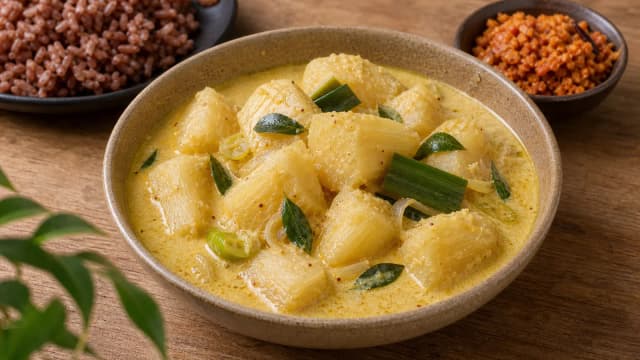
Manioc coconut curry, known in Sri Lanka as maniyokka curry, is chunks of manioc (cassava) simmered in a mild, spiced coconut milk gravy until tender and creamy. Manioc, also called cassava or maniyokka, is a starchy root that cooks much like a potato. It drinks up the coconut sauce and turns soft and starchy. This naturally vegan cassava curry is everyday home food: mild to medium in heat, rich with coconut, and hearty enough to anchor a plate of rice and curry. One thing sets it apart from a potato curry: manioc must be peeled thoroughly, have its central fibre removed, and be cooked all the way through before eating, never raw or undercooked.

Soft, starchy manioc chunks in a mild, creamy coconut gravy. The potato-like root curry that fills a plate and soaks up the sauce.
- Total time
- 50 min
- 20 min prep · 30 min cook
- Serves
- 4 people
- Difficulty
- Medium
- Spice level
- Medium
- Country help
- USA · UK · AU · CA substitutes included
CeylonCooking
ceyloncooking.com/recipes/manioc-coconut-curry
Manioc Coconut Curry (Maniyokka Curry)
Scan to open on your phone
Nutrition
Estimated values, per serving.
About This Dish
Maniyokka, the Sinhala name for manioc or cassava, is one of the most reliable foods on the island. The plant grows from a simple cutting pushed into the ground, survives drought and poor soil, and rewards a household with long, starchy roots that store energy like a pantry buried underground. For generations it has been a backstop crop, the thing that keeps people fed when the rice runs low. It turns up boiled with grated coconut and chilli for breakfast, fried into chips, or, best of all, simmered into this coconut milk curry.
What makes manioc curry so good is how the root behaves in the pot. Cut into chunks and cooked in spiced coconut milk, manioc turns soft, dense and faintly sweet. It is a lot like a waxy potato, but with a smoother, almost creamy bite. The root carries spice gently rather than fighting it, so a pot of maniyokka curry comes out mild, rounded and properly filling. It is humble food, the kind cooked on an ordinary weeknight and ladled generously over red rice with a sambol on the side.
Like most Sri Lankan home cooking, the curry builds in layers. Onion, garlic, curry leaves and pandan soften in oil, the ground spices are bloomed to wake up their fragrance, and the manioc simmers first in thin coconut milk to cook through, then in thick coconut milk so the gravy reduces into something rich and glossy around the tender chunks. A little goraka or lime keeps the coconut from feeling heavy. The base recipe is fully vegan, though many cooks stir in a pinch of Maldive fish for a savoury, smoky depth.
There is one piece of kitchen advice that always goes with manioc, and it is worth taking seriously. Raw cassava contains natural compounds that are only safe once the root is properly peeled and fully cooked. So manioc is never eaten raw or half-done. In practice this is simple: peel it thoroughly, cut out the woody central fibre, boil it until soft, and finish it in the gravy. Done that way, generation after generation, manioc curry is one of the most satisfying and dependable vegetable curries on the Sri Lankan table.
What Is Manioc (Cassava)?
Manioc, called maniyokka in Sinhala and known around the world as cassava, yuca or tapioca root, is a long, brown-skinned starchy root with dense, white flesh. It grows on a tall shrubby plant and is one of the most important staple crops in the tropics, prized because it stores so much energy in the root and grows where little else will. In the kitchen it behaves a lot like a potato: peeled and boiled, the white flesh turns soft, starchy and faintly sweet, and it takes happily to a coconut gravy. The same root, dried and ground, is also where tapioca and tapioca pearls come from, which is why you will see cassava sold as tapioca root.
The one thing that sets manioc apart from a potato is that it has to be prepared properly before eating. Raw cassava contains naturally occurring compounds that are only made safe by thorough peeling and full cooking. So you peel the root right down past the pinkish layer under the skin, cut out the hard central fibre, and boil it until completely soft. It is never eaten raw or undercooked. This is not a fussy modern rule. It is ordinary, long-standing kitchen practice wherever cassava is a staple. Once you have done it once it becomes second nature, no harder than peeling and boiling a potato.
What It Should Taste Like
Soft, starchy manioc chunks, dense and creamy in the centre and gravy-soaked at the edges, sit in a mild to medium spiced coconut sauce that is nutty, faintly sweet and rounded out with curry leaves, pandan and a hint of sour goraka. It is filling, a little like a coconut potato curry but smoother and with its own gently sweet character.
Ingredients
This recipe makes 4 servings. Change the number and every amount below updates with it. Substitutes for hard-to-find items are in the sidebar.
The US button converts grams, millilitres and centimetres to ounces, cups and inches. Spoon measures stay exactly as they are.
Open this in the recipe converter
Manioc
- Manioc (cassava)peeled thoroughly, central fibre removed, cut into bite-size chunksabout 600 g prepared
- Ground turmericfor boiling½ tsp
- Saltfor boiling1 tsp
Curry
- Oil or coconut oil2 tbsp
- Onionsliced1
- Garlicsliced3 cloves
- Green chilliesslit2
- Curry leaves1 sprig
- Pandan (rampe)1 small piece
- Cinnamon1 small stick
- Fenugreek seedsoptional¼ tsp
- Sri Lankan curry powderunroasted or mild for a pale gravy, or roasted for a darker curry1.5 tbsp
- Chilli powderto taste1 tsp
- Ground turmeric½ tsp
- Gorakaoptional2 pieces, or 1 tsp tamarind paste
- Thin coconut milk or water1.5 cups
- Thick coconut milk1 cup
- Maldive fish flakesoptional; omit for vegan1 tbsp
- Saltto taste
Method
Follow these 7 steps. Each one explains not just what to do, but why it matters.
Ready to Start Cooking?
The screen shows one step at a time, with just the ingredients that step needs at your serving count, a timer you can tap, and your phone kept awake.
- 01
Peel the Manioc Thoroughly
Top and tail the manioc, cut it into shorter lengths. Stand each piece up and slice down through the thick skin so the brown bark and the pinkish layer beneath it peel away completely, leaving only clean white flesh.
Peeling is the most important step with manioc, so do not hurry it. The skin is much thicker than a potato's. There is a brown, barky outer layer and a pinkish layer just beneath, and both need to come off entirely down to the bright white flesh. The easiest way is to cut the root into manageable lengths first, then run your knife down the side and peel back the whole rind in strips, the way you would unwrap something, rather than trying to shave it like a potato. This thorough peeling is not just for looks. It removes the layers where the root's natural compounds are most concentrated, which is part of why properly prepared cassava is safe and pleasant to eat.

Tip: If you see any pink, grey or discoloured streaks in the white flesh, cut them away. You want clean, even white throughout before the manioc goes in the pot.
- 02
Remove the Central Fibre and Cut into Chunks
Cut each peeled length in half and pull out the tough, stringy fibre that runs down the centre, then chop the flesh into even, bite-size chunks and drop them into a bowl of water as you go.
There's a hard, woody fibre running down the middle of every manioc root, sometimes a whole stringy core, and it never softens no matter how long you cook it. Split each piece lengthways so you can see it and lift it out with the tip of your knife or your fingers. Take it all out now, because a stray string in the finished curry is nasty to bite into. Cut the flesh into even chunks so they cook at the same rate, just like a potato curry, and keep them in a bowl of water so the cut surfaces don't discolour while you work through the rest.

Tip: Aim for chunks a little larger than bite-size. Dense manioc shrinks slightly and softens as it cooks, and over-small pieces are more likely to break up in the gravy.
- 03
Boil the Manioc Until Fully Tender
Drain the chunks and put them in a pot with the turmeric, salt and enough fresh water to cover them well. Bring it to a boil and cook for 15-20 minutes until the manioc is completely soft and a knife slides through with no resistance. Drain.
This boil does two jobs at once, and both matter. First, it cooks the dense, starchy manioc all the way through. Cassava must be fully cooked before you eat it, never raw or hard in the centre, so cook it until a chunk yields completely and feels soft like a boiled potato. Second, simmering it in plenty of fresh water and then draining carries away the very last of the root's natural compounds. That's exactly why this open boil is the traditional way to prepare it. The turmeric seasons the flesh and lays down a warm golden colour before the chunks ever meet the spices.

Tip: Don't skip or shorten this boil, and don't eat the manioc until it is genuinely soft all the way through. If a chunk still has a firm, waxy centre, give it a few more minutes.
- 04
Build the Spice Base
Heat the oil and gently fry the curry leaves, pandan, cinnamon and fenugreek for a few seconds, then add the onion, garlic and green chilli and cook until soft and golden.
This is the backbone of a good maniyokka curry. The moment the curry leaves and pandan hit the hot oil, they crackle and release their fragrance into the pot, and the cinnamon adds a warm, woody note underneath. Letting the onion soften slowly until golden builds a gentle sweetness that balances the spice to come and stands up to the mild manioc. Take your time here. A rushed, pale base leaves the curry tasting flat no matter how well you cooked the root.

Tip: Coconut oil gives the most authentic flavour, but any neutral oil works. Fry the whole spices first so they bloom in clean oil before the onion goes in.
- 05
Bloom the Spices
Stir in the curry powder, chilli powder and turmeric and cook for 30-60 seconds, just until fragrant, then add the goraka and the Maldive fish if you're using it.
Toasting the ground spices in the oil for under a minute wakes up their aroma and rounds off any raw, dusty edge before the liquid goes in. Keep the heat moderate and keep them moving, because ground spices catch and burn in seconds. Goraka brings a gentle sour, smoky note that cuts the richness of the coconut and balances the starchy manioc. A little Maldive fish, if you eat it, adds a savoury, almost smoky depth that is very traditional. Leave both out and the curry is still excellent and fully vegan.

Tip: Mild unroasted curry powder keeps maniyokka curry light and golden. Swap in roasted (dark) curry powder if you prefer a deeper, smokier curry.
- 06
Simmer in Thin Coconut Milk
Add the boiled manioc and the thin coconut milk or water. Stir gently to coat every chunk, bring it to a gentle simmer, then cover and cook for 8-10 minutes so the manioc drinks up the gravy.
The manioc's already cooked through from the boil, so this stage is about flavour, not softening it more. You're coating each chunk in the spice base and letting it drink up the coconut gravy. Thin coconut milk gives the curry room to simmer and reduce gently without splitting. And as it cooks, the starchy manioc thickens the gravy from within, same way a potato does. Keep the heat gentle and stir sparingly, so the soft chunks stay whole instead of breaking into the sauce.

Tip: If the gravy thickens too fast or looks like it will catch, add a splash more thin coconut milk or water. That manioc starch drinks up liquid fast.
- 07
Finish with Thick Coconut Milk
Pour in the thick coconut milk, season with salt to taste, and simmer gently for 3-5 minutes until the gravy is creamy and lightly thickened. Don't let it boil hard.
The thick coconut milk goes in at the end and is treated gently, because a hard boil will split it into oily flecks and grainy curds. Stirred in over low heat, it rounds the curry into a creamy pale-golden gravy that clings to the tender manioc. Let it warm through and thicken just until the oil starts to glisten at the edges, the sign a coconut curry is properly done, then taste and adjust the salt and sourness before serving.

Tip: Like most coconut milk curries, maniyokka curry is even better the next day, once the flavours settle and the manioc fully soaks up the gravy.
Common Mistakes to Avoid
- Peeling the manioc too thinly and leaving the brown bark or the pinkish layer beneath the skin. Peel right down to clean white flesh.
- Leaving the hard central fibre in means tough, stringy bits in the finished curry.
- Undercooking the manioc. Cassava must be boiled until completely soft and is never eaten raw or hard in the centre.
- Stirring too hard once the manioc is soft. The chunks break down into the gravy.
- Boiling hard after the thick coconut milk goes in. The gravy splits into oily flecks.
Serving Ideas
- With rice as the centrepiece of a rice and curry, alongside a sambol and a dhal.
- With red rice, pol sambol and a green leaf mallum for an everyday plate.
- With bread, roti or string hoppers to mop up the creamy coconut gravy.
- As a filling vegan main that eats like a coconut potato curry.
Building a whole plate around it? Start from our vegetarian rice and curry menu, which sets out what to cook alongside it and in what order.
Storage and Make-Ahead
Keeps 3 to 4 days refrigerated, and the flavour deepens, so it's a good make-ahead curry. Reheat gently without boiling so the coconut gravy doesn't split. If it's thickened, loosen it with a splash of water or coconut milk. It freezes for up to a month, though boiled cassava can turn a little firmer and grainier when it thaws.
Two Ways to Cook It
Use frozen cassava chunks, which come already peeled and de-fibred, so there is no peeling or central fibre to deal with. Boil them until completely soft, fry the spice base, add the cassava with tinned coconut milk, simmer until it soaks up the gravy, finish with a little more thick coconut milk, and skip the goraka and Maldive fish. That's the low-fuss route.
For the proper version, get fresh manioc, peel it thoroughly by hand and cut out that central fibre. Boil it in plenty of water until completely soft. Use goraka for sourness, a pinch of Maldive fish for depth, fresh-pressed first and second coconut milk, and simmer it in a clay pot if you can for an earthier finish.
Lighter and Healthier Version
Maniyokka curry is already plant-based and built around a vegetable, so it does a proper job as a filling main. A few small tweaks keep it light while holding onto that creamy, soft finish.
A Filling Plant-Based Main
Manioc is naturally low in fat and gives you proper complex carbohydrates. That starchy, satisfying texture is why maniyokka curry works as a genuinely filling vegan and vegetarian main, no meat needed.
Lighten the Coconut
Use light coconut milk, or part coconut milk and part water, to cut the fat while keeping the gravy creamy. The manioc's own starch helps thicken it as it simmers.
Go Easy on the Oil
A tablespoon or two of oil is all you need for the spice base. The flavour comes from the curry powder, curry leaves and goraka, not from heaps of fat.
Vegan and Gluten-Free
Leave out the optional Maldive fish and manioc curry has no meat, dairy or wheat, so it suits vegan, vegetarian and gluten-free eaters exactly as it is.
Frequently Asked Questions
Manioc is a long, brown-skinned starchy root with dense white flesh. In Sinhala it is called maniyokka, and elsewhere it is cassava, yuca or tapioca root. It is one of the most important staple crops in the tropics. Once peeled and cooked, it goes soft and starchy, quite like a potato, which is why Sri Lankans simmer it into maniyokka curry, a coconut milk curry with real body.
Cooked It? Tell Us How It Went
Your notes on this manioc coconut curry help the next person get it right: what you swapped, what you would do differently, where the recipe should have warned you. Tap a star if you are in a hurry, or write a few lines if you have a minute.
You Might Also Like


Sri Lankan Home Cooking Starter Pack
40 authentic Ceylon recipes made simple for foreign kitchens: spice guide, pantry checklist, substitute guide, 7-day meal plan and printable shopping lists.