Kiri Kos Maluwa
Sri Lankan Jackfruit Curry (Kiri Kos)
Also known as Kos Curry, Mature Jackfruit Coconut Curry
Sri Lankan jackfruit curry, kiri kos maluwa, is pale mature jackfruit bulbs (kos madulu) simmered in a mild golden coconut-milk gravy with curry leaves, pandan and gentle spice. Polos curry uses very young green jackfruit cooked down dry and meaty; this kos curry uses firmer, more developed flesh and lets it sit in a creamy coconut maluwa until it goes soft, comforting and lightly sweet. Also known as kos curry or mature jackfruit curry, it is naturally vegan and a much-loved part of a Sri Lankan rice and curry.

This is the gentle jackfruit curry: soft pale kos madulu simmered in a mild golden coconut gravy that tastes like a Sunday lunch at home.
- Total time
- 60 min
- 25 min prep · 35 min cook
- Serves
- 4 people
- Difficulty
- Medium
- Spice level
- Medium
- Country help
- USA · UK · AU · CA substitutes included
CeylonCooking
ceyloncooking.com/recipes/kos-curry
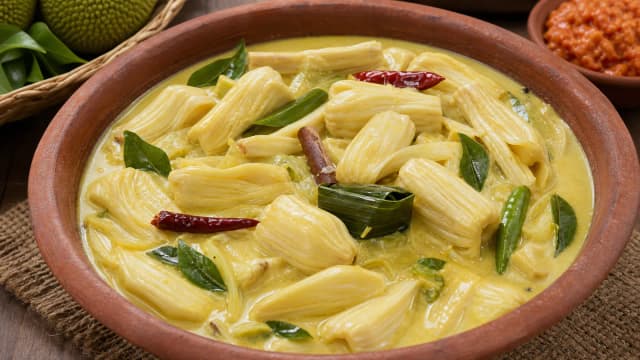
Sri Lankan Jackfruit Curry (Kiri Kos Maluwa)
Scan to open on your phone
Nutrition
Estimated values, per serving.
About This Dish
If polos curry is the bold, meaty one that meat-eaters fall for, kiri kos is its gentler, more homely sibling. Kos means jackfruit in Sinhala, and maluwa means curry or gravy, so kiri kos maluwa is jackfruit cooked in a creamy coconut milk gravy. Here the kos is the pale mature flesh, firmer and more developed than baby polos but still cooked savoury, not the sweet ripe fruit you eat for dessert. Simmered in coconut milk it turns into tender kos madulu that drink up the gravy, and the whole thing has that quiet comfort of a curry someone's grandmother has been making for decades.
Jackfruit runs deep in Sri Lankan life. The trees grow tall in home gardens all over the island, and one fruit can be so big it feeds a whole household, which is why it got a reputation as a tree that keeps people fed in lean times. Every stage is used: very young polos for a dark meaty curry, mature kos for a softer coconut curry like this one, boiled flesh for kos mallum and other sides, and ripe golden pods eaten fresh as a sweet treat. Nothing is wasted, and kos curry is one of the most everyday, lived-in ways the fruit reaches the table.
The gravy is what sets kos curry apart from its young cousin. Polos curry starts with dark roasted curry powder and goraka and cooks down thick and almost dry. Kos curry goes the other way: creamy and mellow, a mild lighter-coloured coconut gravy, usually with just a little curry powder, turmeric, green chilli, and a slip of pandan and curry leaf, so the jackfruit's own soft mild character comes through instead of being buried under spice. It sits comfortably next to rice, a dhal and a sambol and rounds out the plate without shouting.
Made well, kos curry proves that simple home food can be what you crave most. No long list of hard-to-find ingredients and no fiddly technique beyond handling the fruit, just jackfruit, coconut, aromatics and patience while it simmers. It is humble, satisfying and unmistakably Sri Lankan, and it tastes like home whether or not you grew up with it.
Polos, Kos or Varaka? Jackfruit at Every Stage
Jackfruit is really three different ingredients depending on how ripe it is, and Sinhala gives each stage its own name. Polos is the very young, green, unripe fruit, picked while the flesh is firm, pale and starchy. It cooks as a vegetable and has that dense, meaty texture that made young jackfruit famous worldwide as a plant-based meat substitute. Kos is the more mature fruit, the developed but not yet sweet-ripe flesh, firmer and more substantial than polos but still savoury. Varaka (or vela) is the fully ripe, golden, sweet jackfruit, eaten fresh as a dessert fruit.
For this curry, you want kos: the mature, firm flesh, not the baby green polos and definitely not the sweet ripe fruit. At this stage the jackfruit holds its shape in the gravy, but it turns tender and creamy as it simmers. It soaks up the coconut maluwa instead of staying tight and fibrous like polos or collapsing into sweetness like the ripe fruit. If you're buying tinned, reach for young (green) jackfruit in brine or water. That's the closest substitute. Steer clear of the kind packed in sweet syrup, which is meant for puddings.
What It Should Taste Like
Soft, tender kos madulu in a golden coconut gravy that's mild and creamy, gently spiced with curry leaves, pandan and a little chilli. There's a faint natural sweetness from the fruit. It's comforting and homely, not fiery, the curry that anchors a rice and curry plate.
Ingredients
This recipe makes 4 servings. Change the number and every amount below updates with it. Substitutes for hard-to-find items are in the sidebar.
The US button converts grams, millilitres and centimetres to ounces, cups and inches. Spoon measures stay exactly as they are.
Open this in the recipe converter
Jackfruit
- Mature jackfruit (kos)firm, not sweet-ripe. Separate into kos madulu and split large bulbs600 g fresh, or 2 tins drained
- Ground turmericfor par-boiling fresh kos½ tsp
- Saltfor par-boiling1 tsp
Curry
- Onionsliced1
- Garlicsliced3 cloves
- Gingergrated1 tsp
- Green chilliesslit2
- Curry leaves1 sprig
- Pandan (rampe)1 piece
- Cinnamon1 small stick
- Fenugreek seeds¼ tsp
- Sri Lankan curry powderunroasted/mild for the pale gravy1 tbsp
- Ground turmeric½ tsp
- Chilli powderto taste½ tsp
- Thin coconut milk or water1½ cups
- Thick coconut milk¾ cup
- Maldive fish flakesoptional. Omit for vegan1 tsp
- Oil2 tbsp
- Saltto taste
Method
Follow these 5 steps. Each one explains not just what to do, but why it matters.
Ready to Start Cooking?
The screen shows one step at a time, with just the ingredients that step needs at your serving count, a timer you can tap, and your phone kept awake.
- 01
Prep and Cut the Jackfruit
If you're using fresh kos, rub a little oil on your hands and knife first. Then separate the pale kos madulu, trim away any tough core or fibres, and split very large bulbs. If you're using tinned jackfruit, drain, rinse and cut it into pieces.
Fresh jackfruit leaks a sticky, milky sap that glues itself to skin, blades and boards, so the oil is what stops it. A thin film on your hands and knife makes the sap slide off instead of clinging, which keeps the job manageable. Mature kos is firmer than young polos. For kiri kos, you still want the pale bulbs and split segments to look like kos madulu, not dark meaty polos. Tinned green jackfruit is already soft and sap-free, so it's the easy route.

Tip: Keep a small bowl of oil next to the board. Re-oil your hands and knife whenever the sap starts to grip. A spot of oil also helps lift any sap off afterwards.
- 02
Par-Boil the Jackfruit
Put the fresh kos madulu in a pot with the turmeric, salt and enough water to cover. Boil for 15 to 20 minutes until just tender, then drain. Skip this step for tinned jackfruit.
Mature jackfruit is dense, so a head-start in boiling water softens the firm flesh. That way the kos madulu cook evenly in the gravy instead of staying hard in the middle. The turmeric seasons the flesh and gives it a warm golden undertone, and the salt gets right into the pieces. You're after just tender: a knife slides in with a little resistance, but the pieces aren't falling apart. They'll finish cooking and soften further in the coconut milk. Tinned jackfruit is already soft, so it goes straight in later.

Tip: Don't boil the fresh kos to mush here. It should still hold its shape so it doesn't disintegrate during the simmer.
- 03
Build the Spice Base
Heat the oil and fry the onion, garlic, ginger, green chilli, curry leaves, pandan, cinnamon and fenugreek until the onion is soft and fragrant. Stir in the curry powder, turmeric and chilli powder for a few seconds.
This base is gentler than a polos curry, so you're softening and sweetening the onions instead of chasing a dark, roasted depth. Let the aromatics turn translucent and the kitchen fill with the smell of curry leaf and pandan before the ground spices go in. Use a mild, unroasted Sri Lankan curry powder here. It keeps the gravy pale and golden and lets the coconut and the soft jackfruit lead, which is exactly how kiri kos maluwa should taste, mellow, not smoky. Bloom the powders in the oil for just a few seconds so they wake up without scorching.

Tip: Use unroasted (mild) curry powder here, not the dark roasted kind. Dark powder is what makes polos curry brooding. Kiri kos wants light and creamy.
- 04
Simmer in Thin Coconut Milk
Add the kos madulu and the Maldive fish if using, stir to coat them in the spices, then pour in the thin coconut milk or water. Bring to a gentle simmer, cover, and cook for 15 to 20 minutes until the jackfruit is soft and has soaked up the gravy.
Coat the kos madulu in the spice base before any liquid goes in. That way every piece picks up flavour from the start. The thin coconut milk gives the curry room to braise and reduce gently, and this is where mature kos turns properly tender and creamy, drinking in the gravy as it goes. Keep the heat low so it bubbles softly instead of boiling hard. Top up with a splash of water if it threatens to catch before the jackfruit is done. The optional Maldive fish dissolves in here and adds a savoury background note. Leave it out and the curry stays fully vegan.

Tip: Press a piece against the side of the pan. It should give easily and feel soft, not springy or fibrous. If it resists, give it a few more minutes and a little more liquid.
- 05
Finish with Thick Coconut Milk
Pour in the thick coconut milk and stir gently. Let the curry warm through on low heat for 3 to 5 minutes, until the gravy is creamy and lightly thickened. Taste for salt and serve.
The thick coconut milk goes in last and gets handled gently, because hard boiling is what makes coconut gravy curdle and split into grainy bits and oil. Keep the heat low and bring it to the barest simmer, stirring slowly, until the gravy turns silky, pale gold and creamy enough to coat the back of a spoon. That's what gives kiri kos maluwa its silky, pale gold gravy. Taste and adjust the salt now. The curry should be mellow and savoury with only a gentle warmth from the chilli.

Tip: Don't let it boil once the thick milk is in. A lazy simmer keeps the gravy smooth. A rolling boil splits it.
Common Mistakes to Avoid
- Using sweet ripe jackfruit (or the tinned syrup kind) turns the savoury curry cloying. You want mature, firm kos, not the dessert fruit.
- Reaching for dark roasted curry powder makes a brooding polos-style curry, not the mild, creamy kos maluwa.
- Not par-boiling fresh kos means the dense pieces stay hard in the middle while the gravy is ready.
- Boiling hard after the thick coconut milk goes in splits the gravy into oil and grainy curds.
- Skipping the oil on your hands and knife means the sticky sap will glue up the prep.
Serving Ideas
- Serve it as part of a rice and curry, next to a dhal, a sambol and some rice.
- With red rice and a sharp sambol to balance the creamy gravy.
- Spooned over plain rice, or with bread or roti to mop up the coconut maluwa.
- As a soft vegan main alongside a crunchy mallum or stir-fry.
Building a whole plate around it? Start from our vegetarian rice and curry menu, which sets out what to cook alongside it and in what order.
Storage and Make-Ahead
Keeps 3 to 4 days in the fridge and the flavour deepens overnight, so it is a good make-ahead. Reheat gently on low heat without boiling so the coconut gravy stays smooth and does not split. You can freeze it up to a month, but the soft jackfruit turns a little more tender on thawing. Loosen with a splash of coconut milk or water when reheating.
Two Ways to Cook It
Use tinned green jackfruit in brine, drained and rinsed, so there is no sap to handle and no par-boiling. Fry the spice base, stir in the jackfruit, simmer in tinned thin coconut milk until soft, then finish with thick coconut milk off a hard boil. Skip the Maldive fish and you have an easy vegan curry.
Use fresh mature kos, handled with oiled hands and par-boiled until just tender. Add mild unroasted curry powder, a slip of pandan and curry leaf, a touch of Maldive fish, and freshly pressed thin and thick coconut milk. Simmer gently in a clay pot until soft and creamy.
Lighter and Healthier Version
Kos curry is naturally plant-based and built around a vegetable, so it is already a light, wholesome main. A few small tweaks keep it that way while preserving the creamy character that makes it kos maluwa.
A Wholesome Plant-Based Main
Jackfruit is low in fat and a good source of fibre, so kos curry is a filling vegan and vegetarian main without leaning on meat or dairy.
Lighten the Coconut
Use light coconut milk, or part coconut milk and part water, to cut the fat while keeping the gravy creamy. The curry leaf, pandan and spices carry plenty of flavour.
Go Easy on the Oil
A tablespoon or two of oil is enough to soften the aromatics. The body of this curry comes from the coconut milk and the tender jackfruit, not from lots of fat.
Vegan and Gluten-Free
Leave out the optional Maldive fish and the curry has no meat, dairy or wheat, so it suits vegan, vegetarian and gluten-free eaters as it is.
Frequently Asked Questions
Kos curry, or kiri kos maluwa, is a Sri Lankan curry made from mature jackfruit (kos), especially the pale kos madulu bulbs, simmered in a mild, creamy coconut-milk gravy with curry leaves, pandan, turmeric and a little chilli. Kos is the Sinhala word for jackfruit and maluwa means curry, so the name simply means jackfruit curry. It is lightly sweet, naturally vegan and a homely part of a Sri Lankan rice and curry.
Cooked It? Tell Us How It Went
Your notes on this sri lankan jackfruit curry help the next person get it right: what you swapped, what you would do differently, where the recipe should have warned you. Tap a star if you are in a hurry, or write a few lines if you have a minute.
You Might Also Like


Sri Lankan Home Cooking Starter Pack
40 authentic Ceylon recipes made simple for foreign kitchens: spice guide, pantry checklist, substitute guide, 7-day meal plan and printable shopping lists.