Cadju Curry
Sri Lankan Cashew Curry (Kaju Maluwa)
Also known as Cadju Curry, Cashew Nut Curry, Kaju Curry
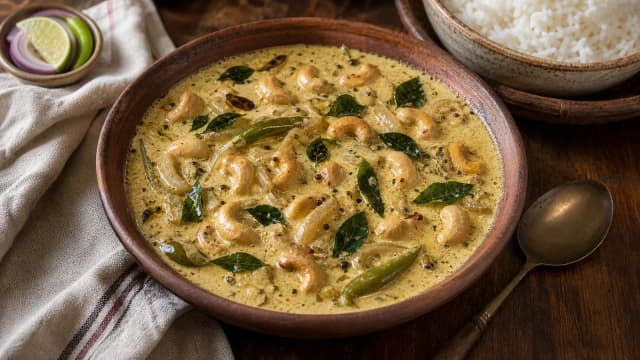
Sri Lankan cashew curry, known locally as kaju maluwa or cadju curry, is whole raw cashews simmered until soft and buttery in a mild, golden coconut gravy scented with curry leaves, pandan and cinnamon. Soft and almost custardy, lightly spiced and naturally vegan, it's a celebration favourite, often flecked with green peas for colour. A handful of nuts turns into something rich and mellow, and it's genuinely easy to make.

A creamy, mild coconut cashew curry, naturally vegan, with cashews simmered soft.
- Total time
- 40 min
- 10 min prep · 30 min cook
- Serves
- 4 people
- Difficulty
- Beginner
- Spice level
- Mild
- Country help
- USA · UK · AU · CA substitutes included
CeylonCooking
ceyloncooking.com/recipes/cashew-curry
Sri Lankan Cashew Curry (Cadju Curry)
Scan to open on your phone
Nutrition
Estimated values, per serving.
About This Dish
Ask for cadju curry in a Sri Lankan home and you're being offered something special. Cadju is the Sinhala word for cashew, and while cashews are eaten everywhere as a snack, simmering them whole into a soft coconut curry is a distinctly Sri Lankan idea. You'll also see it written as cashew nut curry, kaju curry or kaju maluwa (maluwa simply means curry), but it's always the same gentle, golden dish of tender nuts in a mild, creamy gravy. Unlike the fiery curries that share the table, this one is built for comfort rather than heat.
Cashew curry belongs to the festive end of the spread. Because cashews aren't cheap, a pot of cadju curry signals a celebration: a wedding, an almsgiving, a New Year table, or a Sunday lunch made a little more generous. It sits beside yellow rice and a row of sambols as the rich, mellow note that balances everything sharper and spicier around it. In the cashew-growing belt around Anuradhapura, you can still buy fresh, soft young cashews by the roadside, and a curry made from those tender nuts is something cooks talk about for the rest of the year.
What makes a good cashew curry is restraint. The cashews should be soft and yielding, almost melting at the edges yet still holding their shape, suspended in a pale turmeric-coconut gravy that's creamy without being heavy. The spicing stays deliberately quiet so the natural sweetness and butteriness of the nut leads, with curry leaves, pandan and a slit green chilli humming underneath. Done right, it's rich but never cloying, the kind of dish people quietly go back to for a second spoonful.
Why Raw Cashews, Not Roasted
The whole character of cadju curry rests on starting with raw cashews rather than the salted, roasted ones you snack on. Raw cashews are pale, soft and faintly sweet, and once soaked they drink up the coconut gravy and turn meltingly tender as they simmer. Roasted cashews have already had their moisture driven off and their flavour set by the oven, so they stay firm, taste toasty rather than creamy, and any salt on them quietly wrecks the gentle seasoning of the curry. For this dish, raw isn't a preference, it's the point.
The soak matters just as much as the choice of nut. A couple of hours in water, or overnight if you can plan ahead, lets the cashews rehydrate so they cook evenly and reach that custardy softness in the time the gravy takes to come together. In Sri Lanka, cooks lucky enough to have fresh young cashews skip the soak entirely, because the tender new nuts are already soft. Working with the dried ones most of us buy, the soak is what gets you closest to that fresh-cashew texture.
What It Should Taste Like
Mellow and creamy, the cashews turn soft and almost custardy in a delicate turmeric-coconut gravy laced with curry leaves and only a whisper of chilli. Rich and gently sweet, it's a curry that feels special without any fuss.
Ingredients
This recipe makes 4 servings. Change the number and every amount below updates with it. Substitutes for hard-to-find items are in the sidebar.
The US button converts grams, millilitres and centimetres to ounces, cups and inches. Spoon measures stay exactly as they are.
Open this in the recipe converter
- Raw cashewssoaked for 2 hours or overnight2 cups
- Coconut oil2 tbsp
- Onionsliced1
- Garlic2 cloves
- Curry leaves1 sprig
- Pandan (rampe)5 cm piece
- Cinnamon1 small stick
- Ground turmeric½ tsp
- Sri Lankan curry powderunroasted/mild1 tsp
- Green chilliesslit2
- Thin coconut milk1 cup
- Thick coconut milk150 ml
- Green peasoptional½ cup
- Saltto taste
Method
Follow these 5 steps. Each one explains not just what to do, but why it matters.
Ready to Start Cooking?
The screen shows one step at a time, with just the ingredients that step needs at your serving count, a timer you can tap, and your phone kept awake.
- 01
Soak the Cashews
Soak the raw cashews in water for at least 2 hours, overnight if you can. They need that to soften and cook evenly. Drain them well before you start.
This is the quiet step that decides everything, and it's tempting to skip when you're hungry. Dried cashews are dense and thirsty. Without a soak they stay stubbornly firm in the middle while the outsides overcook, and the curry never gets that custardy softness that makes it special. You'll see them plump up as they sit, turning from ivory to a paler, fuller white. That's how you know they're rehydrating and ready to drink up the coconut gravy later. Overnight is ideal, but even a couple of hours changes how they cook completely.

Tip: If you're short on time, pour just-boiled water over the cashews and let them sit for 30 minutes. It speeds up the soak without making them mushy.
- 02
Build the Base
Heat the coconut oil and fry the curry leaves, pandan and cinnamon for a few seconds. Then add the onion, garlic and slit green chillies and cook gently until soft.
The kitchen smells properly Sri Lankan now. The moment the curry leaves and pandan hit the warm oil they crackle and release that savoury, grassy perfume. The cinnamon adds a warm sweetness underneath. Let the onion soften slowly to translucent, just barely golden, not hard browned. You want it sweet and melting, not toasty. This is a pale, gentle curry, and dark caramelised onion would muddy the colour and the delicate flavour. Listen for a steady, soft sizzle, never an aggressive spit.

Tip: Keep the heat moderate. If the curry leaves or onion brown fast, the oil's too hot and the base will taste harsh instead of mellow.
- 03
Add Spices and Cashews
Stir in the turmeric and mild curry powder, then tip in the drained cashews and pour over the thin coconut milk.
Bloom the ground spices in the hot oil for a few seconds. It wakes them up and stops the curry tasting raw and dusty. The turmeric glows gold and the mild curry powder turns fragrant almost instantly. Then fold the cashews through so every nut gets a coat of spice before the liquid goes in. That's how the flavour gets right into them. The thin coconut milk should just about cover the cashews, giving them room to simmer and absorb without the gravy turning claggy too soon. Keep the curry powder unroasted and mild here. A dark roasted blend would overpower the nuts.

Tip: Stir the spices for only 10 to 15 seconds before the cashews go in. Turmeric scorches quickly and turns bitter if it sits in hot oil alone.
- 04
Simmer
Cover and simmer gently for 15-20 minutes until the cashews are tender. Stir in the green peas for the last 5 minutes.
Patience does the work here. A low, lazy simmer lets the cashews soften all the way through and pull the coconut and spice into their centres. You'll see the gravy thicken slightly as the nuts give up a little starch. Test one after 15 minutes. It should yield easily when pressed and taste creamy, not chalky, in the middle. Adding the peas near the end keeps them bright green and just tender, not grey and collapsed. It's a small touch that keeps the dish looking as fresh as it tastes.

Tip: Top up with a splash of warm water or thin coconut milk if the gravy reduces too far before the cashews are soft. They should always be gently swimming, not stewing dry.
- 05
Finish with Thick Coconut Milk
Stir in the thick coconut milk and salt and simmer very gently for 3-4 minutes until the gravy turns thick, glossy and a little paler. Do not let it boil hard.
This final pour is the step that turns the curry properly silky, so treat it gently. Thick coconut milk is delicate and will split into oily flecks and a grainy curdle if you let it come to a rolling boil, so keep the flame low and let it barely tremble while it warms through and thickens around the cashews. As it simmers the gravy turns glossy and pale gold and coats the back of a spoon, and the whole dish tastes rounder and sweeter than it did a minute earlier. Taste for salt right at the end, because the coconut milk softens the seasoning.

Tip: Take the pan off the heat, pour in the thick coconut milk and stir constantly for the first few seconds. That quick stir the moment it goes in is the surest way to keep the gravy smooth and unsplit.
Common Mistakes to Avoid
- Skipping the soak means the cashews stay hard or cook unevenly in the centre.
- Using salted or roasted cashews throws off the seasoning and leaves the texture firm rather than creamy.
- Boiling hard once the thick coconut milk is in splits the gravy into oily, grainy flecks.
- Over-spicing or using a dark roasted curry powder, because this curry should stay mild, pale and creamy.
- Browning the onion too far, which muddies the delicate golden colour and adds a harsh, toasty edge.
- Reducing the gravy too much, leaving the cashews dry instead of softly swimming in sauce.
Serving Ideas
- With yellow rice and a row of sambols for a festive vegetarian or vegan plate.
- Alongside dhal and a fiery meat or fish curry, where its mellow creaminess balances the heat.
- As the gentle, rich centrepiece of a simple rice and curry lunch.
- With plain hoppers or string hoppers, scooped up with the soft nuts and gravy.
- Next to a sharp pol sambol or pickle, for contrast against the buttery cashews.
Sri Lankan Cashew Curry is one of the courses in our vegetarian rice and curry menu and our sri lankan party menu menu, if you want the whole plate rather than one dish.
Storage and Make-Ahead
It keeps for 3 days refrigerated in a sealed container and freezes for up to 2 months. The gravy thickens as it sits, so loosen it with a splash of coconut milk or water when you reheat, and warm it gently over low heat so the coconut milk doesn't split.
Two Ways to Cook It
Use unsalted roasted cashews with a short soak, tinned coconut milk thinned with water for the first stage and neat for finishing, and skip the pandan. A mild, unroasted curry powder keeps everything gentle, and a non-stick pan over low heat tends to make the creamy finish much easier to get right.
Use raw cashews, or tender young fresh cashews if you can find them, with freshly pressed first and second coconut milk in place of tinned. Fry the aromatics in coconut oil, include the pandan and cinnamon, and finish the curry in a clay pot over a low flame for an earthier, rounder flavour.
Lighter and Healthier Version
Cashew curry is naturally rich, since both the nuts and the coconut milk are high in fat, but a few small changes keep it lighter while holding on to the creamy character that makes it special. None of these touch the flavour balance; they simply ease back on the heaviest elements.
Lean on Light Coconut Milk
Use light (reduced-fat) coconut milk for the simmering stage and keep just a small amount of thick coconut milk for the final stir, so you still get a creamy finish on far less fat.
Ease off the Oil
Two tablespoons of coconut oil is a generous amount for this base. Halve it, cook the onions gently in a non-stick pan, and the curry still smells just as good with less fat in the pan.
Bulk It Out with Vegetables
Stir in extra green peas, chopped green beans or spinach near the end. They stretch the dish, add fibre and colour, and mean you use a little less of that rich cashew gravy per serving.
Watch the Portion
Cashews are nutritious but calorie-dense, so treat this as one part of a rice and curry plate, next to lighter sambols and greens, rather than a big bowl by itself.
Frequently Asked Questions
Kaju maluwa is the Sinhala name for Sri Lankan cashew curry. Kaju means cashew nut and maluwa means curry. It's the same dish as cadju curry or cashew nut curry: whole raw cashews simmered until soft and buttery in a mild, golden coconut gravy with curry leaves, pandan and a little cinnamon. You'll see it written kaju maluwa, kaju curry or cadju curry, and they all mean this one gentle, creamy, naturally vegan curry.
Cooked It? Tell Us How It Went
Your notes on this sri lankan cashew curry help the next person get it right: what you swapped, what you would do differently, where the recipe should have warned you. Tap a star if you are in a hurry, or write a few lines if you have a minute.
You Might Also Like


Sri Lankan Home Cooking Starter Pack
40 authentic Ceylon recipes made simple for foreign kitchens: spice guide, pantry checklist, substitute guide, 7-day meal plan and printable shopping lists.