Pol Sambola
Pol Sambol (Pol Sambola)
Also known as Coconut Sambol, Sri Lankan Coconut Relish, Coconut Sambal, Pol Sambal
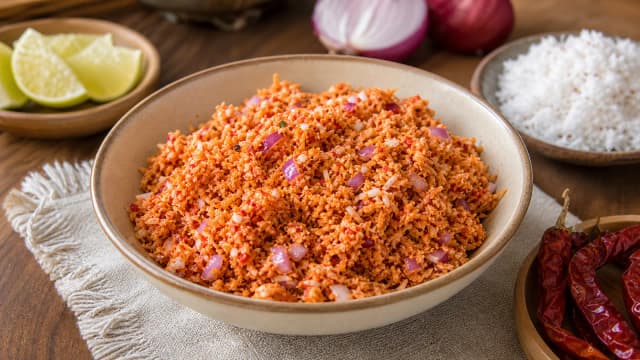
Pol sambol is freshly grated coconut pounded with red chilli, lime, onion and a little Maldive fish. You might know it as coconut sambol or Sri Lankan coconut relish, but it is the same thing: bright red, fiercely hot and ready in ten minutes flat, with not a single pan involved. Smeared on bread, piled onto hoppers or spooned next to rice and dhal, it goes with absolutely everything.

Also in our Southern collection.
Fresh coconut pounded with chilli and lime, ready in ten minutes with no cooking at all, and the one spoonful that makes a plate of rice taste complete.
- Total time
- 10 min
- 10 min prep · 0 min cook
- Serves
- 4 people
- Difficulty
- Beginner
- Spice level
- Authentic Hot
- Country help
- USA · UK · AU · CA substitutes included
CeylonCooking
ceyloncooking.com/recipes/pol-sambol
Pol Sambol (Pol Sambola)
Scan to open on your phone
Nutrition
Estimated values, per serving.
About This Dish
Pol means coconut and sambol means relish, so the name is just 'coconut relish' in Sinhala. You will also see it written pol sambola, coconut sambol or coconut sambal, but it is the same thing: a vivid red tangle of grated coconut, chilli, onion and lime that turns up on Sri Lankan tables morning, noon and night. Ask any household for their version and you will get a slightly different one, because the balance of heat, sourness and salt is a personal thing, and people hold their own line on it fiercely.
What makes pol sambol so loved is how little it asks and how much it gives back. No pot, no flame, no waiting. A handful of ingredients, a few minutes of mixing, and you have a relish that turns plain rice, dhal, bread or hoppers into something you keep reaching for. Breakfast hoppers lean on it, and no rice and curry plate feels finished without it. In a lot of homes it is the first thing a young cook learns to make by hand.
Good pol sambol is all about freshness and contrast. The coconut should be moist and just softened by the chilli oils and lime, never dry and dusty. You want the sweet, milky note of fresh coconut up against the slap of chilli, the sharpness of lime, the savoury depth of Maldive fish and the clean bite of raw red onion, the whole thing holding together in soft, glistening clumps. When it is right it tastes alive, a little fierce, the kind of thing you go back to with your fingers and cannot quite leave alone.
Fresh Coconut Is Everything
The whole dish lives or dies on the coconut, and I mean that. Freshly scraped white coconut is naturally moist and sweet, with a milky richness that drinks up the chilli and lime and pulls the sambol into soft clumps. Frozen grated coconut, thawed and squeezed dry, is the next best thing, and it is a genuinely good stand-in. The one to avoid is sweetened desiccated coconut, which is dried out and sugary and turns the whole relish cloying and crumbly. Just do not.
Coconut brings more than flavour, too. It carries medium-chain fats and a little fibre, which is part of why a spoonful of pol sambol sits satisfyingly next to rice instead of just decorating it. If you are working with a mature coconut at home, scrape the white flesh clean away from the hard brown skin so the sambol stays bright and pale before the chilli stains it red. The goal at every stage is moisture. A coconut that has dried out will never give you that glistening, just-clumping texture that marks a sambol made well.
What It Should Taste Like
Punchy and bright: sweet fresh coconut, the slap of chilli and lime, a savoury edge from the Maldive fish and the clean bite of raw red onion. It should taste alive and just moist, never dry or dusty. If it crumbles instead of clumping, it is not there yet.
Ingredients
This recipe makes 4 servings. Change the number and every amount below updates with it. Substitutes for hard-to-find items are in the sidebar.
The US button converts grams, millilitres and centimetres to ounces, cups and inches. Spoon measures stay exactly as they are.
Open this in the recipe converter
- Fresh grated coconutor thawed frozen grated coconut2 cups
- Red chilli powderto taste; Kashmiri for colour1-2 tbsp
- Red onion or shallotsvery finely chopped½
- Maldive fish flakesoptional; leave out for vegan1 tbsp
- Limejuiced1
- Saltto taste
- Garlicoptional1 small clove
Method
Follow these 5 steps. Each one explains not just what to do, but why it matters.
Ready to Start Cooking?
The screen shows one step at a time, with just the ingredients that step needs at your serving count, a timer you can tap, and your phone kept awake.
- 01
Make the Chilli Paste
If you are using whole dried chillies, soak and pound them first. With chilli powder it is simpler: just combine it with the chopped onion, garlic and salt, then mash it a little to coax the oils out.
This first mash is where the backbone of the flavour gets built, before any coconut softens it. As you crush the onion and garlic against the chilli and salt, you break their cells and pull out the pungent oils that will season the whole bowl. With whole dried chillies the difference is even clearer: soaked and pounded, they give a smoky depth and a coarse, flecked texture that chilli powder on its own cannot match. What you are after is a damp, fragrant paste that already smells sharp and a little fierce, not a dry powder sitting on top of raw onion. If it still looks dusty, keep mashing.

Tip: Mash the salt right into the onion and chilli from the start. It draws the moisture out of the onion and helps that raw bite mellow into the paste.
- 02
Add the Fish
Pound in the Maldive fish flakes so they break down and season the whole mix.
Maldive fish is the quiet secret that makes pol sambol taste so deeply of itself. The hard, smoky flakes are cured and dried tuna, very concentrated, and pounding them into the chilli paste breaks them down so the savouriness spreads evenly instead of sitting in chewy shards. As they grind in, you will notice the paste turn a shade darker and the smell deepen from sharp to savoury and almost meaty. If you are keeping the sambol vegan, just skip this step: you lose a little depth, but the coconut and lime still carry the whole thing.

Tip: If your flakes are big and stubborn, crush them on their own first, or pulse them briefly, so they blend in smoothly instead of leaving hard bits behind.
- 03
Work in the Coconut
Add the grated coconut and mix it through with your hands or a spoon until the whole thing is evenly red and the coconut has softened into the chilli oils.
This is the moment the sambol comes together and turns that warm signature red. Your hands are genuinely better than a spoon here, because the warmth and gentle pressure of your fingers works the chilli oils right into the coconut and softens it as you go. Keep mixing until there are no pale, unseasoned patches left and the whole mass is an even rust-red. The coconut should start to feel supple and a little damp rather than loose and dusty, which is your sign that the oils are doing their job.

Tip: If the coconut feels dry before the lime even goes in, your coconut was too dry to begin with. A teaspoon of warm water, or a little of the juice from the chopped onion, loosens it up.
- 04
Brighten
Squeeze in the lime juice and mix. The coconut should start to clump together and look properly moist.
The lime is what wakes the whole thing up and pulls the flavours into focus, and you add it last on purpose. The acid hits the chilli and the savoury fish, and suddenly the sambol smells brighter and tastes sharper, more lifted. As you mix it through, watch the texture change: the moisture lets the coconut draw together into soft, glistening clumps that hold their shape on a spoon instead of scattering. That clumping is your cue that the moisture is right.

Tip: Add the lime little by little, tasting as you go. Too much at once can make it soggy and flat, so squeeze, mix, taste, then decide if it needs any more.
- 05
Taste and Adjust
Now balance the salt, chilli and lime until it tastes bright and a little fierce. Serve it at room temperature.
Pol sambol is a balancing act, and this last taste is where you make it yours. You are chasing the point where the heat, the sourness of the lime and the savoury salt all land together and none of them swamps the sweet coconut underneath. Take a proper spoonful, not a fingertip, because the flavours read differently in a full mouthful. If it tastes flat, it usually wants salt or lime; if it tastes harsh, it wants a touch more coconut to round it out. At room temperature the flavours sit open and full, where the cold of the fridge would dull them.

Tip: Trust your tongue over the measurements. The chilli powder, the lime and even the coconut vary batch to batch, so the recipe is only a starting point. Your taste is the finish line.
Common Mistakes to Avoid
- Reaching for sweetened desiccated coconut, which turns the sambol cloying, sugary and dry.
- Not squeezing the water out of thawed frozen coconut, which leaves the relish watery and dull.
- Adding the lime too early, so it turns soggy if you make it ahead. The lime goes in last, close to serving.
- Being timid with the chilli. Pol sambol is meant to have real, fierce heat, so do not hold back.
- Leaving the coconut dusty and pale in patches instead of working the chilli oils through until the whole thing is evenly red and just moist.
- Skipping that final taste, so the salt and lime end up out of balance and the sambol reads flat.
Serving Ideas
- On hot toast, or piled onto hoppers for breakfast.
- Spooned next to rice, dhal and a curry on any plate.
- Stuffed into a roti or paratha for a quick snack.
- Spooned over kiribath (milk rice), the classic sweet-and-fiery pairing.
- Alongside string hoppers with a little coconut milk gravy.
Pol Sambol is one of the courses in our beginner rice and curry menu, our vegetarian rice and curry menu, our seafood rice and curry menu and our sri lankan party menu menu, if you want the whole plate rather than one dish.
Storage and Make-Ahead
Best eaten fresh, the day it is made. It will keep for up to 2 days in the fridge in a sealed container, though the colour dulls and the lime fades as it sits. Bring it back to room temperature before serving and wake it up with a squeeze of lime. Do not freeze it, the coconut texture will not survive.
Two Ways to Cook It
Use thawed frozen grated coconut and ready-made chilli powder, skip the Maldive fish, and just mix everything together in a bowl with a spoon. No mortar, no pounding, no cooking, and it still tastes bright and fresh. Honestly, most weekdays this is the way to go.
Scrape the coconut fresh by hand, then pound soaked dried red chillies and Maldive fish on a stone (a miris gala) with the shallots and salt. Work in the coconut last and finish with lime. The stone-ground texture, and the depth you get from whole chillies and fish, is unmistakable. There is no shortcut that matches it.
Lighter and Healthier Version
Pol sambol is already one of the lightest things on a Sri Lankan plate: no cooking, no oil, and naturally plant-based when you leave out the Maldive fish. The only thing worth easing back on is the salt, and there is room to stretch a small amount of coconut further if you are watching calories. There is not much else to lighten, honestly.
Lower-Sodium
Maldive fish is salty on its own, so taste before you add any more salt. Lean on the lime and raw onion for brightness instead of reaching for the salt again.
Bulk It with Onion and Herbs
Stretch the coconut with extra finely chopped red onion, plus a little chopped coriander or curry leaf, so a smaller amount of coconut goes further in each spoonful.
Keep It Vegan and Oil-Free
Skip the Maldive fish and you have a fully plant-based, oil-free, cholesterol-free relish that still brings all the heat and freshness.
Frequently Asked Questions
Pol sambol is a fresh Sri Lankan coconut relish: grated coconut pounded with red chilli, onion, lime, salt and usually a little Maldive fish. No cooking involved. You simply mix everything by hand or in a mortar until the coconut turns red, moist and a little fierce. It is served as a condiment alongside rice, bread, hoppers and curries.
Cooked It? Tell Us How It Went
Your notes on this pol sambol help the next person get it right: what you swapped, what you would do differently, where the recipe should have warned you. Tap a star if you are in a hurry, or write a few lines if you have a minute.
You Might Also Like


Sri Lankan Home Cooking Starter Pack
40 authentic Ceylon recipes made simple for foreign kitchens: spice guide, pantry checklist, substitute guide, 7-day meal plan and printable shopping lists.