Dambala Curry
Sri Lankan Winged Bean Curry (Dambala Curry)
Also known as Four-Angled Bean Curry
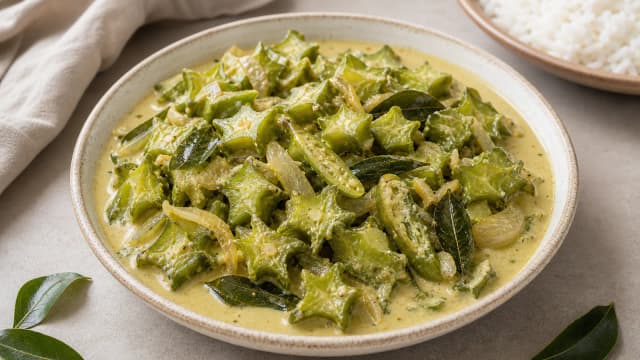
Sri Lankan winged bean curry, or dambala curry as you'll hear it called, is the four-ridged winged bean sliced across into little star shapes and simmered in a light coconut gravy spiced with onion, garlic, green chilli, turmeric and curry leaves until just tender with a slight crunch. Nutty, fresh and a little grassy, this everyday curry, sometimes called four-angled bean curry, is vegan and those starry slices with their gentle bite set it apart from any other bean on a Sri Lankan rice and curry plate.

Frilly winged beans sliced into little stars, simmered just-tender in a light coconut gravy: the nutty, crunchy everyday vegetable that quietly steals the plate.
- Total time
- 35 min
- 15 min prep · 20 min cook
- Serves
- 4 people
- Difficulty
- Beginner
- Spice level
- Medium
- Country help
- USA · UK · AU · CA substitutes included
CeylonCooking
ceyloncooking.com/recipes/winged-bean-curry
Sri Lankan Winged Bean Curry (Dambala Curry)
Scan to open on your phone
Nutrition
Estimated values, per serving.
About This Dish
Ask for dambala in a Sri Lankan kitchen and you get handed something that looks almost too pretty to cook: a long, frilly green pod with four ruffled ridges running its length, so slicing across it gives you a row of little four-pointed stars. Dambala is the Sinhala name for winged bean, also called four-angled bean, and dambala curry is one of those homely, slightly underrated dishes that earns its place on the everyday table. You'll see it written as winged bean curry or four-angled bean curry, but it's always the same nutty, faintly grassy bean cooked gently in a pale coconut gravy.
This is rice-and-curry food without any fuss. Dambala grows readily in home gardens and village plots, climbing up sticks and fences with bright blue flowers, and a curry made from a morning's picking just turns up on the table, beside the dhal and the greens, no ceremony. It costs little, cooks fast, and gives a plate a vegetable with real character: that nuttiness and the gentle crunch that survives the simmer. Where a fiery fish curry shouts, dambala curry is the quietly interesting one, the dish a guest tries, pauses over, and asks the name of.
The whole point of a good winged bean curry is keeping that crunch. The slices should be cooked through and tender enough to give way, but still have a fresh, springy bite and a clear green colour, never stewed down to grey mush. The gravy stays light and savoury, scented with curry leaves and a whisper of unroasted curry powder, just enough to dress the beans rather than drown them. It's a curry built on restraint, where the bean's own nutty, slightly beany flavour leads.
It's worth knowing how this differs from its bean cousins. A long beans curry simmers slender rope-like beans soft in a soupy coconut gravy, while a green bean stir-fry tosses thin slices fast and dry in hot oil to keep them crisp. Dambala curry sits between them in spirit but stands apart in fact: a different bean entirely, with that unmistakable four-pointed star slice and a nutty crunch neither of the others has. Same corner of the plate, a completely different vegetable.
What Is the Winged Bean (Dambala)?
The winged bean is one of the most striking vegetables you will ever slice. Each pod is long and angular, with four frilly, papery ridges, or wings, running down its length, which is exactly why it is also called the four-angled bean. Cut it straight across and every slice falls open into a little four-pointed star, a shape no other bean gives you, which is half the charm of a dambala curry on the plate. In Sinhala it is dambala, and the whole plant is generous: the pods, the leaves, the flowers and even the tuberous root are all edible, and the bean is unusually high in protein for a vegetable, which is part of why it is so valued in home gardens.
Choosing well is everything, because winged beans turn fibrous fast. Look for young, tender pods that are firm, bright green and no longer than your hand, with the ridges still soft and the bean snapping cleanly when bent. Pass over any that are long, pale, leathery or bulging with mature seeds, since older dambala goes stringy and tough no matter how long it cooks. This is also where it parts ways with its cousins: long beans are thin, rope-like and meaty, green beans are smooth, round and sweet, while the winged bean is flat, frilly and nutty, with a denser, crunchier bite that holds up to a gentle simmer and still keeps its character.
What It Should Taste Like
Tender, star-shaped slices of winged bean with a fresh, springy crunch, in a light, savoury coconut gravy gently warm with green chilli and turmeric and perfumed with curry leaves. Nutty and a little grassy beneath the mild spice, soothing and homely rather than rich or fiery, with the beans still tasting green and full of bite.
Ingredients
This recipe makes 4 servings. Change the number and every amount below updates with it. Substitutes for hard-to-find items are in the sidebar.
The US button converts grams, millilitres and centimetres to ounces, cups and inches. Spoon measures stay exactly as they are.
Open this in the recipe converter
- Winged beans (dambala)young, tender pods, sliced across into stars300 g
- Onionsliced1
- Garlicsliced2 cloves
- Green chilliesslit lengthways2
- Curry leaves1 sprig
- Ground turmeric½ tsp
- Sri Lankan curry powderunroasted/mild1 tsp
- Chilli powderoptional, to taste½ tsp
- Thin coconut milk1 cup
- Thick coconut milk150 ml
- Coconut oil1 tbsp
- Maldive fish flakesoptional, leave out for vegan1 tsp
- Saltto taste
Method
Follow these 5 steps. Each one explains not just what to do, but why it matters.
Ready to Start Cooking?
The screen shows one step at a time, with just the ingredients that step needs at your serving count, a timer you can tap, and your phone kept awake.
- 01
Slice the Winged Beans into Stars
Rinse the winged beans, trim off the stem and tip ends and any stringy edge along the ridges, then slice each pod straight across into thin pieces, about half a centimetre, so each slice opens into a little four-pointed star.
This is the step that makes dambala curry unmistakable, so slow down and enjoy it. Hold the pod flat and cut clean across the grain, not on a slant, and watch each slice fall away as a frilly four-pointed star, the four wings becoming the four points. Keep the slices thin and even. The bean is denser and meatier than a green bean, and thin pieces are what let it cook through to tender while still keeping that signature crunch. As you trim, run your thumb along each pod first, because a young, tender one feels firm and springy and the ridges yield slightly, while an old one feels leathery and tough and will stay stringy however long it simmers.

Tip: Snap one bean in half before you start. If it bends rather than breaking with a clean, juicy crack, it is past its best and the curry will be fibrous.
- 02
Build the Aromatic Base
Heat the coconut oil in a pan over medium heat and fry the onion, garlic, slit green chillies and curry leaves until the onion softens and turns translucent.
Here's the thing: the kitchen starts to smell like a Sri Lankan home right now. Curry leaves hit the warm oil and crackle, all savoury and faintly citrus. The onion softens and sweetens at the edges. You're coaxing softness, not colour. Let it go translucent and gentle. Don't brown it hard: this is a pale, light curry, and dark-fried onion would push it muddy and sharp. The slit green chillies bleed fresh, grassy heat into the oil. That heat sits really well with the nutty bean later.

Tip: Keep the heat moderate. You want a steady, soft sizzle, not an aggressive spit. If the curry leaves brown fast, the oil's too hot and the base will taste harsh.
- 03
Wake up the Spices
Stir in the turmeric, mild curry powder and the chilli powder if you're using it. Let them cook with the aromatics for ten to fifteen seconds, until fragrant.
Ground spices taste raw and dusty straight into liquid. A few seconds in hot oil is what fixes that. Watch the pan turn a glowing gold as the turmeric blooms. Breathe in: the curry powder should suddenly smell rounder and toastier. That's the signal it's ready. Keep the blend unroasted and mild. Dambala curry is a gentle, everyday dish where the bean's own nutty flavour leads. A dark roasted curry powder would bury that quiet character under heavy, toasted notes.

Tip: Stir constantly and move fast: no more than fifteen seconds. Turmeric scorches quickly in dry oil and turns bitter. That bitterness would shadow the whole curry.
- 04
Simmer in Thin Coconut Milk
Add the sliced winged beans, the Maldive fish if you're using it, a little salt and the thin coconut milk. Bring to a gentle simmer, cover, and cook for about 10 to 12 minutes, until the beans are just tender but still have a little crunch.
Now the curry finds its rhythm. This is where you protect the crunch that makes winged bean curry worth making. The thin coconut milk should rise to just about cover the stars, giving them room to soften evenly rather than sit dry. A low, lazy simmer cooks them through without battering them to mush. Listen for a quiet, steady bubble under the lid, never a furious boil. The slices deepen to a richer green and lose their raw squeak. The gravy takes on their nutty flavour and turns properly savoury. Start testing early, around the ten-minute mark. A piece should yield to a gentle bite yet still snap with a fresh, springy crunch and taste green, not flat.

Tip: Pull them at just-tender, while they still have bite. Winged beans tip from crunchy to soft quickly. Check early and often, don't walk away from the pan.
- 05
Finish with Thick Coconut Milk
Pour in the thick coconut milk and taste for salt. Let everything simmer very gently for 3 to 4 minutes, until the gravy turns creamy and rounded. Don't let it boil hard.
This last pour gives the curry its creamy finish, so treat it gently. Thick coconut milk is delicate. If it hits a rolling boil, it splits into oily flecks and a grainy curdle. Keep the flame low and let the gravy barely tremble while it warms through. You'll see it turn a paler, glossier gold. It tastes rounder and sweeter than it did a minute earlier, the sharp edges softened into something mellow that clings lightly to each starry slice. Check the salt right at the end: coconut milk quietly mutes the seasoning, so the curry can taste flat without a final adjustment.

Tip: Keep the heat low and stir as the thick coconut milk goes in. A gentle stir for the first few seconds is what keeps the gravy smooth and unsplit, so don't skip it. It's your last chance to stop those slices overcooking.
Common Mistakes to Avoid
- Using old, mature pods that have turned leathery and stringy means the beans will stay fibrous and tough no matter how long they cook.
- Slicing the beans too thick or on a slant, because you lose that pretty four-pointed star and end up with crunchy-raw middles while the edges overcook.
- Over-simmering until the slices turn grey and soft, which throws away the fresh, nutty crunch that makes winged bean curry special.
- Boiling too hard once the thick coconut milk is in, because that splits the gravy into oily, grainy flecks.
- Browning the onion too far, because it muddies the pale colour and puts a harsh edge on a gentle, light curry.
- Using a dark roasted curry powder, because it overpowers the quiet, nutty flavour of the winged bean.
Serving Ideas
- As the nutty, crunchy vegetable on any rice and curry plate, with a spoonful of the light gravy over the rice.
- Alongside dhal, a sambol and a fish or chicken curry for a complete everyday lunch.
- Next to a soft long beans curry, so you get both a soupy bean curry and the crunchier starry one on the same plate.
- Paired with a green bean stir-fry and rice, that's two beans cooked two different ways on the same plate.
- With plain or red rice and a fiery pol sambol, the cool coconut and the nutty bean playing off the heat.
Building a whole plate around it? Start from our vegetarian rice and curry menu, which sets out what to cook alongside it and in what order.
Storage and Make-Ahead
It keeps for 2 to 3 days in the fridge in a sealed container, though the beans lose a little crunch as they sit. The gravy thickens, so loosen it with a splash of coconut milk or water when you reheat it, and warm it gently over low heat so the coconut milk doesn't split. You can freeze it for up to a month, but the slices soften noticeably when thawed and that prized crunch is mostly gone.
Two Ways to Cook It
Soften the onion, garlic and green chilli in a little oil. Stir in turmeric and a mild curry powder, then simmer the sliced winged beans in tinned coconut milk thinned with water until just tender. Finish with a little neat coconut milk and salt, tasting as you go. Easy and quick, and those star slices do the pretty work for you.
Use young, tender garden dambala and freshly pressed first and second coconut milk instead of tinned. Fry the aromatics in coconut oil with plenty of fresh curry leaves, add a little Maldive fish for savoury depth, and simmer gently in a clay pot for an earthier, rounder flavour. Pull the beans while they still have real crunch.
Lighter and Healthier Version
Winged bean curry is already one of the lighter dishes on a Sri Lankan plate, mostly vegetable in a light gravy and unusually high in plant protein for a bean. A few small changes keep it leaner still without losing the nutty crunch that makes it dambala curry.
Lean on Light Coconut Milk
Use light (reduced-fat) coconut milk for the simmer, and keep only a small amount of thick coconut milk for the final stir. You still get a creamy finish on far less fat.
Ease off the Oil
You only need a tablespoon of oil to soften the aromatics. Cook them gently in a non-stick pan and the curry stays just as fragrant with less added fat.
Keep the Crunch
Cooking the beans just until tender keeps their colour, fibre, protein and that signature bite, far better than letting them simmer until they collapse.
Naturally Vegan and Gluten-Free
Leave out the optional Maldive fish and the curry is fully plant-based and gluten-free, with no cholesterol. All you've got is winged beans, aromatics, spices and coconut milk.
Frequently Asked Questions
Winged bean curry is dambala curry in Sri Lanka. You slice the four-ridged winged bean across into little star-shaped pieces and simmer them in a light, spiced coconut milk gravy with onion, garlic, green chilli, turmeric and curry leaves until just tender, with a slight crunch. It's a nutty, fresh, gently spiced everyday vegetable curry, naturally vegan, served as part of a Sri Lankan rice and curry.
Cooked It? Tell Us How It Went
Your notes on this sri lankan winged bean curry help the next person get it right: what you swapped, what you would do differently, where the recipe should have warned you. Tap a star if you are in a hurry, or write a few lines if you have a minute.
You Might Also Like


Sri Lankan Home Cooking Starter Pack
40 authentic Ceylon recipes made simple for foreign kitchens: spice guide, pantry checklist, substitute guide, 7-day meal plan and printable shopping lists.