Kiri Bath
Kiribath (Milk Rice)
Also known as Coconut Milk Rice
Kiribath is Sri Lanka's milk rice, and it's a quiet one. Short-grain rice gets cooked until soft, then thick coconut milk and a little salt are folded through, the whole thing pressed flat and cut into diamonds. Plain, creamy, just gently rich. It's the food of new beginnings: New Year morning, birthdays, the first of every month, nearly always with a spoonful of fiery lunu miris. You'll also see it written kiri bath. It's one of the simplest, most meaningful dishes in the Sri Lankan kitchen.

Sri Lanka's auspicious milk rice: soft coconut rice pressed into diamonds, served at every new beginning with fiery lunu miris.
- Total time
- 35 min
- 5 min prep · 30 min cook
- Serves
- 6 people
- Difficulty
- Beginner
- Spice level
- Mild
- Country help
- USA · UK · AU · CA substitutes included
CeylonCooking
ceyloncooking.com/recipes/kiribath
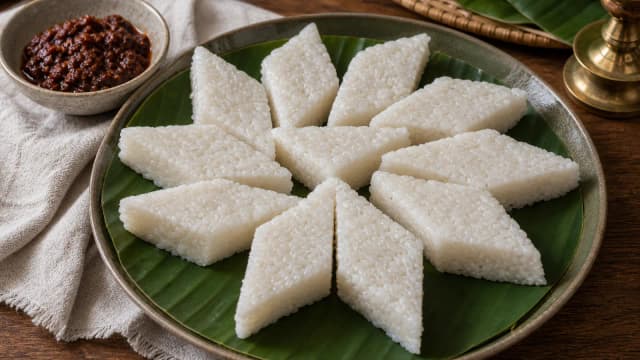
Kiribath (Kiri Bath)
Scan to open on your phone
Nutrition
Estimated values, per serving.
About This Dish
Kiribath simply means 'milk rice' in Sinhala: kiri is milk, bath is rice. The milk is coconut, not dairy. The rice cooks soft, gets folded with thick, first-press coconut milk until creamy and holding together, then it's pressed into a flat slab and cut on the diagonal into neat diamonds. Nothing fancy, and that's exactly the point. It's plain, comforting, quietly rich, a gently sweet canvas for whatever you serve alongside.
No dish carries more meaning on the island. Kiribath marks beginnings. It's the first thing cooked in a new home, the New Year morning breakfast, the first-of-the-month dish for good luck, and often the first food a baby tries. Cooking a pot of milk rice is a small ritual of hope, a way of saying 'may this go well'. That's why you see it at weddings, religious occasions, any fresh start.
For all the ceremony, kiribath is everyday food too. You eat it warm or at room temperature, picking up the diamonds by hand, with the heat and tang of lunu miris cutting through the creamy rice, or a smear of dark kithul treacle or jaggery if you like it sweet. Sweet or savoury, the contrast is the whole point: mild, soft rice on one side, a bright, punchy partner on the other.
Why Coconut, Not Cow's Milk?
Despite the name, there's no dairy in kiribath. The 'milk' is coconut milk, traditionally the thick, first extraction pressed from freshly grated coconut. That's what turns plain boiled rice creamy, glossy and just rich enough to hold together when pressed, and it keeps the dish dairy-free and naturally vegan. Full-fat tinned coconut milk works perfectly well if you're not pressing your own.
The rice matters too. Short-grain or medium-grain white rice, often Sri Lankan samba, gives that soft, slightly sticky texture that lets kiribath set into sliceable diamonds. Long-grain rice like basmati stays too separate and won't hold its shape. Whatever you use, cook the rice soft first, then add the thick coconut milk at the end so it enriches the grains instead of boiling away.
What It Should Taste Like
Mild, soft and creamy. Coconut milk gives it gentle sweetness and richness, and there's just enough salt. It's a plain, comforting canvas that needs something sharp against it, like fiery lunu miris.
Ingredients
This recipe makes 6 servings. Change the number and every amount below updates with it. Substitutes for hard-to-find items are in the sidebar.
The US button converts grams, millilitres and centimetres to ounces, cups and inches. Spoon measures stay exactly as they are.
Open this in the recipe converter
- White rice (samba or short-grain)rinsed well2 cups
- Water2½ cups
- Thick coconut milkor full-fat tinned1 cup
- Salt1 tsp
Method
Follow these 5 steps. Each one explains not just what to do, but why it matters.
Ready to Start Cooking?
The screen shows one step at a time, with just the ingredients that step needs at your serving count, a timer you can tap, and your phone kept awake.
- 01
Cook the Rice Soft
Rinse the rice well. Cook it with the water, covered, over low heat until soft and all the water is absorbed, about 15-20 minutes. It should be a touch softer than rice you'd serve plain.
Kiribath needs rice cooked a little past fluffy, soft enough to mash slightly and bind together. That's what lets it set into sliceable diamonds. Rinsing first removes loose starch so it doesn't turn gluey. A rice cooker is ideal here; otherwise keep the heat low and the lid on so it steams gently instead of catching on the base.

Tip: Use short-grain or samba rice. Long-grain rice like basmati stays separate and won't hold its shape when pressed.
- 02
Add the Thick Coconut Milk
Stir the salt into the thick coconut milk, then pour it over the cooked rice and mix gently but properly, so every grain gets coated.
Adding the coconut milk at the end, to rice that is already cooked, is the whole trick. It enriches the rice and turns it creamy without the fat splitting or boiling away, which is what would happen if you cooked the rice in coconut milk from the start. Stir until the rice looks glossy and a little wet. It will firm up as it cooks down and cools.

Tip: Use thick, first-press or full-fat coconut milk. Light coconut milk will not give you the richness or help it set.
- 03
Cook It Down
Put the pan back on low heat and cook, stirring, for 3-5 minutes until the coconut milk is absorbed and the mixture is thick, creamy and pulling together.
That short cook drives off excess moisture so the kiribath sets firm enough to slice, and it lets the coconut soak right into the grains. Keep stirring so the bottom doesn't catch and the heat stays even. You're ready when it holds together in a mass and a spoon dragged through leaves a clean trail for a second.

Tip: Don't let it dry out completely. It should still look moist and creamy in the pot, because it firms up a lot as it cools.
- 04
Press and Shape
Tip the hot rice onto a flat plate or tray and press it down firmly into an even slab about 2 cm thick. Smooth the top with the back of a spoon or a banana leaf.
Pressing while it is hot is what gives kiribath its clean, set shape. Compact it well so there are no air gaps, or the diamonds will crumble when you cut them. Traditionally it is smoothed and even cut on a banana leaf, which gives a faint, grassy aroma. A flat plate or lined tray works just as well.

Tip: Wet the back of the spoon, or your hands, with a little water or coconut milk so the rice doesn't stick as you press and smooth it.
- 05
Cut into Diamonds
Let it cool and set for 10-15 minutes, then cut into the traditional diamonds: straight lines one way, then diagonal lines across. Serve with lunu miris.
Letting it rest firms the slab so the pieces hold their edges. The diamond shape is traditional and practical, and the diagonal cuts give you neat, equal pieces you can lift by hand. Serve kiribath warm or at room temperature, never piping hot, with something sharp alongside to balance its mild, creamy richness.

Tip: Wipe the knife clean between cuts for tidy diamonds, and serve with lunu miris, seeni sambol, or a little jaggery or treacle.
Common Mistakes to Avoid
- Using long-grain rice like basmati, which stays separate and won't hold the diamond shape.
- Cooking the rice in coconut milk from the start, which can split. Add the thick coconut milk at the end.
- Letting it dry out in the pot, so it turns stiff and crumbly instead of creamy.
- Not pressing it firmly while hot, so the diamonds fall apart when cut.
Serving Ideas
- With lunu miris, the classic fiery onion and chilli sambol, for the traditional creamy-against-hot contrast.
- With seeni sambol or katta sambol for a milder, sweeter pairing.
- With a little kithul treacle or jaggery for a sweet breakfast version.
Building a whole plate around it? Start from our beginner rice and curry menu, which sets out what to cook alongside it and in what order.
Storage and Make-Ahead
Best eaten the day it is made, warm or at room temperature. It keeps a day, covered, in the fridge and firms up further. Bring it back to room temperature before serving. It does not freeze or reheat well, as the texture turns hard.
Two Ways to Cook It
Cook the rice in a rice cooker, stir in tinned full-fat coconut milk and salt at the end, then press into a lined tray and cut. It's a really reliable method.
Use Sri Lankan samba rice and thick milk pressed from fresh coconut, cook it in a clay pot, then shape and cut it on a banana leaf for the traditional aroma and finish.
Lighter and Healthier Version
Kiribath is simple, plant-based food, but it's rich with coconut and built on white rice, so it's worth eating in modest pieces. A few tweaks make it lighter or fit it to different needs.
Naturally Dairy-Free and Vegan
The 'milk' is coconut, not dairy, so kiribath suits dairy-free and vegan eaters exactly as it is. No swaps needed.
Try Red or Brown Rice
Swap white rice for Sri Lankan red rice (or brown rice) and you get more fibre and a nuttier flavour. It sets a little less neatly, but tastes wonderful, especially with lunu miris.
Lighten the Coconut
You can use part light coconut milk to cut the fat, but keep at least some full-fat so it still binds and sets. It'll be a touch softer.
Keep It Savoury
Skip the treacle and jaggery and serve it with lunu miris or a sambol instead. That's a lower-sugar, savoury plate.
Mind the Portion
Kiribath is rich and filling, so a couple of diamonds with a sharp sambol is plenty. Let the accompaniment, not the quantity, carry the meal.
Frequently Asked Questions
Kiribath is Sri Lankan milk rice: short-grain rice cooked soft and enriched with thick coconut milk and a little salt, then pressed flat and cut into diamonds. It's mild, creamy and naturally vegan, the traditional dish for new beginnings and celebrations.
Cooked It? Tell Us How It Went
Your notes on this kiribath help the next person get it right: what you swapped, what you would do differently, where the recipe should have warned you. Tap a star if you are in a hurry, or write a few lines if you have a minute.
You Might Also Like


Sri Lankan Home Cooking Starter Pack
40 authentic Ceylon recipes made simple for foreign kitchens: spice guide, pantry checklist, substitute guide, 7-day meal plan and printable shopping lists.