Seeni Sambola
Seeni Sambol (Seeni Sambola)
Also known as Onion Sambol, Sweet Onion Relish, Caramelised Onion Sambol, Sini Sambol
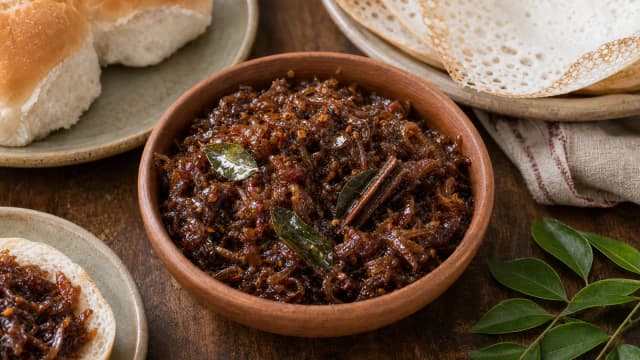
Seeni sambol, sometimes written seeni sambola or onion sambol and known in English as sweet onion relish, is slow-cooked caramelised red onion spiced with chilli, soured with tamarind and rounded out with a little jaggery. Dark, sticky and sweet-hot, it's the famous filling in seeni sambol buns and the calm, sweet contrast on a rice and curry plate. It takes patience to cook down, but a jar keeps for ages and, honestly, it only gets better as it sits.

Also in our Muslim Sri Lankan collection.
Sweet-spicy caramelised onion relish: the jammy filling for buns and the calm, sweet contrast on a fiery curry plate.
- Total time
- 55 min
- 15 min prep · 40 min cook
- Serves
- 6 people
- Difficulty
- Medium
- Spice level
- Medium
- Country help
- USA · UK · AU · CA substitutes included
CeylonCooking
ceyloncooking.com/recipes/seeni-sambol
Seeni Sambol (Seeni Sambola)
Scan to open on your phone
Nutrition
Estimated values, per serving.
About This Dish
Ask for seeni sambol in a Sri Lankan home and you'll be handed something that looks almost like a dark jam: a glossy, mahogany tangle of onions coaxed down low and slow until it's sweet, sticky and deeply savoury. Seeni means sugar in Sinhala and sambol is the broad family of relishes and accompaniments, so the name is literally 'sugar sambol'. You'll also hear it called onion sambol or simply sweet onion relish, but it's the same patient, caramelised condiment every time.
It's a dish that belongs to the Malay and Moor communities of the island as much as to the wider Sri Lankan table, and it earns its keep precisely because it lasts. Cooked properly, a batch sits happily for a week or more and works its way into everything: spooned beside string hoppers and milk rice at breakfast, packed into soft buns for a lunchbox, tucked into festive parcels alongside yellow rice and a row of curries. Where most sambols are bright and fresh, seeni sambol is the slow, jammy one, the keeping sambol that rewards the cook who refuses to hurry.
What makes a good seeni sambol is restraint and time. The onions have to cook gently until they collapse into something almost confit, sweet and silky rather than scorched. Then comes the balance that defines it: chilli heat tempered by the natural sugar of the onions and a little jaggery, all pulled back from cloying by a sharp hit of sour tamarind. Whole spices like cinnamon, cardamom and cloves, fried in coconut oil with curry leaves and pandan, sit quietly underneath. When it's right, it's glossy, concentrated and impossible to stop eating straight from the spoon.
Why the Onions Are Everything
Seeni sambol lives or dies on its onions, and red onions are the classic choice for a reason. They carry more natural sugar than most cooking onions, and that sugar is the engine of the whole dish. Cooked low and slow, those sugars caramelise into the deep, jammy sweetness that gives the relish its name long before you add any actual sugar. Slice them thinly and use far more than feels sensible, because they collapse dramatically as they cook, melting down to a fraction of their raw volume.
The little knob of jaggery near the end doesn't just sweeten; it adds a smoky, treacly caramel depth that plain white sugar can't match, the same unrefined palm sugar that lifts so many Sri Lankan sweets. It works hand in hand with the tamarind, the sweetness and the sourness leaning against each other so the finished sambol tastes layered and balanced rather than flatly sweet. Get the onions deep and dark first, then let the jaggery and tamarind do the final rounding, and you've got the real thing.
What It Should Taste Like
Deeply caramelised and jammy: sweet up front, then a slow build of chilli heat, all balanced by a clean sour note from the tamarind. Glossy, dark and concentrated, with a savoury whisper of whole spice underneath.
Ingredients
This recipe makes 6 servings. Change the number and every amount below updates with it. Substitutes for hard-to-find items are in the sidebar.
The US button converts grams, millilitres and centimetres to ounces, cups and inches. Spoon measures stay exactly as they are.
Open this in the recipe converter
- Red onionsthinly sliced; the more the better5 large
- Coconut oil3 tbsp
- Curry leaves1 sprig
- Pandan (rampe)5 cm piece
- Cinnamon1 stick
- Cardamombruised3 pods
- Cloves3
- Chilli powder1-2 tbsp
- Maldive fish flakesoptional1 tbsp
- Tamarind paste1 tbsp
- Sugar or jaggery2 tbsp
- Saltto taste
Method
Follow these 5 steps. Each one explains not just what to do, but why it matters.
Ready to Start Cooking?
The screen shows one step at a time, with just the ingredients that step needs at your serving count, a timer you can tap, and your phone kept awake.
- 01
Start the Onions
Heat the coconut oil and add the curry leaves, pandan, cinnamon, cardamom and cloves. Once they sizzle and the kitchen starts to smell good, stir in the sliced onions with a pinch of salt.
This first minute sets the whole flavour foundation. Frying the whole spices in oil before the onions go in is called tempering, and it pulls their aromatic oils out into the fat so every onion that follows gets seasoned from the start. You'll know it's ready when the curry leaves crackle and curl and the kitchen fills with the warm scent of cinnamon and cloves. And that pinch of salt on the onions isn't just for taste; it draws out their moisture and helps them soften and break down faster.

Tip: Bruise the cardamom pods with the flat of a knife before they go in. A cracked pod releases far more fragrance than a whole sealed one.
- 02
Caramelise Slowly
Cook over medium-low heat, stirring often, for 25-30 minutes until the onions are deep golden-brown, soft and sweet. Don't rush this. Honestly, this stage is the whole dish.
This is the step that separates real seeni sambol from a quick, sad imitation, and the only skill it asks for is patience. Over gentle heat the onions slowly release their water, then their natural sugars begin to caramelise, turning the pile from pale and sharp to dark, jammy and sweet. Push the heat to speed things up and you'll scorch the edges and get bitterness instead of sweetness. Listen for a soft, steady sizzle rather than an aggressive spitting, and stir often so nothing catches on the base of the pan.

Tip: If the onions start sticking or browning too fast, splash in a tablespoon of water and lower the heat. It buys you time and lifts any caramel off the pan.
- 03
Spice It
Stir in the chilli powder and the Maldive fish, if you're using it, and cook for about 2 minutes until everything is fragrant and the colour deepens.
Adding the chilli powder now, into hot oil and onions rather than at the start, lets it bloom: the heat wakes up the chilli, deepens its colour to a rich brick-red and rounds off any raw, dusty edge. The Maldive fish melts into the mix and brings a deep savoury backbone that balances all the sweetness to come. Keep it moving in the pan, because chilli powder scorches in seconds once it hits direct heat, and burnt chilli turns acrid fast.

Tip: Start with the smaller amount of chilli powder. You can always add more at the balancing stage, but you can't take heat back out once it's in.
- 04
Sweet and Sour
Add the tamarind paste, the sugar or jaggery and a splash of water. Stir and cook for another 8-10 minutes until the mixture turns sticky, jammy and glossy.
Here the relish finds its signature push and pull. The tamarind brings a clean, fruity sourness that stops the sambol from tasting flatly sweet, while the jaggery deepens the caramel notes the onions have already built. The splash of water helps the sugar dissolve evenly and lets everything simmer together into one glossy mass rather than sitting in separate pockets. Watch for the moment the mixture stops looking wet and starts to cling to the spoon in a dark, shiny sheet; that's when it's properly concentrated.

Tip: Dissolve hard jaggery in the splash of warm water first. It melts into the sambol smoothly instead of leaving stubborn lumps.
- 05
Balance
Taste and adjust the sweet, sour, salt and heat until it hits all four at once. Take it off the heat and let it cool before storing.
This final taste is where a good cook earns their reputation. Seeni sambol should land sweet, sour, salty and hot in roughly equal measure, with no single note shouting over the others. Too sweet? A little more tamarind sharpens it. Too flat? A pinch of salt wakes everything up. Too mild? A touch more chilli builds the heat. Remember that the flavours concentrate and settle as it cools, so judge it slightly warm and trust that it will only deepen overnight in the jar.

Tip: Cool it completely before sealing in a jar. Trapping steam in a warm container is the fastest way to shorten how long it keeps.
Common Mistakes to Avoid
- Rushing the onions on high heat so they scorch and turn bitter instead of caramelising into sweetness.
- Skimping on onions; they reduce dramatically, so always use more than feels sensible.
- Forgetting the sour element, as the tamarind is what keeps it from tasting sickly sweet.
- Adding the chilli powder to direct heat and walking away, so it burns and turns acrid in seconds.
- Rushing the final cook so the sambol stays loose and wet instead of sticky, jammy and glossy.
- Sealing it in a jar while still warm, which traps steam and shortens how long it keeps.
Serving Ideas
- Stuffed into soft buns to make the classic seeni sambol buns.
- Spread thickly on toast or eaten with bread and butter for a quick, savoury-sweet snack.
- As a sweet contrast on a rice and curry plate, beside fiery curries and a fresh sambol.
- Spooned alongside string hoppers, hoppers or milk rice at breakfast.
- Tucked into a wrap or sandwich as a punchy relish in place of chutney.
Seeni Sambol is one of the courses in our sri lankan breakfast menu, if you want the whole plate rather than one dish.
Storage and Make-Ahead
Keeps a week or more in a sealed jar in the fridge, and the flavour actually improves after the first day as it settles. It freezes beautifully for up to 2 months. Always use a clean, dry spoon and let it cool completely before sealing to keep the batch fresh.
Two Ways to Cook It
Use dark brown sugar instead of jaggery, skip the Maldive fish, and just be patient with the onions over low heat. That patience really is the only skill the dish asks for.
Fry whole spices and curry leaves in coconut oil, use jaggery and Maldive fish, and cook the onions down until they're truly dark, sticky and almost a chutney before balancing the sweet, sour, salt and heat.
Lighter and Healthier Version
Seeni sambol is naturally rich with oil and sugar, but it takes well to a lighter hand without losing its jammy, sweet-hot character. A few small changes cut the fat and sugar while keeping that deep, caramelised onion flavour.
Less Oil
Caramelise the onions in a good non-stick pan with just 1 tbsp of oil and a small splash of water when they start to stick. They still collapse and brown, you simply use a fraction of the fat.
Let the Onions Do the Sweetening
Properly caramelised onions are already deeply sweet. Halve the added sugar or jaggery and let their natural sweetness carry the dish, balanced as always with the tamarind.
Lower the Salt
Skip the Maldive fish and go easy on added salt, leaning on the chilli, tamarind and whole spices for flavour instead. It comes out a gentler, lower-sodium relish.
Frequently Asked Questions
Seeni sambol is a Sri Lankan caramelised onion relish that's sweet, spicy and sour all at once. The name means 'sugar sambol' in Sinhala, and it's made by slow-cooking red onions with chilli, tamarind and a little jaggery until they turn dark, sticky and jammy. It's best known as the filling in seeni sambol buns and as a sweet contrast on a rice and curry plate.
Cooked It? Tell Us How It Went
Your notes on this seeni sambol help the next person get it right: what you swapped, what you would do differently, where the recipe should have warned you. Tap a star if you are in a hurry, or write a few lines if you have a minute.
You Might Also Like


Sri Lankan Home Cooking Starter Pack
40 authentic Ceylon recipes made simple for foreign kitchens: spice guide, pantry checklist, substitute guide, 7-day meal plan and printable shopping lists.