Wambatu Moju
Eggplant Moju (Brinjal Moju)
Also known as Aubergine Moju
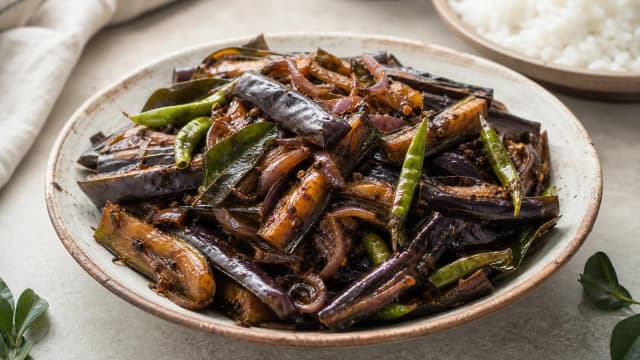
Wambatu moju, or eggplant moju, or brinjal moju, is fried eggplant tossed in a sweet, sour and spicy pickle of mustard, vinegar, chilli and sugar, with fried onion and green chilli. It's sticky, tangy and a little fiery. This Sri Lankan brinjal pickle shows up on festive tables and keeps for days, and the flavour only gets better.

Also in our Southern collection.
Sweet-sour pickled fried eggplant. It's properly addictive, keeps for days, and disappears off the plate first.
- Total time
- 45 min
- 20 min prep · 25 min cook
- Serves
- 6 people
- Difficulty
- Medium
- Spice level
- Medium
- Country help
- USA · UK · AU · CA substitutes included
CeylonCooking
ceyloncooking.com/recipes/eggplant-moju
Eggplant Moju (Wambatu Moju)
Scan to open on your phone
Nutrition
Estimated values, per serving.
About This Dish
Ask for wambatu moju in a Sri Lankan home and you'll get a small dish of dark, glossy fried eggplant that tastes like nothing else on the table. Wambatu means eggplant and moju means pickle, so the name is just 'eggplant pickle' in English. You'll also see it written as brinjal moju or aubergine moju, depending on what you call the vegetable. Whatever you call it, it's the same sweet, sour and spicy tangle of soft fried eggplant, onion and green chilli.
Moju is celebration food. It turns up at weddings, almsgivings and New Year tables, tucked beside yellow rice and a row of curries, and it's almost always the first thing to vanish from the plate. Part of the reason is practical. Because it's really a pickle, a batch can be made days ahead and it only improves while it waits, which is why it became a fixture in lamprais parcels and festive spreads. Every cook guards their own balance of sugar and vinegar, and friendly arguments over the 'right' sweetness are part of the fun.
What makes a good moju is contrast. The eggplant is fried until silky and almost melting, then folded into a syrupy mustard and vinegar glaze that's sharp, a little sweet and properly hot with chilli. Caramelised onion rounds it out and curry leaves give it that back note you can't miss. Served cool or at room temperature with warm rice and curry, it wakes up everything around it.
Eggplant, Brinjal or Aubergine?
Eggplant, aubergine and brinjal are three names for one vegetable. Americans say eggplant, the British and French say aubergine, and across South Asia and Sri Lanka it's brinjal, or wambatu (sometimes written batu) in Sinhala. The 'eggplant' name comes from early European varieties that were small, white and egg-shaped, nothing like the long purple ones most of us cook with now. It was first domesticated in South Asia thousands of years ago, which feels right for a dish like moju.
Botanically it's actually a fruit, a berry from the nightshade family alongside tomatoes and peppers, even though we cook it as a vegetable. It's earned the 'king of vegetables' nickname in South Asian kitchens, and it's good to eat: low in calories, high in fibre and rich in antioxidants, including nasunin in that glossy purple skin. So it's worth leaving the skin on.
What It Should Taste Like
Silky fried eggplant in a glossy sweet-sour-hot glaze. Mustardy tang, caramelised onion, and green chilli bite. Intense and moreish.
Ingredients
This recipe makes 6 servings. Change the number and every amount below updates with it. Substitutes for hard-to-find items are in the sidebar.
The US button converts grams, millilitres and centimetres to ounces, cups and inches. Spoon measures stay exactly as they are.
Open this in the recipe converter
- Eggplant (aubergine)cut into batons or wedges2 large
- Ground turmeric½ tsp
- Salt1 tsp
- Oilfor frying
- Red onionsliced1
- Green chillieshalved3
- Garlicsliced3 cloves
- Curry leaves1 sprig
- Mustard seedsground, or 1 tsp mustard paste1 tsp
- Chilli powder1 tsp
- Vinegar3 tbsp
- Sugar2 tbsp
- Maldive fish flakesoptional1 tbsp
Method
Follow these 5 steps. Each one explains not just what to do, but why it matters.
Ready to Start Cooking?
The screen shows one step at a time, with just the ingredients that step needs at your serving count, a timer you can tap, and your phone kept awake.
- 01
Salt the Eggplant
Toss the eggplant batons with the turmeric and salt. Leave them to sit for 15 minutes, then pat them thoroughly dry.
This is the step almost everyone skips, and it's the single thing that separates silky moju from a greasy, sad version. Eggplant is mostly water held in a sponge of air pockets. Salt pulls that moisture to the surface so the flesh softens and stops drinking oil the moment it hits the pan. Within a few minutes you'll see beads of water sitting on the batons. The turmeric works alongside it, seasoning the flesh and laying down that warm golden undertone before any frying begins.

Tip: Pat them really dry before frying. Any surface water will spit and steam instead of crisping.
- 02
Fry the Eggplant
Deep fry or shallow fry the eggplant until deep golden and soft, then drain on paper. Fry the sliced onion and green chilli briefly in the same oil and set them aside.
Don't rush this. You're after a deep, almost mahogany gold and a texture so tender the pieces nearly melt when you press them. Under-fried eggplant stays spongy and slightly bitter. Fried properly, it turns sweet and creamy inside a crisp edge. Work in batches so the oil stays hot and the eggplant browns rather than stews in a crowded pan. The onion and chilli need only a quick turn through the oil, just enough to soften their raw bite and pick up a little colour.

Tip: Test the oil with one baton first. It should sizzle steadily on contact, not violently and not feebly.
- 03
Make the Moju Sauce
In a pan with a little oil, fry the curry leaves and garlic, then stir in the ground mustard, chilli powder, vinegar, sugar, Maldive fish and a splash of water. Simmer until glossy and syrupy.
This is where moju gets its personality. The instant the curry leaves hit the oil they crackle and perfume the whole kitchen, and the garlic turns nutty and golden. When the vinegar goes in, it'll smell sharp and bracing. That's exactly right. It mellows as the sugar dissolves and the sauce reduces to a glossy, spoon-coating glaze. Keep tasting. You're chasing a balance where sweet, sour and hot all land at once and none of them takes over.

Tip: Grind your own mustard seeds if you can. That fresh, pungent heat is the soul of the dish. Ready-made paste is a fine but milder shortcut.
- 04
Fold It All Together
Add the fried eggplant, onion and green chilli to the sauce and fold gently until everything is coated.
Fold, don't stir hard. The eggplant is fragile now. The goal is to keep the pieces whole, each one slicked in that dark, shiny glaze rather than crushed into a paste. A couple of minutes of slow turning over low heat is all it takes for the sauce to cling and for every baton to drink up the flavour.

Tip: Pull it off the heat while the pieces still hold their shape. They keep softening in the residual warmth.
- 05
Rest, Then Serve
Take the pan off the heat and let the moju sit before serving. It tastes even better after a few hours as the flavours settle in.
Moju is one of those rare dishes that rewards patience. Straight from the pan it's already good, but give it a few hours, or better still overnight in the fridge, and it transforms. The vinegar and mustard work their way deep into the eggplant, the edges begin to pickle, and the whole thing turns rounder and more complex. That's exactly why cooks make it ahead for celebrations, and why the jar at the back of the fridge somehow tastes best on day three.

Tip: Serve it cool or at room temperature, not piping hot. Moju is meant to be the bright, sharp note against warm rice and curry.
Common Mistakes to Avoid
- Skipping the salting and drying. The eggplant absorbs too much oil and goes soggy.
- Under-frying. The eggplant should be deep golden and silky before it meets the sauce.
- Skipping the sugar-vinegar balance. Moju is all about sweet-sour-hot.
Serving Ideas
- As a side on any rice-and-curry plate.
- With yellow rice and a meat curry at a celebration.
- As a tangy contrast to creamy dhal.
Eggplant Moju is one of the courses in our vegetarian rice and curry menu and our sri lankan party menu menu, if you want the whole plate rather than one dish.
Storage and Make-Ahead
Keeps a week refrigerated and improves with time. It's practically a pickle. Freezes for 1 month.
Two Ways to Cook It
Shallow-fry the eggplant in a non-stick pan, use a little Dijon for the mustard note, and skip the Maldive fish.
Deep-fry the eggplant, use freshly ground mustard seeds and Maldive fish, and let it pickle overnight before serving.
Lighter and Healthier Version
Moju is traditionally deep-fried, but lighter methods work beautifully. It's naturally plant-based and cholesterol-free if you leave out the optional Maldive fish, so a few small changes give you a heart-friendly side that still has the sweet-sour-hot character that makes it moju.
Air Fryer (Least Oil)
Toss the salted, well-dried batons with just 1 tbsp of oil and air-fry at 200C/400F for 12 to 15 minutes, shaking the basket halfway, until deep golden. That's around 80% less oil than deep-frying and the easiest route to a low-fat moju.
Oven-Roasted
No air fryer? Spread the batons on a lined tray, brush lightly with oil, and roast at 220C/425F for 20 to 25 minutes, turning once, until soft and caramelised at the edges.
Cut the Sugar
Moju doesn't need to be very sweet. Halve the sugar and let the caramelised onion's natural sweetness carry it, or skip refined sugar entirely and use dates instead.
Sweeten with Dates
Blend 3 to 4 soft, pitted dates into the sauce in place of the sugar. They melt into the glaze, add natural sweetness and a little fibre, and give a deeper caramel note. That's the well-loved brinjal moju with dates variation.
Lighter Glaze
Make the sauce in a non-stick pan with a teaspoon of oil and an extra splash of water, so the glaze stays glossy with far less fat.
Naturally Cholesterol-Free
Left vegan, moju has zero dietary cholesterol. Use a heart-healthy oil like rice bran or olive oil, keep the oil and salt modest, and you have a side that suits most heart-conscious diets.
Watch How to Make It
Read the steps already? Watch the whole process from start to finish to see the texture, colour and timing at each stage.
How to Make Sri Lankan Eggplant Moju (Wambatu Moju)
Narrated in English
A step-by-step walk-through of frying the eggplant and building the sweet, sour and spicy moju glaze with mustard, vinegar and chilli.
Filmed by Rinoza's Recipes. We did not make this video, we are linking to theirs.
Watch on YouTubeFrequently Asked Questions
Wambatu moju translates as eggplant pickle. Wambatu (sometimes written batu) is the Sinhala word for eggplant, also called brinjal or aubergine, and moju means a sweet-sour pickle. So batu moju, wambatu moju and eggplant moju all name the same Sri Lankan side dish: fried eggplant in a tangy, spicy mustard and vinegar glaze.
Cooked It? Tell Us How It Went
Your notes on this eggplant moju help the next person get it right: what you swapped, what you would do differently, where the recipe should have warned you. Tap a star if you are in a hurry, or write a few lines if you have a minute.
You Might Also Like


Sri Lankan Home Cooking Starter Pack
40 authentic Ceylon recipes made simple for foreign kitchens: spice guide, pantry checklist, substitute guide, 7-day meal plan and printable shopping lists.