Jaffna Kathirikkai Sambal (Wambatu Sambol)
Also known as Eggplant Sambol, Brinjal Sambol
Kathirikkai sambal, wambatu sambol in Sinhala, is the Jaffna way with eggplant: you fry cubes until golden, then crush them in a bowl with roughly chopped onion, coriander leaves, chilli flakes, salt and two spoons of thick tamarind water. No cooking after the frying, no coconut, no gravy. In Jaffna homes this is breakfast, eaten with plain white rice, and it is sour and salty and hot enough that rice and this alone is a meal. Tamarind is what makes it taste right. Lime works and gives you a different, brighter sambal, and a spoon of Maldive fish or dried shrimp takes it somewhere else again.

Also in our Jaffna collection.
Fried eggplant crushed with raw onion, chilli flakes and thick tamarind water. This is the Jaffna morning sambal that carries a plate of plain rice all on its own.
- Total time
- 30 min
- 15 min prep · 15 min cook
- Serves
- 4 people
- Difficulty
- Beginner
- Spice level
- Medium
- Country help
- USA · UK · AU · CA substitutes included
CeylonCooking
ceyloncooking.com/recipes/kathirikkai-sambal
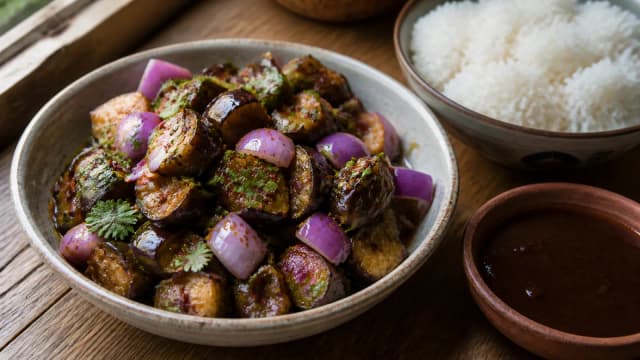
Jaffna Kathirikkai Sambal
Scan to open on your phone
Nutrition
Estimated values, per serving.
About This Dish
There are two families of Sri Lankan sambal. One is pounded raw, like lunu miris. The other is built from something cooked, and kathirikkai sambal belongs there: the eggplant is fried first, then everything else goes in raw and cold around it. That contrast is the whole dish. Hot, oily, collapsing eggplant meets crunchy raw onion and sharp tamarind, and the two don't fully blend. You want to still find pieces of onion in it.
In Jaffna this is morning food. A plate of plain white rice, a spoon of this on the side, and that's breakfast. Nothing else needed. Rice at breakfast surprises people who grew up with hoppers and string hoppers, but it's normal across the north, and a sambal like this one is exactly why it works: it's salty, sour and hot enough to season a whole plate of plain rice.
The tamarind is the argument. You dissolve a piece in a little water until you have a thick, dark juice, and two spoons of that goes into the bowl. Lime juice will do the same job on paper, both are sour, both cut the oil. They don't taste the same. Tamarind brings a heavy, almost date-like sourness that sits under the eggplant, while lime is thin and bright and sits on top of it. Both are worth making. If you're making it for the first time, make the tamarind one.
The crushing at the end isn't mixing. You press everything together with your hand or the back of a spoon so the eggplant breaks a little and drinks the tamarind, the onion bruises just enough to let its juice out, and the whole thing binds into something you can spoon. Overdo it and you have eggplant paste. A few presses is all it takes.
Tamarind or Lime, and What Changes
Tamarind is the one this sambal is built around. Soak a piece the size of a walnut in about 4 tablespoons of warm water, squash it with your fingers until the water goes dark and thick, and strain out the seeds and fibre. What you want is a concentrated juice, not tamarind tea: thin it too far and the sambal goes watery and the sourness disappears. Two tablespoons of that thick juice is enough for two eggplants. Shop-bought tamarind concentrate works too, though it's usually much stronger, so start with a teaspoon and taste.
Lime is the everyday substitute and it makes a genuinely different sambal rather than a worse one. It's sharper and cleaner, it hits the front of your tongue instead of the back, and it fades faster, so a lime sambal wants eating within the hour. Use the juice of half a lime for the same quantity, add it right at the end, and taste before you add more. What lime can't give you is the dark, fruity depth tamarind has, which is why the tamarind version is the one people in Jaffna make.
What It Should Taste Like
Sour comes first, then salt, then a heat that builds. The eggplant goes soft and oily inside its browned skin, the raw onion stays crunchy and sweet against it, and the coriander lifts the whole thing. It should taste strong enough that a spoonful seasons a mouthful of plain rice, not so mild that you need three.
Ingredients
This recipe makes 4 servings. Change the number and every amount below updates with it. Substitutes for hard-to-find items are in the sidebar.
The US button converts grams, millilitres and centimetres to ounces, cups and inches. Spoon measures stay exactly as they are.
Open this in the recipe converter
To Fry
- Eggplantsabout 500 g, cut into 2 cm cubes2 medium
- Cooking oila neutral oil, or coconut oilenough to deep fry
The Sambal
- Tamarindabout 20 g, soaked in 4 tbsp warm watera walnut-sized piece
- Red onionsabout 120 g, chopped into rough 1 cm pieces, not fine2 medium
- Coriander leavesroughly chopped, stalks and alla small handful
- Chilli flakeskaeli miris, to taste1 to 2 tsp
- Saltstart here and taste at the end3/4 tsp
- Maldive fish or dried shrimpoptional, see step 51 tbsp
Method
Fifteen minutes of frying, five of mixing, and the only real decision is tamarind or lime. Get the tamarind soaking before the oil goes on and everything else just falls into place.
Ready to Start Cooking?
The screen shows one step at a time, with just the ingredients that step needs at your serving count, a timer you can tap, and your phone kept awake.
- 01
Soak the Tamarind First
Put the tamarind in a small bowl, pour over about 4 tablespoons of warm water, and squash it with your fingers until the water goes dark and thick. Strain out the seeds and fibre, then set the tamarind juice aside.
Do this before you heat the oil, because tamarind needs a few minutes of sitting and you don't want to stop and do it while the eggplant is frying. Work it properly with your fingers until the pulp has come off the seeds, and keep the water mean. You're after thick, dark and slightly syrupy, roughly the consistency of thin cream. If it looks like weak tea, you've used too much water and the sambal will taste flat. Making the lime version instead? Skip this step entirely and squeeze half a lime at the end.

Tip: Use warm water, not hot. Hot water pulls more of that woody bitterness from the shell fragments.
- 02
Cut the Eggplant into Cubes
Cut the eggplants into cubes of about 2 cm, skin on. Keep them roughly the same size so they fry evenly.
Skin on, always. It's what holds each cube together once the inside collapses, and without it you get mush the moment you crush the sambal. Two centimetres is the size that works: smaller cubes go greasy and disappear into the mixture, bigger ones stay raw in the middle by the time the outside is dark. No need to salt and drain the eggplant first, the way some recipes ask, because the frying drives the water off anyway.

Tip: Cut them just before you fry. Cut eggplant browns quickly once it sits, and you lose that pale flesh that fries up golden.
- 03
Fry Them Until Golden Brown
Heat enough oil for deep frying, then fry the cubes until they're golden brown all over and soft in the middle. Lift them out and drain on kitchen paper.
The oil has to be properly hot before anything goes in, or the eggplant sits there soaking up oil instead of sealing. Fry in batches and give each piece room, because a crowded pan drops the temperature and you end up with pale, oily cubes. You want a real brown here, not a timid gold: the browning is where the sweetness comes from, and it's what stands up to the tamarind later. Press one with a spoon, it should give completely. Then drain them well, since oil left on the cubes turns the finished sambal heavy.

Tip: Deep frying is the traditional route, and it does taste better, but a wide pan with a centimetre of oil, turning the cubes as they colour, gets you most of the way there with far less oil.
- 04
Put the Raw Ingredients in a Bowl
In a mixing bowl, combine the chopped onion, coriander leaves, chilli flakes and salt.
Chop the onion into rough centimetre pieces. Fine chopping is the mistake here. It disappears into the sambal and you lose the crunch that makes the dish work against all that soft eggplant. Red onions are sweeter and less aggressive raw than white ones, which matters because nothing is going to cook them. Chilli flakes go in raw too, so they stay hot and slightly rough rather than smooth like chilli powder would.

Tip: Rub the salt and chilli flakes into the onion with your fingers for a moment before anything else joins them. The onion softens just enough to take the seasoning better.
- 05
Add the Fried Eggplant and the Tamarind
Tip in the fried eggplant while it's still warm, add 2 tablespoons of the thick tamarind juice, and add the Maldive fish or dried shrimp now if you're using it.
Warm eggplant absorbs the tamarind far better than cold, so don't let it sit around while you tidy up. Two tablespoons sounds like very little against 500 g of eggplant. It's enough. The juice is concentrated and the eggplant is soft enough to drink it. The optional additions change the dish rather than improve it. Maldive fish brings a dry, smoky, salty depth that makes the sambal taste older and more savoury. Dried shrimp brings a sweeter, more marine version of the same. Crumble either one small so it distributes. Neither is needed, and both are very good.

Tip: Add the tamarind in two goes and taste in between. Tamarind strength varies a lot between blocks and brands.
- 06
Crush It Together, Gently
Press everything together with your hand or the back of a spoon. Crush the eggplant lightly so it takes up the tamarind and binds with the onion. Taste, adjust the salt, and serve straight away with plain rice.
This isn't stirring. You want a few firm presses that break up some of the cubes and leave others whole, so the sambal holds together but still has texture. The onion should bruise just enough to release its juice. Stop while you can still see what things are. Taste it at the end and be honest about the salt. This is meant to season plain rice, and a shy sambal will taste like nothing next to it. Serve it right away, because the crunch of the raw onion is at its best in the first ten minutes.

Tip: If it tastes sharp and thin rather than round, it usually wants salt, not more tamarind.
Common Mistakes to Avoid
- Frying the eggplant pale instead of properly brown, so it tastes oily and cannot stand up to the tamarind.
- Making the tamarind water too thin, which leaves the sambal watery and flat.
- Chopping the onion fine, so it disappears and the sambal loses its crunch.
- Crushing it into a paste. Some cubes should stay whole.
- Skipping the draining, so the oil goes into the bowl with the eggplant.
- Serving it an hour later. The onion loses its bite and the whole thing sags.
Serving Ideas
- With plain white rice, on its own, the way it's eaten in Jaffna at breakfast.
- On a rice and curry plate as the sour, hot element beside a mild dhal.
- With string hoppers or plain rotti, spooned on the side.
- Alongside a fish curry, where the tamarind in both dishes pulls in the same direction.
Building a whole plate around it? Start from our beginner rice and curry menu, which sets out what to cook alongside it and in what order.
Storage and Make-Ahead
Eat this the day you make it, ideally within the hour. The fried eggplant holds its texture for a while, but the raw onion goes limp and the tamarind pulls water out of everything, so leftovers get soft and watery. If you want a head start, fry the eggplant and make the tamarind juice ahead, keep them separate, and mix the sambal right before you eat. It doesn't freeze.
Two Ways to Cook It
Shallow fry instead of deep frying. A centimetre of oil in a wide pan, turn the cubes until they're brown on most sides. Use tamarind concentrate from a jar, a teaspoon loosened in a spoon of water, and you skip the soaking and straining. Chop the onion coarsely, mix everything with a spoon instead of your hand, and taste for salt before it hits the table.
Deep fry the cubes in coconut oil until they're properly dark, soak a block tamarind by hand and strain it thick, and use kaeli miris instead of chilli powder. Crush it all together by hand in a wide bowl, add a spoon of crumbled Maldive fish, and serve it warm with plain white rice for breakfast.
Lighter and Healthier Version
The frying is where all the fat comes from. Everything else is vegetables, tamarind and salt. So the lighter versions are all about how the eggplant gets cooked, and each one costs you a little of the browning that makes the sambal taste the way it does.
Air Fry the Eggplant
Toss the cubes in a tablespoon of oil and air fry at around 200C until browned, shaking the basket a few times. You lose some deep-fried richness, but you keep the shape and most of the colour, and that's what matters against tamarind.
Roast Them Instead
Spread the cubes on a tray with a little oil and roast hot until the edges catch. It's slower than frying, and the flesh dries more than it collapses, so the texture gets chewier.
Drain Properly
Whichever way you cook them, let the cubes sit on kitchen paper for a minute before they go in the bowl. It's the cheapest fat saving you can make here, and it improves the sambal anyway.
Vegan as Written
The base recipe has no dairy and no fish. Leave out the optional Maldive fish and dried shrimp and it stays fully plant-based.
Frequently Asked Questions
This is Jaffna eggplant sambal. Cubes of eggplant fried until golden, then crushed together in a bowl with roughly chopped raw onion, coriander leaves, chilli flakes, salt and thick tamarind water. Nothing gets cooked after the frying. It's eaten with plain white rice, often at breakfast in Jaffna homes, and it's sour, salty and hot enough to season the rice on its own.
Cooked It? Tell Us How It Went
Your notes on this jaffna kathirikkai sambal help the next person get it right: what you swapped, what you would do differently, where the recipe should have warned you. Tap a star if you are in a hurry, or write a few lines if you have a minute.
You Might Also Like


Sri Lankan Home Cooking Starter Pack
40 authentic Ceylon recipes made simple for foreign kitchens: spice guide, pantry checklist, substitute guide, 7-day meal plan and printable shopping lists.