Sri Lankan Beetroot Curry (Beet Curry)
Also known as Coconut Beetroot Curry
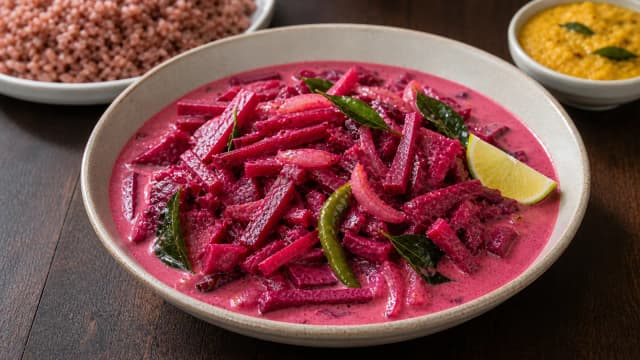
Sri Lankan beetroot curry, also called beet curry or coconut beetroot curry, is beetroot cut into matchsticks or cubes and simmered in coconut milk with onion, garlic, green chilli, curry leaves and warm spices. The beetroot bleeds a proper vivid magenta into the gravy, the coconut milk softens its earthy sweetness, and the chilli keeps it from turning too sweet. Quick, colourful and gently spiced, this beetroot curry is one of the easiest vegetable curries to make and a favourite splash of colour on the rice and curry plate.

A vivid magenta, mildly sweet coconut curry that brings real colour and earthy comfort to any rice and curry plate.
- Total time
- 40 min
- 15 min prep · 25 min cook
- Serves
- 4 people
- Difficulty
- Beginner
- Spice level
- Medium
- Country help
- USA · UK · AU · CA substitutes included
CeylonCooking
ceyloncooking.com/recipes/beetroot-curry
Sri Lankan Beetroot Curry
Scan to open on your phone
Nutrition
Estimated values, per serving.
About This Dish
Ask for beetroot curry in a Sri Lankan home and you get handed something that stops you in your tracks before you taste it. A small dish glowing an almost unreal magenta-purple, sitting bright against the whites and golds of the rest of the plate. Sri Lankans love colour on their rice and curry spread, and beetroot earns its place by being the most vivid thing on the table. It is humble everyday food. Cooked midweek from a couple of beets and a little coconut milk, and it still looks like a celebration.
Beetroot is not an ancient Sri Lankan vegetable the way coconut or jackfruit is. It came in through colonial-era kitchen gardens and the cool hill country around Nuwara Eliya, where the climate suits it. Home cooks did what they always do with a new vegetable: simmered it in coconut milk with curry leaves and chilli until it tasted Sri Lankan. The result is a curry that feels completely at home on the plate. It is mild and sweet enough for children, but green chilli, garlic and that unmistakable back note of curry leaves lift it into something properly savoury.
The thing about beetroot curry is balance. Beetroot is naturally sweet and earthy, and left alone it tastes one-dimensional, almost like dessert. Coconut milk softens and rounds that sweetness. Green chilli and a pinch of chilli powder pull against it. A squeeze of lime or a splash of vinegar at the end wakes the whole thing up. Cooks tune it to taste. Some keep it saucy and creamy, others cook it down almost dry so the beetroot is glossy and concentrated. Either way, you want sweet but savoury, earthy but bright, never flat.
Honestly, it is one of the friendliest curries for a beginner. No frying-and-draining, no tricky paste to grind, no splitting gravy to fear. You soften some aromatics, add the cut beetroot, pour in the coconut milk and let it simmer until tender. The only real skill is in the cutting. Get even matchsticks or cubes so the beetroot cooks evenly, and resist the urge to stir too hard so the colour does not turn everything in the kitchen pink. Master those and you have a reliable, gorgeous curry in under half an hour.
Beetroot for Curry: Cutting It, and That Vivid Colour
For curry you want firm, fresh beetroot with smooth, taut skin, the kind that feels heavy and dense in the hand. Trim off the leafy tops and the wispy root, then peel the tough outer skin with a peeler or a small knife. After that, the cut decides the texture of your curry. Matchsticks (julienne) are the classic Sri Lankan way: cut the peeled beetroot into thin slices, stack them and slice again into thin sticks. They cook quickly, tangle nicely in the gravy, and give the dish that homestyle look. Cubes or short batons are easier, especially for beginners; they take a few minutes longer to cook through but are far less fiddly. Whichever you choose, keep the pieces even so they all turn tender at the same time, and cut them on the smaller side, because beetroot is dense and slow to soften.
You can also start with precooked beetroot, the vacuum-packed cooked beets sold ready to eat. They cut the cooking time dramatically, because they only need warming through in the gravy rather than simmering until tender. That gets you a near-instant curry. Raw beetroot, though, gives a fresher, earthier flavour and a deeper colour, and it lets the beetroot absorb the spices as it cooks rather than just being coated in them. The vivid magenta is the beetroot's signature: it comes from betalain pigments in the flesh, the same water-soluble dyes that stain a chopping board and turn your fingers pink. That colour bleeds into a coconut gravy, but it also means a little care with cutting and stirring goes a long way, both for the look of the dish and the state of your kitchen.
What It Should Taste Like
You get tender, earthy-sweet beetroot in a creamy coconut gravy stained a vivid magenta, with the savoury hum of curry leaves and garlic, a gentle warmth from green chilli, and a bright lift of lime or vinegar that keeps the natural sweetness in check. It's sweet but savoury, earthy but fresh, and as good to look at as it is to eat.
Ingredients
This recipe makes 4 servings. Change the number and every amount below updates with it. Substitutes for hard-to-find items are in the sidebar.
The US button converts grams, millilitres and centimetres to ounces, cups and inches. Spoon measures stay exactly as they are.
Open this in the recipe converter
- BeetrootPeeled and cut into matchsticks or small cubes.3 medium (about 400 g)
- Oil or coconut oil2 tbsp
- OnionFinely sliced.1
- GarlicSliced.3 cloves
- Green chilliesSlit.2
- Curry leaves1 sprig
- Pandan (rampe)Optional.1 small piece
- Fenugreek seedsOptional.¼ tsp
- Ground turmeric½ tsp
- Sri Lankan curry powderUnroasted or mild.1 tsp
- Chilli powderTo taste.½ tsp
- Thin coconut milk or water¾ cup
- Thick coconut milk½ cup
- Lime juice or vinegarTo finish, to taste.1 tsp
- Saltto taste
Method
Follow these 7 steps. Each one explains not just what to do, but why it matters.
Ready to Start Cooking?
The screen shows one step at a time, with just the ingredients that step needs at your serving count, a timer you can tap, and your phone kept awake.
- 01
Peel and Cut the Beetroot
Trim the tops and root, peel the beetroot, then cut it into thin matchsticks or small even cubes. Cut on the smaller side, since beetroot is dense and takes a while to soften.
Look, this step decides how the curry cooks and how it looks, so give it a few careful minutes. Matchsticks are the classic Sri Lankan cut. Slice the peeled beetroot thinly, stack the slices, and slice again into thin sticks so they tangle prettily in the gravy and cook fast. Cubes are easier and very forgiving for a first attempt; just keep them small and even. Whatever shape you go for, evenness is what matters. Mismatched pieces cook unevenly, and you end up with some still firm while others have gone soft. Beetroot is far denser than most vegetables, so pieces that look small still take a while to turn tender.

Tip: Beetroot stains, so cut it on a board you don't mind colouring, or use a glass or plastic one and rinse it straight away. A quick rub with lemon and salt lifts the pink stain from your hands.
- 02
Soften the Aromatics
Heat the oil and gently fry the curry leaves, pandan and fenugreek for a few seconds. Add the onion, garlic and green chilli and cook until soft and just golden.
This is the base that carries the curry. The moment curry leaves and pandan hit the warm oil, they crackle and the kitchen fills with that savoury, grassy perfume of Sri Lankan home cooking. The few fenugreek seeds add a faint, pleasantly bitter maple note underneath. Let the onion soften slowly to translucent and barely golden, not browned hard. You want it sweet and melting, because beetroot is already sweet and dark caramelised onion would tip the whole thing into cloying. Listen for a steady soft sizzle, never an aggressive spit.

Tip: Keep the heat moderate. If the curry leaves or onion start colouring fast, the oil is too hot and the base turns harsh instead of mellow.
- 03
Bloom the Spices
Stir in the turmeric, mild curry powder and chilli powder. Cook 30 to 60 seconds until fragrant, keeping everything moving so the spices don't catch.
Toasting ground spices in hot oil for under a minute wakes them up and cooks off that raw, dusty edge before the liquid goes in. Keep the heat moderate and keep them moving. Ground spices catch and burn in seconds, and turmeric especially turns bitter if it sits alone in hot oil. The chilli powder and green chilli are doing real work here. Beetroot is so sweet that without a little heat the curry can taste flat, almost like pudding, so this is where you set the savoury backbone that balances the sweetness later.

Tip: If the spices look like they're about to catch, add a splash of coconut milk or a little water straight away. That stops them burning instantly.
- 04
Add the Beetroot and Coat It
Tip in the cut beetroot and stir for a minute, just until every piece is coated in the spiced base.
Coating raw beetroot in the spice base before any liquid goes in is how the flavour gets right into it as it cooks, not just sitting on the surface. You'll see the beetroot release its colour immediately, glossing the onions and spices a deep purple-red, which is exactly what you want. This is also where raw beetroot earns its place over precooked. As it simmers from raw, it drinks up the turmeric, curry powder and coconut, so it tastes seasoned all the way through.

Tip: Stir gently and only briefly. The more you stir beetroot, the more colour it throws off, so a light hand stops everything turning one shade of pink.
- 05
Simmer in Coconut Milk
Pour in the thin coconut milk or water, add a little salt, bring it to a gentle simmer, then cover and cook for 12 to 15 minutes until the beetroot is tender.
This is where the beetroot softens and the gravy turns a deep magenta. The thin coconut milk gives the curry room to simmer without reducing too fast or splitting, and the beetroot slowly turns tender while bleeding its colour into the sauce. Keep the heat gentle and the lid on so it steams and softens evenly. Test a piece after 12 minutes: matchsticks turn tender and yielding quite quickly, while cubes need the full time or a couple of minutes more. If you're using precooked beetroot, you skip most of this and just warm it through in the gravy for 3 to 4 minutes.

Tip: Top up with a splash of warm water or thin coconut milk if the pan threatens to go dry before the beetroot is tender. Dense raw beetroot can drink up more liquid than you expect.
- 06
Finish with Thick Coconut Milk
Stir in the thick coconut milk and simmer very gently for 3 to 4 minutes until the gravy is creamy. Don't let it boil hard. At this point you decide whether you want it saucy or dry.
Thick coconut milk goes in at the very end, and you treat it gently. Boil it hard and it splits into oily flecks with a grainy curdle. Stirred in over low heat, it rounds out the curry into a rich, creamy gravy that softens the magenta to a rose-pink. For a saucy curry, pull it off the heat once the gravy is creamy and just coats the beetroot. For a drier curry, let it simmer gently a few minutes longer so the liquid cooks down and the beetroot goes glossy and concentrated, the way plenty of homes prefer it. Both are right. It comes down to whether you want gravy to mop up or a thicker side to pile on.

Tip: Take the pan off high heat and add the thick coconut milk, stirring as it goes in. A quick stir at the start is the surest way to keep the gravy smooth and unsplit.
- 07
Brighten and Serve
Turn off the heat, stir in the lime juice or vinegar, taste, fix the salt, and serve.
That little squeeze at the end does a lot. Beetroot and coconut are both sweet, so without an acidic lift the curry can taste flat and heavy. A teaspoon of lime juice or a splash of vinegar cuts through the sweetness, sharpens the earthy beetroot flavour and makes everything taste fresher and more balanced. Add it off the heat so the brightness stays lively instead of cooking away, then taste. It should land sweet but savoury, creamy but bright. Adjust the salt last, since the coconut milk softens the seasoning.

Tip: Like most coconut curries, beetroot curry gets even better the next day once the flavours settle, and the colour deepens beautifully.
Common Mistakes to Avoid
- Cutting the beetroot too big or unevenly, so some pieces stay firm while others overcook. Keep them small and even.
- Skipping the chilli and the final acid leaves the curry flat and over-sweet. Beetroot needs both to balance its sweetness.
- Over-stirring makes the beetroot bleed more colour and turns the whole dish (and your kitchen) uniformly pink.
- Boiling hard after the thick coconut milk goes in splits the gravy into oily, grainy flecks.
- Under-cooking dense raw beetroot leaves it crunchy. Give it the full simmer or top up with a little liquid.
Serving Ideas
- As the splash of colour on a rice and curry plate, next to a dhal and a sambol.
- With red rice, pol sambol and a green leaf mallum for a simple, colourful everyday plate.
- Alongside a fierier meat or fish curry, where its gentle sweetness balances the heat.
- With bread, roti or string hoppers to scoop up the creamy magenta gravy.
- Next to a sharp lunu miris, for a bright contrast against the sweet, earthy beetroot.
Building a whole plate around it? Start from our vegetarian rice and curry menu, which sets out what to cook alongside it and in what order.
Storage and Make-Ahead
Keeps for 3 to 4 days refrigerated in a sealed container, and the flavour deepens, so it's a good make-ahead curry. Reheat gently without boiling so the coconut gravy doesn't split, loosening with a splash of water or coconut milk if it has thickened. It freezes for up to a month, though the beetroot softens further on thawing. Note that it will happily stain plastic containers pink.
Two Ways to Cook It
Chop the beetroot into small cubes rather than fiddly matchsticks, use tinned coconut milk thinned with water for the simmer and neat for the finish, and leave out the pandan and fenugreek. Let the cubes cook until a knife slides in easily, then stir through the thick coconut milk and a squeeze of lime. A non-stick pan over moderate heat makes that creamy finish easy.
Cut the beetroot into fine matchsticks, fry the aromatics in coconut oil with curry leaves, pandan and a few fenugreek seeds, and use fresh-pressed first and second coconut milk instead of tinned. Let it cook down a little drier so the beetroot turns glossy and concentrated, finish with lime, then leave it to rest so the flavours and colour deepen.
Lighter and Healthier Version
Beetroot curry is naturally plant-based and starts with a low-calorie vegetable that's full of fibre and nutrients, so it's already a sound dish. A few small tweaks keep it light without losing the creamy feel.
A Naturally Light Vegetable
Beetroot is low in calories and fat and gives you fibre, folate and nitrates, so this curry is properly filling and nourishing. Most of the calories come from the coconut milk and oil, not the beetroot itself.
Lighten the Coconut
Use light (reduced-fat) coconut milk for the simmering stage, or part coconut milk and part water, and keep only a small amount of thick coconut milk for the final stir. That way you still get a creamy finish on far less fat.
Go Easy on the Oil
A tablespoon or two of oil is plenty for building the spice base. Cook the aromatics gently in a non-stick pan and the curry stays just as fragrant with less added fat.
Vegan and Gluten-Free
Beetroot curry contains no meat, dairy or wheat, so it works for vegan, vegetarian and gluten-free eaters exactly as written. Use a heart-healthy oil and keep the salt modest for a heart-friendly side.
Frequently Asked Questions
Sri Lankan beetroot curry is matchsticks or cubes of beetroot simmered in coconut milk with onion, garlic, green chilli, curry leaves and warm spices like turmeric and mild curry powder. The beetroot bleeds a vivid magenta into the gravy, the coconut rounds out that natural earthy sweetness, and a little chilli and lime keep it balanced. It's a quick, mild to medium, naturally vegan vegetable curry and a colourful staple on the rice and curry plate.
Cooked It? Tell Us How It Went
Your notes on this sri lankan beetroot curry help the next person get it right: what you swapped, what you would do differently, where the recipe should have warned you. Tap a star if you are in a hurry, or write a few lines if you have a minute.
You Might Also Like


Sri Lankan Home Cooking Starter Pack
40 authentic Ceylon recipes made simple for foreign kitchens: spice guide, pantry checklist, substitute guide, 7-day meal plan and printable shopping lists.