Watalappan
Watalappam (Watalappan)
Also known as Wattalappam, Sri Lankan jaggery custard, coconut jaggery pudding, Watalappam pudding
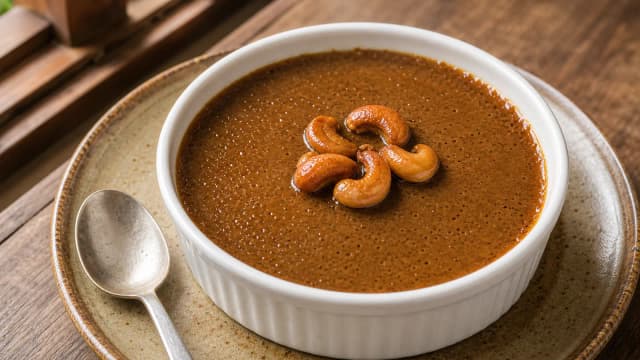
Watalappam, also spelled watalappan or wattalappam, is a steamed coconut custard sweetened with dark jaggery and spiced with cardamom, clove and nutmeg. Often called Sri Lankan jaggery custard or coconut jaggery pudding, it is the showpiece dessert of Eid and every festive table, brought by the Malay and Moor communities. Silky, deeply caramel and topped with toasted cashews, it tastes like a spiced coconut creme caramel.

Also in our Muslim Sri Lankan collection.
Steamed jaggery and coconut custard with warm spice: the showpiece dessert of every Sri Lankan celebration.
- Total time
- 60 min
- 15 min prep · 45 min cook
- Serves
- 6 people
- Difficulty
- Medium
- Spice level
- Mild
- Country help
- USA · UK · AU · CA substitutes included
CeylonCooking
ceyloncooking.com/recipes/watalappam
Watalappam (Watalappan)
Scan to open on your phone
Nutrition
Estimated values, per serving.
About This Dish
Set a bowl of watalappam in front of anyone who grew up with it and watch the reaction: a slow, knowing smile. This is celebration food, the dark, glossy custard that signals the feast has reached its sweetest moment. The name is spelled a dozen ways (watalappan, wattalappam, watalappa) but it always points to the same thing: a dense steamed pudding of jaggery, coconut milk and egg that wobbles like silk and tastes of deep, smoky caramel.
Watalappam came to the island with the Malay and Moor communities and became inseparable from Eid, weddings and almsgivings. Part of its appeal is that it is made ahead: the custard is steamed, cooled and chilled so it sets firm. You can make it the day before and let it deepen in the fridge while the rest of the feast comes together. Every family guards its own balance. A little more clove here, a whisper of rose water there. Arguments over the perfect jaggery are part of the fun.
A great watalappam comes down to jaggery and a gentle hand. Real kithul or palm jaggery gives that almost molasses-dark sweetness no refined sugar can copy. Steam it slowly, never at a hard boil, and the custard stays satin-smooth instead of grainy. Done right it is dense but tender, intensely caramel, warmed with spice and finished with the crunch of cashews on top.
Jaggery: The Dark Heart of Watalappam
Jaggery is unrefined sugar made by boiling down the sap of palm trees (or sugarcane) until it sets into firm, fudgy blocks. The prized kind here is kithul jaggery, tapped from the fishtail palm, with a smoky, almost molasses-like depth that gives watalappam its signature dark colour and rounded caramel flavour. Palm jaggery and gula melaka are close cousins. None of them taste like plain white sugar. That is exactly why the dish leans on them.
Jaggery is unrefined, so it often carries a little grit and fibre. Melt it gently with a splash of coconut milk and strain it before it goes into the custard. That small step is the difference between a smooth, glassy pudding and one with sandy specks. The darker and more aromatic your jaggery, the deeper and more authentic the finished watalappam will be.
What It Should Taste Like
Dense, silky and intensely caramel from the jaggery. Warmed with cardamom and clove, rich with coconut, finished with a crunch of cashew on top. Think spiced coconut creme caramel, only darker and deeper.
Ingredients
This recipe makes 6 servings. Change the number and every amount below updates with it. Substitutes for hard-to-find items are in the sidebar.
The US button converts grams, millilitres and centimetres to ounces, cups and inches. Spoon measures stay exactly as they are.
Open this in the recipe converter
- Jaggery (kithul or palm)grated or chopped200 g
- Thick coconut milk400 ml
- Eggslightly beaten5
- Cardamomground½ tsp
- Clovesground, or a pinch2
- Nutmeggrateda pinch
- Vanilla or rose wateroptional½ tsp
- Cashewsto top2 tbsp
- Salta pinch
Method
Follow these 5 steps. Each one explains not just what to do, but why it matters.
Ready to Start Cooking?
The screen shows one step at a time, with just the ingredients that step needs at your serving count, a timer you can tap, and your phone kept awake.
- 01
Melt the Jaggery
Warm the jaggery gently with 2-3 tbsp of the coconut milk until fully dissolved. Cool slightly, then strain out any grit.
Jaggery rarely melts perfectly clean. It's unrefined, so it carries fine fibre and the odd hard nib that won't dissolve no matter how long you stir. Warming it slowly with a little coconut milk coaxes it into a thick, dark syrup that smells of toffee and smoke, and straining afterwards is what guarantees a glassy, grit-free custard. Keep the heat low and gentle; you want it just liquid, not bubbling and caramelising further, or it can turn bitter.

Tip: Let the syrup cool to barely warm before it meets the eggs. Pour it in hot and you'll scramble them into sweet little curds.
- 02
Make the Custard
Whisk the eggs with the remaining coconut milk, the jaggery syrup, spices, vanilla and a pinch of salt until smooth, then strain for silkiness.
This is the moment the dessert comes together, and gentleness is everything. Whisk just enough to blend the eggs evenly into the coconut milk and syrup without whipping in a froth of bubbles. That foam would set into a pocked, foamy surface. The spices wake up the instant they hit the warm liquid, filling the kitchen with cardamom and clove. Pass the mixture through a sieve to catch any clinging egg strands and stray jaggery. That single strain is the real reason a watalappam comes out silky.

Tip: Skim off any foam that rises to the top before steaming. A clean surface sets into a smooth, even custard.
- 03
Fill the Dish
Pour the custard into a heatproof bowl or individual ramekins, then scatter a few cashews over the top.
How you portion it is up to the occasion. A single large bowl is the traditional, generous way, scooped at the table. Ramekins set faster and look elegant for guests. Either way, don't fill right to the brim, because the custard rises a little as it steams. The cashews scattered on top toast lightly in the steam and sink just slightly, giving every spoonful that nutty crunch against the soft custard.

Tip: Wipe any drips off the rim before steaming so the finished surface stays clean and the cashews stay put.
- 04
Steam
Cover with foil and steam over simmering water for 40-45 minutes, until just set with a slight wobble in the centre.
Low and slow is the whole game here. Cover the dish with foil so condensation drips off the foil instead of pooling on the custard and pocking the surface. Keep the water at a steady simmer, never a rolling boil. Too much heat is exactly what curdles a custard and turns it grainy and weepy. You're done when the edges are firm but the very centre still trembles like jelly when you nudge the dish. It'll finish setting as it cools, so resist the urge to overcook.

Tip: Lift the lid as little as possible. Every peek drops the temperature and stretches the cooking time.
- 05
Cool and Chill
Cool, then chill for at least 2 hours. Serve it cold, scooped straight from the bowl.
Patience is what turns a good watalappam into a great one. Warm from the steamer it's loose and the flavours sit flat. A few hours in the fridge firms it into that dense, sliceable custard and lets the jaggery and spice deepen and round out. Made the day before, it's better still, which is exactly why cooks prepare it ahead for a feast. Serve it properly cold, spooned out so each portion shows off that dark, glossy interior and the cashews on top.

Tip: Chill it uncovered until cold, then cover, so trapped steam doesn't drip back onto the set surface.
Common Mistakes to Avoid
- Steaming too hot curdles the custard and leaves it grainy and weepy instead of silky.
- Not straining the syrup and the custard leaves jaggery grit or stringy egg in the finished pudding.
- Pouring hot jaggery syrup straight onto the eggs scrambles them into sweet little curds.
- Don't rush the chilling. Watalappam needs at least a couple of hours in the fridge to set and deepen properly.
- Using too little jaggery or a pale sugar leaves it weakly sweet and lacking the signature dark caramel colour.
- Whisking in too much air sets as a foamy, pocked surface rather than a smooth one.
Serving Ideas
- Serve it chilled and scooped into bowls, topped with toasted cashews.
- Pair it with a strong, unsweetened Ceylon tea to cut the richness.
- Make it the grand finale to a celebration rice-and-curry feast.
- Spoon it alongside fresh mango or banana for a fruity contrast.
- Set it in small ramekins and turn it out like a creme caramel for individual servings.
Watalappam is one of the courses in our sri lankan party menu menu, if you want the whole plate rather than one dish.
Storage and Make-Ahead
It keeps 3-4 days covered in the fridge, and honestly it's better made a day ahead. The flavour deepens and the texture firms. Keep it well covered so it doesn't pick up fridge odours, and serve it cold. Don't freeze it, thawing makes the custard split and turn watery.
Two Ways to Cook It
Go for palm sugar or dark muscovado instead of hunting for kithul jaggery. Bake in a water bath in individual ramekins for an easy, even set, and use a pinch of ready mixed spice instead of grinding whole cardamom and clove.
For the full version, use kithul jaggery, fresh-pressed thick coconut milk, and freshly ground cardamom and clove. Then steam the custard in a single large bowl over a gentle flame and chill it overnight before serving.
Lighter and Healthier Version
Watalappam is supposed to be rich and celebratory, but a few small swaps lighten it without losing the dark, spiced character that makes it watalappam. The richness comes from coconut milk, jaggery and egg yolks, so that's where there's room to ease back.
Lighter Coconut Milk
Use light coconut milk, or replace half the thick coconut milk with thin coconut milk. The custard still sets and still tastes of coconut, just with noticeably less fat per serving.
Ease off the Jaggery
Cut the jaggery by a quarter. The spice and coconut carry plenty of flavour, and the custard stays dark and caramel without turning cloyingly sweet.
More Whites, Fewer Yolks
Swap one or two whole eggs for egg whites. The custard sets just as firmly with a little less fat and cholesterol, and the colour stays just as deep thanks to the jaggery.
Skip or Scatter Fewer Cashews
Use a light scatter of cashews instead of a generous layer, or toast them dry so they crunch without added oil.
Smaller Portions
Set it in small ramekins. A petite portion of something this rich satisfies just as well as a large scoop, and it keeps the calories in check.
Frequently Asked Questions
Watalappam is a rich Sri Lankan steamed custard built from jaggery, coconut milk, eggs and warm spices like cardamom, clove and nutmeg. It's dense, silky and deeply caramel, a bit like a spiced coconut creme caramel, and it's the dessert people bring out for Eid and other celebrations.
Cooked It? Tell Us How It Went
Your notes on this watalappam help the next person get it right: what you swapped, what you would do differently, where the recipe should have warned you. Tap a star if you are in a hurry, or write a few lines if you have a minute.
You Might Also Like


Sri Lankan Home Cooking Starter Pack
40 authentic Ceylon recipes made simple for foreign kitchens: spice guide, pantry checklist, substitute guide, 7-day meal plan and printable shopping lists.