Kadala Thel Dala
Sri Lankan Tempered Chickpeas (Tempered Kadala)
Also known as Thel Dala Kadala, Sri Lankan Tempered Chana
Sri Lankan tempered chickpeas, kadala thel dala, are whole chickpeas soaked and boiled until tender, then tempered with onion, garlic, mustard seeds, curry leaves and chilli and finished with a little freshly grated coconut. It's savoury, gently spiced and served dry rather than soupy, a beloved Sri Lankan breakfast and tea-time dish, eaten with pittu, string hoppers, bread or rice. Kadala simply means chickpea, and this dry, tempered style is different from the saucier kadala curry simmered in coconut milk. It takes well to add-ins too: a fried or boiled egg, or a handful of prawns, cuttlefish or dried sprats, turns it into a more substantial plate.

Soft, tender chickpeas tempered dry with onion, mustard seed, curry leaves and coconut. That's the classic Sri Lankan breakfast.
- Total time
- 55 min
- 15 min prep · 40 min cook
- Serves
- 4 people
- Difficulty
- Beginner
- Spice level
- Medium
- Country help
- USA · UK · AU · CA substitutes included
CeylonCooking
ceyloncooking.com/recipes/sri-lankan-tempered-chickpeas
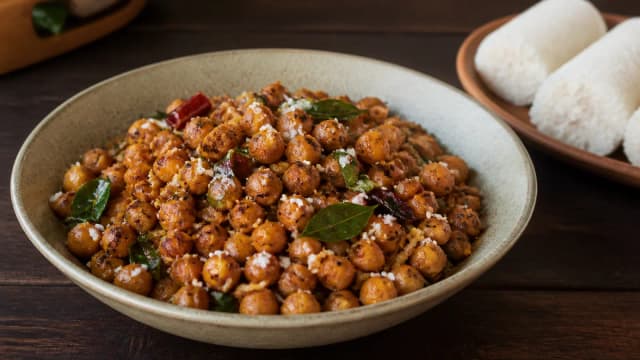
Sri Lankan Tempered Chickpeas (Kadala Thel Dala)
Scan to open on your phone
Nutrition
Estimated values, per serving.
About This Dish
Walk past a Sri Lankan home early in the morning and there's a good chance someone is eating kadala. Kadala is the Sinhala word for chickpea, and kadala thel dala, tempered kadala, is the dish that turns a humble handful of dried beans into one of the island's favourite breakfasts. It's plain, cheap and filling, the sort of thing cooked on an ordinary weekday and still good enough to set out for guests. Thel dala means tempered in oil, and that's exactly what sets this style apart from the saucier kadala curry made with coconut milk.
This is a dry dish, not a curry that swims in gravy. The cooked chickpeas glisten with a tempered coating of onion, mustard seeds, curry leaves and chilli, not a pool of sauce. That tempering, the splutter of mustard seeds and curry leaves in hot oil, is what makes it unmistakably Sri Lankan, and a final scatter of freshly grated coconut gives it a sweet, nutty finish. Many cooks make it heartier by folding in a chopped boiled egg or a handful of prawns, cuttlefish or fried dried sprats (haal masso) near the end, turning a simple breakfast into a light meal.
Kadala belongs on the breakfast and tea-time table, the same slot filled by pittu, string hoppers and hoppers. A mound of soft chickpeas alongside steamed pittu or a nest of string hoppers, with a sharp pol sambol or lunu miris on the side, is a breakfast that carries you through a morning. It also turns up wrapped in bread as a quick snack, or as a light, protein-rich part of a lunch or dinner plate. Few dishes do so much with so little.
A good kadala comes down to texture and balance. The chickpeas should be properly tender, soft enough to give easily but still holding their round shape, never hard in the middle and never collapsed to mush. The temper should smell fragrant and carry just a little fire, the coconut fresh and sweet against the savoury beans. Get those right and you understand why generations of Sri Lankans have started the day with a bowl of it.
Kadala: White Chickpeas, Brown Kadala and the Soak
Kadala is simply the Sinhala word for chickpea, the same legume known across South Asia as chana. The pale, round, larger variety, the white or golden chickpea (kabuli chana), is the most common choice for this dish, prized for its buttery softness when cooked. There's also a smaller, darker kind, the brown kadala or kala chana, with a thicker skin, a firmer bite and a nuttier, earthier flavour. Both make fine tempered kadala, and many cooks have a firm preference: the white kind cooks softer and faster, while brown kadala holds its shape and tastes more rustic.
Whichever you use, the soak is what decides the dish. Dried chickpeas are hard as pebbles, and they need a long bath, ideally overnight, to rehydrate so they cook evenly and turn tender all the way through instead of staying chalky in the centre. As they soak, you'll see them swell to almost double their size and lose their wrinkles. The brown kadala, with its tougher skin, benefits even more from a generous, unhurried soak. Skip or rush this step and you will be boiling hard, stubborn beans for far longer than the recipe suggests.
Freshly grated coconut finishes the dish and it matters. Stirred or scattered in at the end while the chickpeas are still warm, it brings a sweet, milky, slightly nutty note that works well against the savoury temper. It's the touch that makes the dish Sri Lankan rather than a generic chana. Fresh is best, but unsweetened desiccated coconut, lightly moistened, stands in well when fresh is out of reach.
What It Should Taste Like
Soft, nutty chickpeas in a savoury, mostly dry coating of fried onion, popped mustard seeds and curry leaves. There's a gentle chilli warmth and a sweet, fresh hit of grated coconut at the end. It's a substantial dry curry, not saucy.
Ingredients
This recipe makes 4 servings. Change the number and every amount below updates with it. Substitutes for hard-to-find items are in the sidebar.
The US button converts grams, millilitres and centimetres to ounces, cups and inches. Spoon measures stay exactly as they are.
Open this in the recipe converter
Cook the Chickpeas
- Dried chickpeas (kadala)soaked overnight1½ cups
- Waterto cover generously
- Ground turmeric½ tsp
- Pandan (rampe)optional5 cm piece
- Salt1 tsp
The Temper
- Coconut oil2 tbsp
- Mustard seeds½ tsp
- Onionfinely sliced1
- Garlicsliced3 cloves
- Curry leaves1 sprig
- Dried red chilliesbroken2
- Green chilliesslit, optional2
- Ground turmeric¼ tsp
- Sri Lankan chilli powderto taste½ tsp
To Finish
- Freshly grated coconut½ cup
- Saltto taste
- Limeoptionala squeeze
Method
Follow these 7 steps. Each one explains not just what to do, but why it matters.
Ready to Start Cooking?
The screen shows one step at a time, with just the ingredients that step needs at your serving count, a timer you can tap, and your phone kept awake.
- 01
Soak the Chickpeas
Put the dried chickpeas in a large bowl, cover them with plenty of cold water, and leave them to soak overnight or for at least 8 hours. Drain and rinse before you cook.
This step decides whether your kadala is a pleasure or a chore. Dried chickpeas are rock hard and need a long, slow drink to rehydrate right through to the centre. A proper soak lets them cook evenly and turn tender in a reasonable time, rather than staying chalky in the middle no matter how long you boil them. As they sit overnight you'll see them swell to nearly double, smooth out their wrinkles and pale slightly, all signs they are ready. Cover them with plenty of water, because they drink up a surprising amount and you do not want them poking above the surface by morning.

Tip: Short on time? Cover the chickpeas with just-boiled water and leave them for 1 to 2 hours. Or do a quick-soak: boil them for 5 minutes, then rest them off the heat for an hour. Overnight is still best for the most even, tender result.
- 02
Boil Until Tender
Put the soaked, drained chickpeas in a pot with the turmeric, pandan and plenty of fresh water. Bring to a boil, then simmer gently for 30 to 40 minutes until soft. Add the salt only in the last 10 minutes. Drain, keeping a little of the cooking water.
You're turning hard beans into something you actually want to eat. The only trick is patience and gentle heat. A steady, lazy simmer cooks the chickpeas through to a soft, creamy centre while keeping their round shape, where a hard rolling boil tends to batter the skins loose before the insides are done. Test a few as you go: a properly cooked chickpea gives easily when pressed and tastes buttery rather than chalky in the middle. Hold the salt back until near the end, because salting too early can toughen the skins and slow the softening. The turmeric tints them a warm gold and the pandan lends a soft background aroma as they cook.

Tip: Cooking time depends on how old and how well-soaked your chickpeas are. Brown kadala (kala chana) has a tougher skin, so it usually needs longer than the white kind. Judge by tenderness, not the clock.
- 03
Make the Temper
Warm the coconut oil in a wide pan over medium heat. When the mustard seeds go in they'll pop right away, so wait for that. Then add the onion, garlic, curry leaves, broken dried chillies and slit green chillies. Fry until the onion turns soft and golden and the whole pan smells fragrant.
This step is what makes the whole kitchen smell like a Sri Lankan home, and it's the difference between tempered kadala and plain boiled chickpeas. Get the oil properly hot first, so the mustard seeds crackle and pop the instant they hit. That popping is your signal the temper is alive. The moment the curry leaves go in, they spit and throw off that citrus-resin perfume. The garlic turns nutty and golden, and the onion softens then caramelises at the edges into something sweet. The dried chilli warms the oil with a gentle, smoky heat. Keep everything moving so nothing scorches. You want golden and fragrant, never dark and bitter.

Tip: Keep a lid or splatter screen close by. Mustard seeds jump out of the pan as they pop, and once the oil is hot the temper moves quickly.
- 04
Bloom the Ground Spices
Turn the heat down a little, then stir in the turmeric and chilli powder. Let them cook in the oil for just 10 to 15 seconds until they smell fragrant.
Adding the ground spices straight into the hot, oily temper for a few seconds wakes them up and drives off that raw, dusty edge they have straight from the packet. You'll see the oil flush a deeper red-gold and smell the chilli turn round and toasty almost at once. Watch this step closely: turmeric and chilli powder scorch quickly and turn bitter if they sit too long in hot oil on their own, so keep them moving and have the chickpeas ready to go in right after. This short bloom gets the spice flavour into the oil, and from there onto every chickpea.

Tip: If the pan looks too dry to carry the ground spices, splash in a little more oil before they go in. The spices need some fat to bloom in, or they'll catch and burn.
- 05
Add the Chickpeas and Combine
Tip the drained chickpeas into the temper and fold gently, so every chickpea gets coated in the spiced oil, onion and curry leaves. Season with salt and cook for 3 to 5 minutes for the flavours to come together.
This is where the dish actually comes together. Fold, don't stir hard. The chickpeas are tender now, and you want them whole and round, each one slicked in the fragrant temper rather than mashed. Over a few minutes of gentle turning, the spiced oil and the sweet fried onion work their way around every bean, and the chickpeas pick up a glossy, savoury coating. Taste now for salt. Beans drink up far more than you expect, and the dish falls flat if it's under-seasoned.

Tip: Wait to taste for salt until after the chickpeas have gone in and warmed through. The fried onion, chilli and curry leaves change the seasoning, so judge it once everything's combined.
- 06
Keep It Dry, and Add Extras if You Like
Keep cooking gently until any moisture cooks off and the chickpeas glisten. If you want a heartier plate, fold in a chopped boiled egg now, or a handful of cooked prawns, cuttlefish or fried dried sprats (haal masso). For a fully saucy version, make the coconut-milk kadala curry instead.
Tempered kadala should be dry, not swimming in gravy. The chickpeas get glossy and coated, which is why it's so good with pittu, string hoppers and bread. It doesn't soak into anything and stays separate on the plate. Cook off the last bit of moisture over gentle heat and the beans turn shiny as the oil and spice cling to them. This is also a forgiving base for add-ins. A chopped boiled egg melts into the temper for a popular kadala-and-egg breakfast, and prawns, cuttlefish or fried dried sprats give it a savoury, seaside note. Stir any of them through gently at the end, just to warm and combine, so the chickpeas stay whole.

Tip: If you're adding seafood, cook it first or use already-cooked, then fold it in at the end. Raw prawns or cuttlefish added to the dry pan will weep water and turn the whole thing soggy.
- 07
Finish with Grated Coconut
Just take the pan off the heat and stir or scatter the freshly grated coconut through the warm chickpeas. Add a squeeze of lime if you like, then serve.
Grated coconut is the final touch that makes this a Sri Lankan kadala and not a generic chana, so add it right at the end while the chickpeas are still warm. Stirred through off the heat, it stays fresh, sweet and milky, a soft note against the savoury, spiced beans, and it brings the dish together just like the temper started it. Some cooks toss it all through for an even coating, others scatter it on top for texture, both are right. A squeeze of lime, if you use it, lifts everything with a clean, bright edge right before serving.

Tip: Add the coconut off the heat, not while the pan is still cooking. Fresh grated coconut is at its best raw and warm, and if you leave it to fry it dries out and loses that sweet, milky character.
Common Mistakes to Avoid
- Not soaking the chickpeas long enough means they stay hard and chalky in the centre no matter how long you boil them.
- Salting the chickpeas too early in the boil can toughen the skins and slow the softening.
- Boiling the chickpeas at a hard, rolling boil knocks the skins loose and breaks the beans before the insides are done.
- Skipping the temper, the one step that turns plain boiled chickpeas into Sri Lankan kadala.
- Burning the ground turmeric and chilli powder by leaving them too long in hot oil turns them bitter.
- Frying the grated coconut instead of adding it off the heat means it dries out and loses its sweet, fresh character.
- Under-seasoning, because chickpeas soak up far more salt than people expect and the dish ends up flat.
Serving Ideas
- Serve it with pittu and a sharp pol sambol or lunu miris for a classic Sri Lankan breakfast.
- Serve it alongside string hoppers and a little curry gravy for a comforting morning or tea-time plate.
- Serve it wrapped in bread or stuffed into a warm roti for a quick, protein-rich snack.
- Serve it as a side on a rice-and-curry plate next to a creamy dhal.
- Serve it with coconut roti and a fried egg for an easy, filling weekend brunch.
Building a whole plate around it? Start from our vegetarian rice and curry menu, which sets out what to cook alongside it and in what order.
Storage and Make-Ahead
It keeps for 3 to 4 days in a sealed container in the fridge, and the flavour actually improves overnight. Reheat gently with a small splash of water to loosen it, because the chickpeas firm up as they cool. Cooked, undressed chickpeas also freeze well for up to 2 months, so you can boil a big batch and temper a fresh portion whenever you want it.
Two Ways to Cook It
Use tinned chickpeas to skip the soaking and boiling completely. Just drain, rinse and add them straight to the temper. Keep the temper simple with onion, garlic, mustard seeds and curry leaves, then finish with desiccated coconut. You still get that signature tempered aroma and a satisfying bowl with the least possible effort.
Soak dried white kadala, or the nuttier brown kala chana, overnight. Boil them with turmeric and pandan until properly tender, then temper in coconut oil with mustard seeds, curry leaves, dried chilli and fresh chilli. Keep it dry and finish with freshly grated coconut and a squeeze of lime. This is the fuller, breakfast-table kadala you would find in a Sri Lankan home.
Lighter and Healthier Version
Look, tempered kadala is already a wholesome, plant-based dish built on high-protein, high-fibre chickpeas, so it needs very little to lighten it. The richness sits almost entirely in the tempering oil and the coconut. A few small swaps keep all the flavour while trimming the fat, which suits anyone watching calories or cooking it for everyday rather than a treat.
Ease off the Temper Oil
Make the temper in a non-stick pan with 1 tbsp of oil instead of 2. You still get the popped mustard seeds and fried curry leaf aroma on noticeably less fat.
Keep It Dry, Not Coconut-Heavy
Traditional dry kadala uses only a light scatter of grated coconut, so it's naturally lighter than a coconut-milk curry. Keep the coconut modest and let the spices carry it.
Lean on the Chickpeas
Chickpeas are naturally high in plant protein and fibre and very filling, so a generous bowl with just a little pittu, string hoppers or bread is satisfying without needing much else.
Skip the Lime Salt
Brighten it with a squeeze of fresh lime and the warmth of extra chilli rather than more salt. That keeps the flavour lively while you ease back on sodium.
Frequently Asked Questions
Sri Lankan tempered chickpeas, or kadala thel dala, are whole chickpeas that get soaked, boiled until tender, then tempered (thel dala means tempered in oil) with onion, garlic, mustard seeds, curry leaves and chilli, and finished with freshly grated coconut. They're served dry rather than soupy, and they're a classic breakfast and tea-time food eaten with pittu, string hoppers, bread or rice. Kadala is simply the Sinhala word for chickpea.
Cooked It? Tell Us How It Went
Your notes on this sri lankan tempered chickpeas help the next person get it right: what you swapped, what you would do differently, where the recipe should have warned you. Tap a star if you are in a hurry, or write a few lines if you have a minute.
You Might Also Like


Sri Lankan Home Cooking Starter Pack
40 authentic Ceylon recipes made simple for foreign kitchens: spice guide, pantry checklist, substitute guide, 7-day meal plan and printable shopping lists.