Sri Lankan Pittu (Puttu)
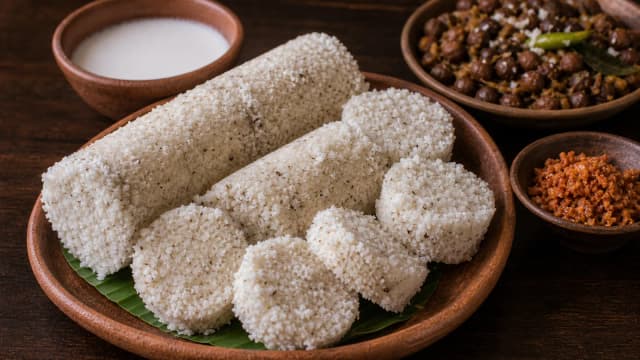
Sri Lankan pittu, also spelled puttu, is roasted rice flour layered with grated coconut and a little salt, packed into a tall mould and steamed until it becomes soft, crumbly cylinders. On its own it's mild, fluffy and barely sweet, which is exactly why it works: you eat it for breakfast or dinner with thick coconut milk, kadala (chickpea) curry, dhal, lunu miris or ripe banana and sugar. It's usually made with white or red rice flour, often with nutty kurakkan (finger millet) added, and you don't need anything more than flour, water, coconut and a steamer.

Soft, steamed cylinders of roasted rice flour and coconut. Breakfast or dinner, waiting for whatever you spoon over it.
- Total time
- 35 min
- 15 min prep · 20 min cook
- Serves
- 4 people
- Difficulty
- Beginner
- Spice level
- Mild
- Country help
- USA · UK · AU · CA substitutes included
CeylonCooking
ceyloncooking.com/recipes/pittu
Sri Lankan Pittu
Scan to open on your phone
Nutrition
Estimated values, per serving.
About This Dish
Pittu is one of those dishes that looks like almost nothing and tastes like home. It's just roasted rice flour, dampened with a little water until it clumps, layered with grated coconut and salt, then steamed until the grains swell and set into a soft cylinder. No oil, no spice paste, no long simmer. And yet a plate of warm pittu with coconut milk and a fiery sambol is a complete meal that millions of people eat for breakfast or dinner across the island. In Sinhala it's pittu; in Tamil it's puttu, and you'll hear both names used for the same thing.
The shape really comes from the mould. The traditional one is a tall bamboo cylinder, the pittu bambuwa. It sits over a pot of boiling water like a chimney, so the steam rises straight up through the flour and coconut. Many homes now use a metal pittu mould or a pittu maker that screws onto a pressure cooker or a steaming pot, but the idea is the same: you layer crumbly flour with grated coconut, steam it until just cooked, then push it out as a neat log and break it into rounds at the table. The bamboo version has a faint, woody fragrance that older cooks still swear by.
What sets the Sri Lankan version apart is that it's honest about what it is. Pittu here is firmer and drier than some of its South Indian cousins, and that's on purpose: it's meant to soak up whatever you serve with it, not to be soft and fluffy on its own. The flour is properly roasted first, which is the difference between pleasant, nutty pittu and a raw, pasty one. Red rice flour gives an earthier, chewier pittu with a rosy colour. Kurakkan pittu, made with finger millet, is the wholegrain favourite: darker and deeply nutty, the one many families reach for when they want something more sustaining.
Half the joy of pittu is the table around it. Pour over warm, slightly sweet coconut milk and it becomes gentle comfort food. Spoon kadala curry or dhal beside it and it's hearty and filling. Add a knob of lunu miris or pol sambol and it turns bright and fiery. Or mash it with ripe banana and a little sugar for a quick sweet plate that children grow up on. The pittu itself stays mild and steady, the calm centre that lets everything else shine.
White, Red or Kurakkan: Choosing Your Flour
Pittu starts with roasted rice flour, and the flour you pick decides its character. Plain white rice flour gives the familiar pale, soft pittu most people picture. Red rice flour, milled from Sri Lanka's nutty red rice, makes a rosier, chewier and more wholesome pittu with a deeper flavour. Kurakkan flour, ground from finger millet, makes the famously dark, almost chocolate-brown kurakkan pittu. That's the wholegrain favourite, earthy, filling and rich in fibre. You can also blend kurakkan with a little rice flour for a lighter wholegrain version.
Whatever flour you're using, it needs to be roasted. Or roast it yourself in a dry pan until it smells toasty and loses that raw edge. Roasting is what gives pittu its gentle nutty aroma, and stops it tasting pasty. Many packets are sold as pittu flour, already roasted and ground to the right texture. If yours is raw, a few minutes in a dry pan over low heat, stirring so it doesn't colour too much, sorts it out before you ever add water.
What It Should Taste Like
Soft, light and crumbly. Separate little grains, not a dense cake. Mild, faintly nutty from the roasted flour and sweet from the coconut. On its own it's plain on purpose. It comes alive the moment it meets coconut milk, a curry or a sambol.
Ingredients
This recipe makes 4 servings. Change the number and every amount below updates with it. Substitutes for hard-to-find items are in the sidebar.
The US button converts grams, millilitres and centimetres to ounces, cups and inches. Spoon measures stay exactly as they are.
Open this in the recipe converter
Pittu
- Roasted rice flour (white or red), or kurakkan flourpittu flour, roasted2 cups
- Freshly grated coconutplus extra for layering1 cup
- Salt¾ tsp
- Warm wateradded little by littleabout ½ to ¾ cup
To Serve
- Thick coconut milkplain or lightly sweetened1 cup
- Kadala (chickpea) curry or dhaloptionalto serve
- Lunu miris or pol samboloptionalto serve
- Ripe banana and sugaroptional, for a sweet plateto serve
Method
Follow these 5 steps. Each one explains not just what to do, but why it matters.
Ready to Start Cooking?
The screen shows one step at a time, with just the ingredients that step needs at your serving count, a timer you can tap, and your phone kept awake.
- 01
Roast the Flour if It Is Raw
If your rice or kurakkan flour isn't already roasted, toast it in a dry pan over low heat for a few minutes. Stir until it smells nutty and loses that raw, pasty smell, then let it cool.
This is the quiet step that decides if your pittu tastes good or pasty. Raw rice flour has a flat, chalky smell. Roasting drives that off and brings out a warm, toasty aroma that carries right through the finished pittu. Keep the heat low and the spoon moving so the flour warms evenly without browning. You want fragrance, not colour. Many packets are sold pre-roasted as pittu flour, so you can skip straight to mixing if that's what you have.

Tip: Let the roasted flour cool before you add water. Hot flour clumps unevenly and is much harder to bring to that right damp, sandy texture.
- 02
Mix to a Damp, Crumbly Texture
Put the flour and salt in a bowl. Add the warm water a little at a time, rubbing it through with your fingertips until the flour just clumps when pressed but still falls apart into loose crumbs.
This texture is the whole secret of pittu, and it's easy to feel once you know it. You're not making a dough. You want damp, sandy flour that holds its shape for a second when you squeeze a handful, then crumbles when you poke it. Too little water and the pittu steams up dry and powdery. Too much and it sets into a heavy, gummy cake instead of those light, separate grains. Add the water in small splashes and keep rubbing it through. Rice flour drinks unevenly, and a few extra drops change everything.

Tip: Test by squeezing a fistful. It should hold together, then break cleanly when nudged. If it stays in a wet lump, you've gone too far, so work in a little more dry flour.
- 03
Layer Flour and Coconut into the Mould
Spoon a layer of grated coconut into the base of the pittu mould or bamboo. Then add a loose layer of the damp flour. Keep alternating coconut and flour until the mould is full, finishing with coconut. Do not press it down.
The alternating layers are what give pittu its look and its lightness. Keep everything loose and airy as you fill the mould. Packing it tight blocks the steam and gives you a dense block instead of fluffy, crumbly pittu. The coconut between the layers melts into the flour as it steams, seasoning it and keeping it moist. A traditional bamboo pittu bambuwa adds a faint woody fragrance. A metal mould or a pittu maker that fits a steaming pot works just as well.

Tip: Spoon the flour in rather than scooping and pressing. The more gently you fill the mould, the lighter the pittu.
- 04
Steam Until Just Set
Put the filled mould over a pot of boiling water, or fit the pittu maker onto your steamer. Steam for about 8 to 12 minutes, until steam rises freely through the top and the pittu is cooked through, no longer raw in the middle.
Pittu cooks fast because the layers are loose and the flour is already roasted. You'll know it's ready when steam puffs steadily out of the top of the cylinder and the surface looks set rather than wet, usually within about ten minutes. Don't over-steam: leave it too long and the separate grains start to clump and turn stodgy. If you're steaming in a cloth-lined steamer instead of a mould, the same rule holds, pull it the moment it's cooked through.

Tip: A good test is to ease a little out from the top. It should be hot through, dry to the touch and crumbly, not sticky or doughy.
- 05
Push Out and Serve Warm
Push the pittu out of the mould into a neat cylinder, break it into rounds and serve it hot with thick coconut milk, a curry or sambol, or banana and sugar.
Pittu is at its best straight from the steamer, while it is warm and the grains are soft and loose. Pour over warm, slightly sweet coconut milk for the gentlest version, or set it beside kadala curry, dhal or a fiery lunu miris for a fuller meal. For a sweet plate, mash a round with ripe banana and a sprinkle of sugar, the way generations have eaten it for breakfast. However you serve it, the pittu is the base and everything else adds the flavour.

Tip: Serve it as soon as it's out of the mould. Pittu firms up as it cools, though it steams back to soft in a few minutes.
Common Mistakes to Avoid
- Adding too much water, so the pittu steams into a dense, gummy cake instead of light, separate grains.
- Using raw, unroasted flour, which leaves the pittu tasting flat and pasty.
- Packing the mould tightly, which blocks the steam and gives a heavy block.
- Over-steaming, which makes the crumbly grains clump together and turn stodgy.
- Skimping on the coconut layers. They are what keep the pittu moist and seasoned.
Serving Ideas
- With warm, lightly sweetened thick coconut milk poured over, the classic gentle breakfast.
- Alongside kadala (chickpea) curry or dhal for a filling, savoury plate.
- With a spoonful of fiery lunu miris or pol sambol for brightness and heat.
- Mashed with ripe banana and a little sugar for a quick sweet version.
Building a whole plate around it? Start from our sri lankan breakfast menu, which sets out what to cook alongside it and in what order.
Storage and Make-Ahead
Best eaten warm and fresh. Cooked pittu keeps a day or two in an airtight container in the fridge and steams back to soft in a few minutes. A quick splash of water before resteaming helps. The damp flour mix is best steamed straight away rather than stored, as it dries out. Cooked pittu also freezes for up to a month. Resteam from frozen until hot through.
Two Ways to Cook It
Use ready-roasted white pittu flour and frozen grated coconut. Rub in warm water until the flour just clumps, then steam the loose mix in a cloth-lined steamer or idli mould in a thin layer for about 10 minutes. No special mould needed. Serve with coconut milk straight away.
Roast your own rice or kurakkan flour in a dry pan, use freshly scraped coconut, and layer flour and coconut into a bamboo pittu bambuwa set over a pot of boiling water for that traditional woody fragrance. Push out the cylinder, break into rounds and serve hot with coconut milk and kadala curry.
Lighter and Healthier Version
Pittu is already a light, steamed, oil-free food. A couple of simple swaps make it even more nourishing, and it stays soft and comforting.
Steamed, No Oil
Pittu is steamed, not fried, so there's no added oil at all. The only fat comes from the coconut, and you can keep that modest if you like.
Go Wholegrain with Kurakkan
Kurakkan (finger millet) pittu, or a blend of kurakkan and red rice flour, adds fibre and minerals. It also has a lower impact on blood sugar than plain white rice flour, and it stays just as soft.
Naturally Vegan and Dairy-Free
Plain pittu is just flour, coconut, salt and water. No dairy, no eggs, no oil, so it's naturally plant-based. Serve it with coconut milk and you keep it that way.
Skip the Sugar
Pittu isn't sweet on its own. Pair it with a savoury kadala curry, dhal or sambol instead of banana and sugar, and you keep added sugar off the plate entirely.
Frequently Asked Questions
Pittu is made of roasted rice flour, grated coconut, salt and a little water. You dampen the flour until it just clumps, layer it with coconut, and steam it in a tall mould or bamboo until it sets into soft, crumbly cylinders. No oil, no egg, no yeast. It's one of the simplest steamed foods in the Sri Lankan kitchen. Red rice flour or kurakkan (finger millet) flour can be used in place of white rice flour for a more wholesome version.
Cooked It? Tell Us How It Went
Your notes on this sri lankan pittu help the next person get it right: what you swapped, what you would do differently, where the recipe should have warned you. Tap a star if you are in a hurry, or write a few lines if you have a minute.
You Might Also Like


Sri Lankan Home Cooking Starter Pack
40 authentic Ceylon recipes made simple for foreign kitchens: spice guide, pantry checklist, substitute guide, 7-day meal plan and printable shopping lists.