Rathu Kekulu
Sri Lankan Red Rice (Rata Hal)
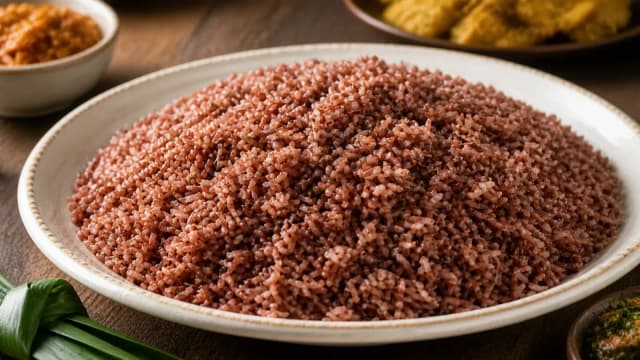
Sri Lankan red rice, or rathu kekulu, is the island's everyday wholegrain rice. Unpolished red-skinned grains, a nutty flavour, a satisfying chew, and far more fibre than white rice. It's the base of a proper rice and curry, and it's simple to cook on the stove or in a rice cooker once you know it wants a little more water and a little more time. Naturally vegan and high in fibre, it's a rice that actually works for you.

The nutty wholegrain rice at the heart of every Sri Lankan rice and curry. It's chewy, filling and genuinely good for you.
- Total time
- 45 min
- 10 min prep · 35 min cook
- Serves
- 4 people
- Difficulty
- Beginner
- Spice level
- Mild
- Country help
- USA · UK · AU · CA substitutes included
CeylonCooking
ceyloncooking.com/recipes/sri-lankan-red-rice
Sri Lankan Red Rice (Rathu Kekulu)
Scan to open on your phone
Nutrition
Estimated values, per serving.
About This Dish
Long before polished white rice became the norm, red rice was just rice in Sri Lanka. Rathu kekulu is rice with the reddish bran layer left on. That means each grain keeps the fibre, the minerals and the nutty flavour that milling strips away. It cooks up firmer and chewier than white rice, with a faint earthiness, and it holds its own against the boldest curry without turning to mush. There are heirloom red varieties too, like the fragrant suwandel, each with its own character.
This is the rice of the everyday table. The foundation a Sri Lankan rice and curry is built on. A mound of red rice in the centre, ringed by a few curries, a sambol and a dhal, is the island's defining meal. And it's good for you. Because the bran stays on, red rice is higher in fibre and releases its energy more slowly than white rice. That's why so many people choose it when they're watching their blood sugar or eating for the long haul.
Cooking red rice is no harder than white. It just asks for a little patience. The grains are tougher, so they drink up more water and take longer to soften, and a short soak helps them along. A rice cooker handles it really well. On the stove, it's a matter of the right water ratio and a gentle, covered simmer. Get it right and you have rice with real texture and flavour. Not a bland backdrop, but a part of the meal in its own right.
What Is Sri Lankan Red Rice?
Sri Lankan red rice, rathu kekulu, is wholegrain rice that keeps its reddish bran layer instead of being polished white. That bran is where the nutty flavour, the chew and most of the fibre and nutrients live. It cooks and nourishes more like brown rice than white, but with its own distinct, slightly earthy taste. Heirloom varieties such as suwandel, a fragrant red rice, and kuruluthuda are prized for their aroma.
Because the bran is intact, the grains are tougher and thirstier than white rice. They need more water, roughly one and a half parts water to one part rice, a longer cook, and ideally a soak of 20 to 30 minutes first. The payoff is rice that holds its shape, carries curry really well, and keeps you full far longer than a bowl of white rice.
What It Should Taste Like
Nutty, earthy and pleasantly chewy. The grains stay separate and firm. It's a sturdy, wholesome rice that stands up to bold curries instead of disappearing under them.
Ingredients
This recipe makes 4 servings. Change the number and every amount below updates with it. Substitutes for hard-to-find items are in the sidebar.
The US button converts grams, millilitres and centimetres to ounces, cups and inches. Spoon measures stay exactly as they are.
Open this in the recipe converter
- Sri Lankan red rice (rathu kekulu)rinsed, soaked 20-30 min2 cups
- Waterfor the stovetop method3 cups
- Saltoptional½ tsp
- Pandan (rampe)optional, for aroma1 small piece
Method
Follow these 5 steps. Each one explains not just what to do, but why it matters.
Ready to Start Cooking?
The screen shows one step at a time, with just the ingredients that step needs at your serving count, a timer you can tap, and your phone kept awake.
- 01
Rinse and Soak
Rinse the red rice in a few changes of water until it runs less cloudy. Then soak it for 20-30 minutes and drain.
Red rice is a wholegrain, so the bran makes it tougher and slower to cook than white rice. A short soak softens the outer layer and cuts the cooking time noticeably. You get more even, tender grains. Rinsing first washes off loose starch and dust, so the cooked rice is cleaner-tasting and less sticky.

Tip: No time to soak? You can skip it. Just add a little extra water and a few more minutes of cooking.
- 02
Add the Water
Tip the drained rice into a pot or rice cooker with the water, salt and pandan if you're using it. For red rice I use about 3 cups water to 2 cups rice, more than white rice would need.
The water ratio is the whole game with red rice. The bran is still on the grain, so it drinks more liquid. You want roughly one and a half parts water to one part rice, where white rice needs about one and a quarter. Too little and the centres stay hard. Too much and it turns gluey. If you soaked it first, use the lower end of that.

Tip: In a rice cooker I use the same ratio and the 'brown rice' setting if the machine has one. It just handles the longer cook on its own.
- 03
Boil, Then Simmer
Bring it to the boil uncovered, then drop the heat to low, cover it tightly and simmer for 25-30 minutes until the water is absorbed and the grains are tender with a little chew.
Boil first, then drop to a gentle covered simmer. That way the rice steams evenly without the bottom scorching. Keep the lid on and don't stir, stirring lets out starch and turns it sticky. Red rice is done when it's tender but still has a pleasant bite. It should never be soft and mushy like overcooked white rice.

Tip: If the water's gone but the grains are still hard, add a splash of hot water, cover and give it another 5 minutes.
- 04
Rest and Steam
Turn off the heat and leave it covered, don't touch it, for 10 minutes so it finishes steaming and firms up.
The rest is when the grains settle and the last bit of moisture spreads evenly, so the rice finishes tender all the way through instead of wet at the bottom and firm on top. It's the same trick that makes good white rice fluffy, and it matters even more for a sturdy grain like red rice.

Tip: Don't lift the lid during that rest. You want to trap the steam.
- 05
Fluff and Serve
Fluff it gently with a fork and serve it as the base of a rice and curry.
Fluffing with a fork instead of stirring with a spoon separates the grains without crushing them, so the texture stays light and the rice looks like rice, not paste. Serve it warm, mounded in the centre of the plate, with curries, a sambol and a dhal arranged around it.

Tip: Red rice keeps and reheats well, so cook extra for kottu or fried rice the next day.
Common Mistakes to Avoid
- Using a white-rice water ratio, so the grains stay hard in the middle.
- Skipping the soak and then under-cooking, which leaves a chalky centre.
- Stirring while it cooks, which turns it sticky.
- Not letting it rest off the heat, so it cooks unevenly.
Serving Ideas
- As the base of a full rice and curry, with a meat or fish curry, a dhal and a sambol.
- Topped with a fried egg and lunu miris for a quick, filling plate.
- Cooled and used the next day for kottu or fried rice.
Building a whole plate around it? Start from our beginner rice and curry menu, which sets out what to cook alongside it and in what order.
Storage and Make-Ahead
Keeps for 3 to 4 days in the fridge and reheats well with a splash of water. It also freezes for up to a month, so it's handy to batch-cook. Cool it quickly and store it covered.
Two Ways to Cook It
Use a rice cooker: add soaked rice and water at about 3 cups to 2 cups, press cook, and let it rest. The 'brown rice' setting, if your machine has one, does the rest.
Use heirloom red rice such as suwandel or kuruluthuda, soak it well, and cook it in a clay pot over low heat with a piece of pandan for aroma and a faint earthy crust at the base.
Lighter and Healthier Version
Red rice is already the lighter, more nourishing choice, which is exactly why it's worth cooking instead of white. The bran stays on the grain, so it brings fibre and slow-release energy that polished rice loses. A few notes make the most of that.
More Fibre Than White Rice
That intact red bran means more fibre per serving. You feel full for longer, and the rice raises blood sugar more slowly.
A Lower Glycaemic Option
Red rice is wholegrain, so it releases its energy more slowly than white rice. That is why people managing blood sugar, or anyone wanting steady energy, reach for it.
Naturally Vegan and Gluten-Free
Plain red rice is just rice and water. No dairy, no gluten, and it gives you a clean, wholesome base for any curry or vegetable.
Watch the Portion, Not the Rice
Rice is filling. Let the curries and vegetables take over the plate and keep the rice to a sensible mound. That chew in red rice means a smaller portion still feels satisfying.
Frequently Asked Questions
Resting lets the grains settle and the last bit of moisture spread evenly, so the rice finishes tender all the way through instead of wet at the bottom and firm on top. Leave it covered for 10 minutes and do not lift the lid. That trapped steam is what gives you evenly cooked, separate grains.
Cooked It? Tell Us How It Went
Your notes on this sri lankan red rice help the next person get it right: what you swapped, what you would do differently, where the recipe should have warned you. Tap a star if you are in a hurry, or write a few lines if you have a minute.
You Might Also Like


Sri Lankan Home Cooking Starter Pack
40 authentic Ceylon recipes made simple for foreign kitchens: spice guide, pantry checklist, substitute guide, 7-day meal plan and printable shopping lists.