Uru Mas Curry
Sri Lankan Pork Curry (Pork Curry)
Also known as Black Pork Curry
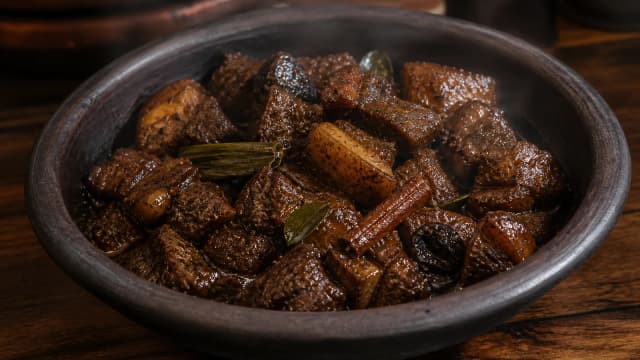
Uru mas curry is Sri Lankan pork cooked low and slow with roasted curry powder, plenty of black pepper and sour goraka until the meat goes meltingly tender and the gravy turns dark, thick and glossy. People call it black pork curry for that near-mahogany colour, and it's a real fixture in Burgher and Christian Sri Lankan kitchens, especially at Christmas. Bold, tangy and properly peppery, it rewards patience and tastes even better the next day.

Also in our Burgher and Colonial collection.
The dark, peppery slow-cooked pork curry that defines a Burgher Christmas table: rich, glossy and bold.
- Total time
- 100 min
- 25 min prep · 75 min cook
- Serves
- 5 people
- Difficulty
- Medium
- Spice level
- Authentic Hot
- Country help
- USA · UK · AU · CA substitutes included
CeylonCooking
ceyloncooking.com/recipes/sri-lankan-pork-curry
Sri Lankan Pork Curry (Uru Mas Curry)
Scan to open on your phone
Nutrition
Estimated values, per serving.
About This Dish
Ask for uru mas curry in a Sri Lankan home and you get a bowl of pork so dark it looks nearly black, glossy with its own rendered fat and smelling of pepper, roasted spice and sour goraka. Uru means pig and mas means meat, so the name just says pork curry, but this is nothing like a mild, creamy stew. It is meat cooked the long way, simmered until it gives in, in a gravy of dark roasted spices, a heavy hand of black pepper and the smoky tartness of goraka. You'll also hear it called black pork curry, which tells you exactly what it looks like when it's done.
Pork curry belongs to the Burgher and Christian table more than any other community in Sri Lanka. In Buddhist and Hindu homes pork is rarely cooked, so the dish became a marker of festive Burgher cooking, the sort of thing that anchors Christmas lunch alongside breudher, frikkadels and a glass of something celebratory. Every family keeps its own balance: more pepper here, an extra piece of goraka there, a splash of vinegar in some kitchens and none in others. Because it only deepens as it sits, people happily make it a day or two ahead, which is exactly when it tastes its best.
What makes a good uru mas curry is how the pork and its fat work together. Pork has enough fat marbled through to baste itself as it simmers, slowly melting into the gravy and giving it that glossy sheen and deep richness. The roasted curry powder and pepper toast onto the meat, the goraka pulls everything tight and tangy, and after an hour or more on a low flame the sauce reduces to a dark, clinging coat, not a thin soup. Done right, it's deep, peppery and a little fiery, with tender meat that falls off the fork and gravy you want to mop up with every last grain of rice.
It's a curry that respects your stove as a slow cooker and your patience. There's no shortcut to the colour and depth, both of which come from time: time for the spices to roast onto the meat, time for the goraka to soften and release its sour smokiness, and time for the fat and gravy to marry into one glossy whole. Make it unhurried, taste as you go and let it rest before serving, and you'll understand why Burgher families cook it for the people they love most.
Goraka, Black Pepper and Roasted Curry Powder: The Dark, Tangy Soul of the Dish
Uru mas curry gets its character from three ingredients, and goraka is the first. Goraka is a small sticky almost black dried fruit, a relative of tamarind, that Sri Lankan cooks use to add a deep smoky sourness. It is not the bright tang you get from lime or vinegar. A couple of soaked pieces simmered with the pork do two jobs at once: they cut through the richness of the fatty meat so the curry never sits heavy, and they give that brooding, almost meaty darkness that is the whole point of a 'black' pork curry. It gives up its flavour slowly, which is exactly why this dish likes a long simmer.
Black pepper is the second, and it goes in far more generously than in most curries. Pork and pepper have always been an instinctive match, and here the pepper does the heavy lifting that chilli usually does. It brings a warm woody heat that builds slowly instead of burning at the front. Freshly ground and added with a proper hand, it gives the curry a peppery bite that stays at the back of the throat and defines the dish as much as its colour does. The third is Sri Lankan roasted curry powder, the dark chocolate-brown blend of dry-roasted coriander, cumin and fennel. It brings toasty, almost coffee-like depth, and once it's roasted onto the meat it turns the gravy that signature near-black.
Then there is the pork fat itself. It is not a flaw to trim away, it is an ingredient. A cut with some fat marbled through it renders slowly as the curry simmers, basting the meat from inside, carrying the spice flavour and giving the finished gravy its glossy lacquered shine. The trick is to let that fat do its work and then balance it: the goraka's sourness and the pepper's bite keep the richness in check, so the curry tastes deep and luxurious rather than greasy.
What It Should Taste Like
Dark, glossy and deeply savoury. There is a real peppery bite up front, the smoky sourness of goraka cuts through the richness, and toasty roasted-spice depth sits behind it. The pork should be meltingly tender and the gravy thick enough to cling. Bold and warming, not creamy or mild.
Ingredients
This recipe makes 5 servings. Change the number and every amount below updates with it. Substitutes for hard-to-find items are in the sidebar.
The US button converts grams, millilitres and centimetres to ounces, cups and inches. Spoon measures stay exactly as they are.
Open this in the recipe converter
The Pork and Marinade
- Pork shoulder or bellycut into 4 cm cubes, fat left on1 kg
- Sri Lankan roasted curry powder2 tbsp
- Black pepperfreshly ground2 tsp
- Chilli powder1-2 tsp
- Ground turmeric½ tsp
- Salt1½ tsp
The Pot
- Gorakasoaked in warm water 15 minutes3-4 pieces
- Coconut oil2 tbsp
- Onionfinely sliced1 large
- Garlicminced5 cloves
- Gingerminced1 tbsp
- Curry leaves2 sprigs
- Pandan (rampe)optional but worth it5 cm piece
- Cinnamon1 small stick
- Cardamom and clovesa few of each
- Vinegaroptional, for extra tang1 tbsp
- Water300 ml
Method
Follow these 8 steps. Each one explains not just what to do, but why it matters.
Ready to Start Cooking?
The screen shows one step at a time, with just the ingredients that step needs at your serving count, a timer you can tap, and your phone kept awake.
- 01
Cube and Marinate the Pork
Cut the pork into even 4 cm cubes, leave the fat on, and toss it thoroughly with the roasted curry powder, black pepper, chilli, turmeric and salt. Let it sit for 20 minutes while you prep, or overnight in the fridge if you can.
Cut the pork into pieces roughly the same size so they cook at the same rate, and do not trim away all the fat. That fat bastes the meat as it cooks and gives the finished gravy its gloss. Massaging the spices in properly does two jobs: the salt and pepper season the meat right through instead of just sitting on the surface, and the curry powder gets time to bloom against the pork so it tastes as if it was always part of it. Every cube should end up evenly coated, dark rust-red and slightly tacky to the touch. Pork takes well to a long marinade, so an overnight rest in the fridge genuinely deepens the flavour.

Tip: Spice and salt the pork the night before if you can. A long marinade is the easiest way to a deeper, more peppery flavour with zero extra effort.
- 02
Soak the Goraka
While the pork marinates, soak the goraka pieces in a little warm water for about 15 minutes until they soften. Keep both the pieces and their soaking water aside.
Goraka turns up dried, hard and almost black, and it gives up its smoky sourness slowly. A soak in warm water softens it and gives you a head start. Keep the dark soaking liquid too, not just the pieces, because that water already carries flavour and it all goes into the pot. This is the ingredient that shifts an ordinary pork curry into a proper dark, tangy uru mas curry, balancing the rich fat with a deep sourness that lime or vinegar alone can't match. If your goraka is whole and large, tear it into smaller pieces so it releases its flavour faster.

Tip: Goraka is potent. Start with three pieces and add the fourth only if you want it sharper. You can always simmer in more, but you can't take the sourness back out.
- 03
Build the Aromatic Base
Heat the coconut oil over medium heat. Add the curry leaves, pandan, cinnamon, cardamom and cloves. When they crackle, add the sliced onion and cook until soft and golden, about 7 minutes.
This is the fragrant foundation the whole curry sits on. The moment the curry leaves and whole spices hit the hot oil, they crackle and release their oils, perfuming the fat with cinnamon, clove and that unmistakable savoury curry-leaf aroma. Let the onion soften slowly, from sharp and raw to sweet and golden. That gentle background sweetness will balance the pepper and goraka later. Don't rush it to a hard brown. Soft and golden is what you want. The deep colour of this curry comes from the spices and goraka, not scorched onion.

Tip: Keep the heat at medium. Curry leaves and whole spices scorch and turn bitter in a flash if the oil gets smoking hot.
- 04
Add the Garlic and Ginger
Stir in the minced garlic and ginger and fry for about a minute, until the raw smell gives way to a warm, savoury aroma.
Garlic and ginger burn quickly, so they go in after the onion has softened, not at the start. A single minute is usually enough. The moment their sharp, raw bite turns mellow and fragrant, they're ready. With pork, a generous hand of garlic is traditional and welcome, because its savoury depth stands up well to the fatty meat and the heavy pepper to come. Stir constantly so nothing catches on the bottom of the pan and turns bitter.

Tip: Mince the garlic and ginger finely so they melt into the base rather than catching and burning in stray chunks.
- 05
Brown the Marinated Pork
Turn the heat up a little and add the marinated pork. Stir to coat, then let it cook for 6-8 minutes, turning, so the spices toast onto the meat and the pork picks up colour on all sides.
This step builds the curry's dark, roasted soul, and it's the one to take your time over. As the spice-coated pork sits against the hot pan, the curry powder and pepper toast a second time, deepening from rust to dark brown and developing a rich, almost smoky note. The surface of the meat catches colour and starts to render its fat. You'll smell the kitchen shift from raw spice to something deep and savoury. Keep turning so the spices catch all over without burning, and don't crowd the pan into a steam. You want the pork searing, not stewing, at this stage.

Tip: Resist adding liquid early. This dry browning is exactly what builds the toasty depth and dark colour that set a black pork curry apart from a pale one.
- 06
Add the Goraka and Simmer Slowly
Add the soaked goraka with its dark soaking water, pour in the 300 ml of water, and stir in the vinegar if using. Cover and simmer gently for 50-60 minutes, stirring now and then, until the pork is fork-tender.
Now the curry settles in for its long, patient cook. The water and goraka liquor deglaze the pan, lifting all the toasted spice off the bottom into the gravy, and a low lazy simmer slowly breaks down the connective tissue in the pork until the meat turns properly tender. Keep it at a gentle bubble, not a hard boil, which would toughen the meat and reduce the liquid too fast. As it cooks, the goraka releases its smoky sourness, the pork fat renders into the gravy, and the colour deepens steadily towards that signature near-black. Top up with a splash of hot water only if it threatens to dry out before the meat is tender.

Tip: Tenderness comes first, thickness second. If the gravy cooks down too far before the pork is soft, add a little hot water and keep simmering. You can always cook off the extra liquid at the end.
- 07
Reduce to a Dark, Glossy Gravy
When the pork is tender, take the lid off and raise the heat a little. Let the gravy bubble and reduce until it turns dark, thick and glossy and clings to the meat instead of pooling around it.
This final reduction is where the curry becomes memorable. With the lid off, the excess liquid cooks away and the rendered pork fat emulsifies back into the sauce, so the gravy thickens, darkens and takes on a glossy, almost lacquered shine. Stir gently and often now, scraping the base, because the sauce is concentrated and can catch. You're looking for a gravy thick enough to coat the back of a spoon and cling to each piece of pork, dark and shining, not a thin, watery curry. This is also the moment to taste and balance: it should be peppery, deeply savoury and pleasantly sour from the goraka.

Tip: Keep a close eye on it now. Once most of the liquid has gone, the line between glossy and scorched is short, so keep the heat moderate and keep stirring.
- 08
Taste, Rest, Then Serve
Taste and adjust the seasoning with salt, a little more pepper or a touch more vinegar to taste. Then take the pan off the heat and let it rest for at least 10 minutes before serving.
Resting isn't fussiness. It genuinely improves the curry. Off the heat, the gravy settles and thickens further, the pepper and goraka mellow and meld into the meat, and flavours that were sharp and separate a moment ago round into one another. Taste before you serve and adjust: pork curry should land with a clear peppery bite, a smoky sourness and real depth, so don't be shy with the pepper. Like most roasted-spice curries, it's even better the next day, once a night in the fridge has let everything deepen. That's exactly why Burgher cooks make it ahead for Christmas.

Tip: Cook this a day or two before a celebration. Reheat it gently and it will taste like you fussed for hours, with none of the last-minute rush, and the flavour will be deeper for the wait.
Common Mistakes to Avoid
- Trimming away all the pork fat. That fat is what bastes the meat and gives the gravy its glossy richness as it renders.
- Rushing the simmer. Pork needs a long, gentle cook to become tender, and a hard boil only toughens it.
- You skip the dry-browning step and go straight to simmering in water. That throws away all the roasted depth and the dark colour.
- Going easy on the black pepper. A generous, peppery bite is what defines uru mas curry.
- Leaving out the goraka or using too little sourness. The rich, fatty curry ends up heavy and flat.
- Not reducing the gravy at the end. You get thin, watery curry instead of dark, thick gravy that clings.
Serving Ideas
- With steamed rice or red rice, plus a dhal and a sharp sambol for a classic rice-and-curry plate.
- Make it the bold centrepiece of a Burgher Christmas spread with yellow rice and frikkadels.
- Mop it up with coconut roti or godamba roti for a hands-on meal.
- Next to pol sambol or lunu miris, which cool things down and balance the pepper and richness.
- Spoon it over ghee rice or coconut rice for a more indulgent plate.
Building a whole plate around it? Start from our beginner rice and curry menu, which sets out what to cook alongside it and in what order.
Storage and Make-Ahead
It keeps for 4 days in a sealed container in the fridge. The flavour deepens after a day or two as the pepper and goraka meld, so it's a great make-ahead dish. It freezes well for up to 3 months. Reheat gently over low heat. Add a splash of water if the gravy has thickened too much, and warm it right through before serving.
Two Ways to Cook It
Use pork shoulder cut into even cubes, a jar of ready-made roasted curry powder, and tamarind paste instead of goraka if you can't find it. Keep the chilli to 1 tsp but be generous with the black pepper, and don't skip the dry-browning step, that's the one thing that makes it taste right. Simmer it gently and unhurried, and let it rest before serving.
Use fatty pork shoulder or belly, roast and grind your own curry powder, and simmer with real soaked goraka and its dark liquor for that smoky sourness. Be generous with freshly ground black pepper, add a splash of vinegar for extra tang, and cook it low and slow until the gravy is dark and glossy. Make it a day or two ahead so the flavour deepens, the way Burgher families do for Christmas.
Lighter and Healthier Version
Pork curry is rich by nature. Much of its character comes from the fat rendering into the gravy. You can't strip that out without losing what makes it special, but a few small adjustments shave off some fat while keeping the dark, peppery, tangy soul of the dish intact.
Choose a Leaner Cut
Use pork leg or trimmed shoulder instead of belly. You lose a little of the silky richness, but the goraka and pepper still carry the flavour and the gravy stays deeply savoury.
Lift off the Fat
Cook the curry a day ahead and chill it. The rendered fat sets on top and is easy to lift off before reheating. That cuts a meaningful amount of the saturated fat with no loss of flavour.
Ease Back the Oil
Bloom the aromatics in 1 tbsp of coconut oil rather than 2, in a non-stick pan. The pork renders plenty of its own fat as it browns, so the curry loses nothing.
Bulk It with Vegetables
Stir in potato, green beans or aubergine for the last stretch of the simmer. They soak up the gravy, add fibre, and stretch the pork a little further per serving.
Lean on Pepper, Not Extra Oil
The peppery, sour balance is what makes this curry satisfying. Build flavour with freshly ground pepper, goraka and a little vinegar rather than reaching for more fat.
Frequently Asked Questions
Uru mas curry is the Sinhala name for Sri Lankan pork curry. Uru means pig and mas means meat, so it translates simply as pork curry. The pork simmers low and slow with roasted curry powder, plenty of black pepper and sour goraka until the meat is tender and the gravy is dark, thick and glossy. It is bold and peppery with a sour tang, and it is a treasured dish in Burgher and Christian Sri Lankan kitchens, especially at Christmas.
Cooked It? Tell Us How It Went
Your notes on this sri lankan pork curry help the next person get it right: what you swapped, what you would do differently, where the recipe should have warned you. Tap a star if you are in a hurry, or write a few lines if you have a minute.
You Might Also Like


Sri Lankan Home Cooking Starter Pack
40 authentic Ceylon recipes made simple for foreign kitchens: spice guide, pantry checklist, substitute guide, 7-day meal plan and printable shopping lists.