Isso Curry
Sri Lankan Prawn Curry (Isso curry)
Also known as Sri Lankan shrimp curry, isso kari, prawn coconut curry
Isso curry, as Sri Lankans call it, is plump prawns simmered in a quick coconut gravy that leans on roasted curry powder and curry leaves. Prawns cook in minutes, you see, so the whole trick is to build the base properly first and only then slip the prawns in at the very end, so they stay sweet and soft instead of turning to rubber. It is rich without being heavy, and it is on the table in about twenty minutes.

A quick coconut prawn curry that is ready in about 20 minutes. Fancy enough for date night, easy enough for a Tuesday.
- Total time
- 35 min
- 15 min prep · 20 min cook
- Serves
- 4 people
- Difficulty
- Beginner
- Spice level
- Medium
- Country help
- USA · UK · AU · CA substitutes included
CeylonCooking
ceyloncooking.com/recipes/prawn-curry
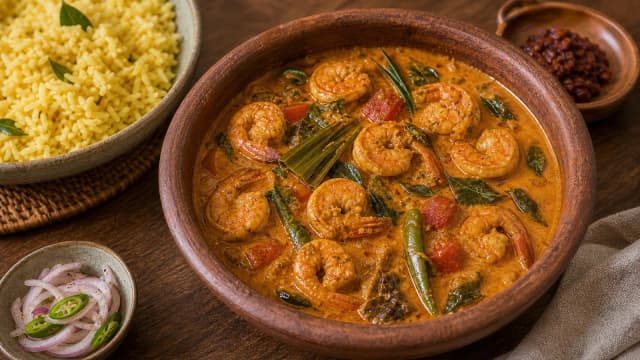
Sri Lankan Prawn Curry (Isso Curry)
Scan to open on your phone
Nutrition
Estimated values, per serving.
About This Dish
Ask for isso curry in a Sri Lankan home and it usually turns up on the day someone wants something a bit special without standing at the stove all afternoon. Isso means prawn, and this dish itself sits in that sweet spot where it feels like a celebration but takes almost no time, which is exactly why it lands on the table for visitors, weekend lunches and quiet date-night dinners. You might see it written as prawn curry, shrimp curry or isso kari, depending on where you grew up. Same idea everywhere: sweet shellfish in a coconut gravy that tastes like far more work than it took.
Sri Lanka's long coastline means seafood runs through the cooking, and prawns sit near the top of the catch. Coastal kitchens worked out long ago that the sweetness of fresh prawns wants a gravy that is fragrant and a little fiery rather than heavy, so the spicing leans on toasty roasted curry powder, curry leaves and a whisper of pandan, never a heavy hand of chilli. Coconut milk softens the edges and turns the whole thing glossy and comforting.
What makes a good prawn curry is knowing when to hold back. The base, onion fried slow until golden, garlic and ginger bloomed, spices toasted, tomato melted down, can take its own sweet time and will reward you for it. The prawns cannot. Add them too early or let the pot boil too hard and they turn tight and rubbery; cook them only until they curl and turn opaque and they stay plump and giving. Get that balance right and you have a curry that is sweet, savoury and fragrant, finished with a squeeze of lime that wakes the whole thing up.
Why Roasted Curry Powder Matters Here
The one ingredient that defines this curry is Sri Lankan roasted curry powder, and it is worth knowing why. Unlike the bright yellow powders sitting in a lot of kitchens, the Sri Lankan blend is dry-roasted until the coriander, cumin and fennel turn deep brown and throw off a dark, toasty, almost coffee-like smell. That roasting is what gives the gravy its warm colour and its deep, smoky character, the flavour that makes people ask what is in it.
Against the natural sweetness of prawns, that toasted spice base is a good match. It adds savour and depth without leaning on heat, so the shellfish stays the star. If you can find or make a proper roasted blend instead of a raw, unroasted one, this curry repays you for it more than almost any other dish, because the gravy is quick and there is nowhere for a flat spice mix to hide.
What It Should Taste Like
Sweet, tender prawns in a fragrant coconut gravy that carries the toasty depth of roasted curry powder, the perfume of curry leaves and a bright squeeze of lime. Rich and savoury, but it never sits heavy.
Ingredients
This recipe makes 4 servings. Change the number and every amount below updates with it. Substitutes for hard-to-find items are in the sidebar.
The US button converts grams, millilitres and centimetres to ounces, cups and inches. Spoon measures stay exactly as they are.
Open this in the recipe converter
- Raw prawnspeeled and deveined500 g
- Coconut oil2 tbsp
- Onionfinely chopped1
- Garlic3 cloves
- Ginger1 tbsp
- Curry leaves1 sprig
- Pandan (rampe)optional5 cm piece
- Sri Lankan roasted curry powder1½ tbsp
- Chilli powder1 tsp
- Ground turmeric¼ tsp
- Tomatochopped1
- Thick coconut milk200 ml
- Limeto finish½
- Saltto taste
Method
Follow these 5 steps. Each one explains not just what to do, but why it matters.
Ready to Start Cooking?
The screen shows one step at a time, with just the ingredients that step needs at your serving count, a timer you can tap, and your phone kept awake.
- 01
Build the Base
Heat the coconut oil and fry the curry leaves and pandan until they crackle, then tip in the onion and cook it slowly, slowly until soft and golden. Add the garlic and ginger and fry for a minute or so, just until fragrant.
Everything good in this quick curry starts here, so do not rush the onion. The moment the curry leaves and pandan hit the hot oil they snap and let off a sweet, grassy smell that fills the kitchen and, more to the point, the oil that everything else will cook in. Let the onion go past translucent to a proper gold; that slow caramelisation builds the savoury backbone the gravy needs, since the prawns themselves spend so little time in the pan. When the garlic and ginger go in you will catch them sharpen and then settle, and that is your cue they are ready for the spices.

Tip: Keep the heat moderate while the onion cooks. Rushed on a high flame it scorches at the edges and goes bitter before the middle softens.
- 02
Bloom the Spices
Stir in the roasted curry powder, chilli powder and turmeric and fry for about thirty seconds, then add the chopped tomato and cook until it breaks down and melts into the base.
Toasting the spices in that hot, fragrant oil for even half a minute changes everything. The raw, dusty edge cooks off and the roasted curry powder blooms into something darker, nuttier and more aromatic. You will watch the mixture turn a deeper rust colour and smell the difference almost at once. The tomato then does two jobs: its juice stops the spices catching, and as it collapses it gives the gravy a gentle sweet-sour body to hang on. Cook it until the pieces lose their shape and melt into a thick, glossy paste.

Tip: If the spices look like they are about to catch and burn, add a splash of water rather than more oil. Burnt spices turn the whole curry acrid, and there is no fixing it after that.
- 03
Make the Gravy
Pour in the thick coconut milk with a splash of water, bring it to a gentle simmer and cook for about 5 minutes so it thickens a little and the flavours settle together. Season with salt.
This is the moment the loose spice paste becomes a curry. As the coconut milk warms through it loosens the base and turns it a soft, sunset orange, and a few minutes of easy simmering rounds off the sharp spice notes into something mellow and settled. Watch the surface: a lazy bubble or two is all you want, never a rolling boil, because hard heat splits coconut milk into grainy oil and curds. This short rest also lets you taste and fix the salt before the prawns ever go in, while the gravy is still all yours to adjust.

Tip: Taste the gravy now and get the salt right at this stage. Once the prawns are in you want to stir as little as possible, so the gravy should already be where you want it.
- 04
Add the Prawns
Stir in the prawns and simmer them gently for just 4-5 minutes, until they turn pink and opaque and curl into a loose C. Do not let them go a minute longer.
Here is where the dish is won or lost. Prawns are basically muscle, and the second they cook through they want to keep tightening into rubber, so you are aiming to pull them at the exact point of doneness, not a minute past it. Watch them closely: raw grey turns to coral pink and the flesh goes from glassy to opaque from the outside in. A loosely curled C is perfect; a tight, clenched O means they have gone too far. Keep the heat low so the gravy never boils hard around them, which would both toughen the prawns and risk splitting the coconut milk.

Tip: If you are not sure, cut one prawn in half at four minutes. The middle should be just opaque, not glassy. They keep cooking in the hot gravy after the heat is off, don't forget.
- 05
Finish with Lime
Squeeze in the lime, taste once more for salt, and serve straight away while the prawns are still at their tender best.
That final hit of lime is small, but it changes everything. The coconut gravy is rich and rounded, and a squeeze of fresh acid right at the end cuts through it, lifts the spices and makes the prawns taste even sweeter by contrast. Add it off the heat so the fresh sourness stays bright instead of cooking away. This is your last chance to balance things too; a curry that tastes a bit flat almost always wants a pinch more salt or another squeeze of lime, not more spice.

Tip: Serve it straight away. Prawn curry waits for no one; the longer it sits hot on the stove, the firmer the prawns get, so get it to the table while they are still soft.
Common Mistakes to Avoid
- Overcooking the prawns until they go tight and rubbery; they need only 4-5 minutes and keep cooking in the leftover heat.
- Adding the prawns too early, so they toughen during the simmer; the gravy should be finished before they go in.
- Using pre-cooked prawns, which turn chewy the moment they warm through in the gravy.
- Boiling the coconut milk hard, which splits it into grainy oil and curds instead of staying smooth.
- Not toasting the spices long enough, so the gravy keeps a raw, dusty taste instead of a roasted depth.
- Forgetting to season and taste the gravy before the prawns go in, while it is still easy to stir and fix.
Serving Ideas
- With yellow rice and a coconut sambol for an easy feast.
- Over plain steamed rice with an extra squeeze of lime.
- With warm bread or roti to soak up all that gravy.
- Alongside a vegetable curry and dhal for a full rice and curry spread.
- With string hoppers or hoppers for a proper coastal-style meal.
Sri Lankan Prawn Curry is one of the courses in our seafood rice and curry menu, if you want the whole plate rather than one dish.
Storage and Make-Ahead
Best eaten fresh, the day it is made. It keeps for a day in the fridge in a sealed container; reheat it very gently over low heat, just until warm, so the prawns don't toughen. Skip the freezer, cooked prawns turn watery and rubbery once thawed.
Two Ways to Cook It
Use frozen raw prawns and a good shop-bought roasted curry powder, skip the pandan, and hold the chilli to half a teaspoon. Get the gravy seasoned and tasting right before the prawns go in, then simmer them gently for five minutes and finish with lime. It is genuinely hard to get this one wrong.
Buy shell-on prawns, peel them, and simmer the shells with a little water for ten minutes to make a quick stock, then use that in place of the splash of water for a deeper, sweeter seafood flavour. Use freshly roasted, home-ground curry powder and add a small piece of goraka for a southern-style tang, simmered into the gravy and lifted out before serving.
Lighter and Healthier Version
Prawn curry is already a fairly light dish, since prawns are lean and high in protein, but the richness comes from the coconut milk and the frying oil. A few small swaps keep it just as satisfying while trimming the fat, and you don't lose the fragrant, savoury character that makes it isso curry.
Use Light Coconut Milk
Swap the thick coconut milk for a light or reduced-fat version, or loosen the thick milk with extra water. You lose a little richness but keep the flavour, and the gravy stays plenty creamy.
Go Easy on the Oil
Fry the base in 1 tablespoon of oil instead of 2, and use a non-stick pan with a splash of water to stop the onion catching. The roasted spices and aromatics carry the flavour, not the fat.
Load up on Prawns and Tomato
Add a second tomato or a handful more prawns to stretch the curry, so each serving is leaner and higher in protein with no extra coconut milk or oil.
Serve with More Veg
Stir a handful of spinach or green beans into the gravy with the prawns, or serve it over red rice, to add fibre and stretch the dish further on the same amount of coconut milk.
Frequently Asked Questions
Isso curry is the Sri Lankan name for prawn curry, isso being the Sinhala word for prawn. It is plump prawns simmered in a fragrant coconut gravy spiced with roasted curry powder, curry leaves and chilli, finished with lime. It is quick to make, and you will also see it written as Sri Lankan shrimp curry or isso kari.
Cooked It? Tell Us How It Went
Your notes on this sri lankan prawn curry help the next person get it right: what you swapped, what you would do differently, where the recipe should have warned you. Tap a star if you are in a hurry, or write a few lines if you have a minute.
You Might Also Like


Sri Lankan Home Cooking Starter Pack
40 authentic Ceylon recipes made simple for foreign kitchens: spice guide, pantry checklist, substitute guide, 7-day meal plan and printable shopping lists.