Kithul Mal Maluwa
Kithul Flower Curry (Kithul Mal Curry)
Also known as Fishtail Palm Flower Curry
Kithul mal maluwa is a village curry made from the young flower spike of the kithul palm, the same fishtail palm that gives us treacle and jaggery. The flower is boiled with goraka, pounded, then cooked down with a mustard and garlic temper, roasted chilli and curry powder, and thick coconut milk. One rule matters more than the rest: hot water only, never cold, at every single stage including the coconut milk squeeze. Cold water leaves the curry with a scratchy, itchy feeling in the mouth. No amount of spice fixes that afterwards.

A village curry from the young flower of the kithul palm, cooked with goraka, roasted spices and coconut milk. Hot water at every stage, never cold.
- Total time
- 70 min
- 30 min prep · 40 min cook
- Serves
- 4 people
- Difficulty
- Medium
- Spice level
- Medium
- Country help
- USA · UK · AU · CA substitutes included
CeylonCooking
ceyloncooking.com/recipes/kithul-mal-curry
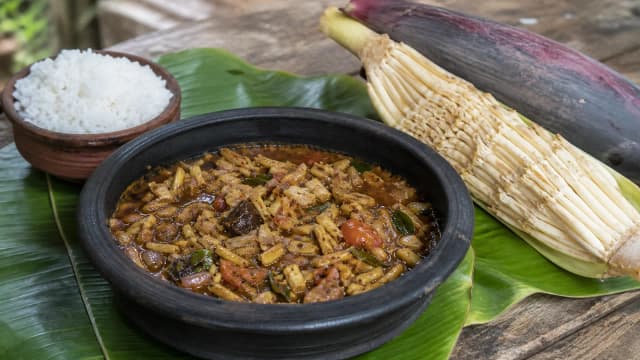
Kithul Flower Curry (Kithul Mal Maluwa)
Scan to open on your phone
About This Dish
Start with the rule, because it's the whole difference between a good plate of this and a mouth that itches for an hour. Never let cold water near a kithul flower. Boil it in hot water, squeeze the coconut milk with hot water, top the pan up with hot water. Village cooks are absolute about this and they're right. The itch comes from irritant crystals in the flesh, the same family of trouble that makes raw kithul fruit something nobody touches, and heat plus sourness is the old answer to it.
The sourness is the second half of that answer. Goraka goes into the boiling water and more goes into the curry itself, and a squeeze of lime finishes the pan. That isn't only for flavour. Acid works on the same irritant the heat is working on, which is why this curry tastes noticeably more sour than most vegetable curries and why nobody in a village kitchen makes it mild and creamy.
The kithul palm is worth knowing before you cook its flower. It's the tree behind kithul treacle and kithul jaggery, tapped at the flower for sap that gets boiled down into syrup. The flower itself is a different proposition entirely: a heavy hanging spike, cut young while the pieces are still tender, stripped of its outer sheath and chopped down small. It's not a shop vegetable. If you're not somewhere kithul grows, you're reading this for interest rather than for dinner, and that's fine.
What I like about this recipe is how completely it belongs to its place. Nobody buys any of it. The flower comes off a tree in the garden, the coconut, goraka and curry leaves are there anyway, and what comes out is a curry most people, including plenty of Sri Lankans, have never eaten. Cook it with hot rice and nothing else needs to be on the plate.
The One Rule: Hot Water Only, Never Cold
Every stage of this curry uses hot water. The flower is boiled in hot water, the coconut milk is squeezed with hot water rather than cold, and anything you add to the pan later is hot too. Do that and the curry is fine to eat. Skip it and you get kata kahana gathiya, the scratchy, itchy feeling in the mouth and throat that kithul is known for. Once it's in the pot you can't cook it out. That's the single instruction every village cook repeats about kithul mal.
Sourness does the same job from the other side. Goraka goes into the boiling water with the flower, a few more pieces go into the curry, and lime juice goes in at the end. Between the heat and the acid, the irritant is dealt with and the curry ends up tasting the way it should: sour, peppery and dark. Use the young flower rather than a mature one, cut the pieces small, and boil them until they're properly tender before they ever meet the temper.
What It Should Taste Like
Here's the thing about this curry: sour hits first from the goraka, then a slow black-pepper heat, with the roasted curry powder sitting dark underneath it all. The flower pieces are tender and slightly fibrous, closer to banana blossom than any root vegetable, and the coconut milk pulls the whole thing together without making it sweet. If it tastes flat, it wants more sour, not more salt.
Ingredients
This recipe makes 4 servings. Change the number and every amount below updates with it. Substitutes for hard-to-find items are in the sidebar.
The US button converts grams, millilitres and centimetres to ounces, cups and inches. Spoon measures stay exactly as they are.
Open this in the recipe converter
To Boil the Flower
- Young kithul flower (කිතුල් මල්)about 500 g once the outer sheath is off and you've chopped it small1 young spike
- Goraka (ගොරකා)dried garcinia, for the boiling water3 pieces
- Salt (ලුණු)for the boiling water1 tsp
- Hot water (උණු වතුර)hot, never cold, at every stageenough to cover
To Dry Roast
- Chilli powder (මිරිස් කුඩු)1 tsp
- Roasted curry powder (තුනපහ කුඩු)1 tbsp
- Curry leaves (කරපිංචා)1 sprig
- Salt (ලුණු)a pinch
The Temper and the Curry
- Coconut oil (පොල් තෙල්)2 tbsp
- Mustard seeds (අබ)1/2 tsp
- Garlic (සුදු ලූනු)sliced6 cloves
- Curry leaves (කරපිංචා)2 sprigs
- Pandan leaf (රම්පේ)1 short piece
- Green chillies (අමු මිරිස්)sliced3
- Red onions (රතු ලූනු)chopped2 medium
- Tomato (තක්කාලි)chopped1 medium
- Turmeric powder (කහ කුඩු)1/2 tsp
- Goraka (ගොරකා)for the curry itself2 pieces
- Black pepper powder (ගම්මිරිස් කුඩු)1/2 tsp
- Salt (ලුණු)to taste
- Thick coconut milk (පොල් කිරි)squeezed with hot water, not cold1 cup
- Lime (දෙහි)at the very enda squeeze
Method
Before anything else: use hot water only, all the way through, and that includes the coconut milk squeeze. Cold water at any stage leaves the curry itchy to eat, and there is no fixing it later. Get the kettle on before you start.
Ready to Start Cooking?
The screen shows one step at a time, with just the ingredients that step needs at your serving count, a timer you can tap, and your phone kept awake.
- 01
Clean and Chop the Flower
Strip the tough outer sheath off the kithul flower, pull the spike apart, then chop everything into small pieces.
Use a young flower. An older one is fibrous and stays chewy no matter how long you boil it. The outer covering comes away in strips, and none of it goes in the pot. Chop the pieces small, roughly the size of the last joint of your finger, because they shrink less than you expect, and a big piece stays raw in the middle. Some cooks wear gloves for this part, and given what the flesh does to a mouth, that instinct is not a bad one.

Tip: Don't rinse the chopped pieces under a cold tap. From here on, everything that touches this flower is hot.
- 02
Boil It with Goraka and Salt
Put the chopped flower in a pot with 3 pieces of goraka, 1 tsp salt and enough hot water to cover. Boil until the pieces are properly tender, then drain and pick out the goraka.
This step makes the curry safe to enjoy rather than something that scratches at your throat, so give it the time it needs. The pieces should crush easily between finger and thumb before you drain them. Goraka in the water is doing the real work here alongside the heat, so don't leave it out, and pull the pieces out afterwards or you'll bite into one later. Drain the water away completely.

Tip: If the pot runs low, top up with hot water from the kettle, never straight from the tap.
- 03
Pound the Boiled Pieces
Tip the drained flower into a mortar and pound it until the pieces break down into a rough, small-textured mixture.
A mortar and pestle, the wangediya, does something a knife cannot. It bruises and shreds the fibres rather than slicing them, so the pieces drink up the gravy instead of sitting in it. You're not making a paste. Stop while there is still texture and you can see individual pieces. A few pulses in a food processor will do at a push, though it tends to go from chunky to mush in about two seconds, so use the pulse button and watch it.

Tip: Pound it while it's still warm. Cooled pieces go rubbery and take much longer to break down.
- 04
Dry Roast the Chilli, Curry Powder and Curry Leaves
In a dry pan over low heat, roast the chilli powder, curry powder, a sprig of curry leaves and a pinch of salt for a minute or two, until it smells toasted. Set it aside.
This little roast is the difference between a curry that tastes of raw powder and one that tastes cooked through. Keep the heat low and keep it moving, because ground spice burns in seconds and burnt chilli powder is bitter in a way you cannot cover up. It's ready when the smell changes from dusty to nutty and the curry leaves go crisp. Take it off the heat before you think it's done, since the pan carries on cooking it.

Tip: Crumble the roasted curry leaves into the mix with your fingers before it goes in the pan. They break up better crisp than soft.
- 05
Temper the Mustard, Garlic and Leaves
Heat the coconut oil in a pan, then drop in the mustard seeds, sliced garlic, curry leaves and the pandan. Let them fry until the mustard pops and the garlic turns golden.
Wait for the oil to be properly hot before the mustard goes in, or the seeds sit there and go soft instead of popping. Once they crack, the garlic and leaves follow straight away and the smell tells you when it is right: sharp mustard, sweet fried garlic, and that grassy hit off the curry leaves as they hit the oil. Garlic goes from golden to burnt fast in hot coconut oil, so keep it moving.

Tip: Sliced garlic, not crushed. Crushed garlic burns before the rest of the temper is ready.
- 06
Fry the Chilli, Onion and Tomato
Add the green chillies, red onions and tomato to the pan. Fry until the onions have really softened and the tomato has broken down.
Take your time here. This is what makes the base of the gravy. You want the onions soft and translucent, not browned, and the tomato fully collapsed so it thickens the curry instead of leaving chunks. It is ready when the mix comes together and you see oil separating at the edges of the pan.

Tip: Red onions are sweeter than white ones, and they hold up to the sour goraka that hits later.
- 07
Add the Flower and All the Spices
Stir in the pounded kithul flower. Add the turmeric, the 2 remaining pieces of goraka, the pepper and salt to taste. Then add the roasted chilli and curry powder mix and stir until everything is coated.
Mix it properly now, while the pan is still fairly dry. Spices coat the flower far better before the coconut milk goes in than after. You want everything one colour, a dark rusty brown, with no dusty patches left. Give it a minute in the pan so the powders cook in the oil rather than steaming in the milk later. The goraka pieces soften as the curry cooks and keep releasing sourness the whole time.

Tip: Taste for salt now, and taste again at the end. Coconut milk mutes salt, so what seems right here will taste flat later.
- 08
Coconut Milk, Then Lime at the End
Pour in the coconut milk squeezed with hot water. Let the curry simmer gently until it thickens and the flavours come together. Squeeze in a little lime, taste, and take it off the heat.
Hot water for the squeeze, one last time. Keep the pan at a gentle simmer, not a boil, so the coconut milk does not split. The curry is ready when it has thickened enough to coat the pieces and you can see oil at the surface. The lime goes in off the boil, right at the end, and it does two things: it lifts the whole curry and it works with the goraka against the itch. Taste before you turn off the heat. If it tastes dull, add sour before anything else.

Tip: Serve it with hot rice and nothing complicated. This curry carries the plate on its own.
Common Mistakes to Avoid
- Using cold water at any stage. It leaves the curry itchy in the mouth and you cannot fix it afterwards.
- Squeezing the coconut milk with cold water. The rule applies to the milk just as much as to the pot.
- Choosing a mature flower instead of a young one. The pieces stay fibrous no matter how long they boil.
- Don't skip the goraka in the boiling water. It's doing more than just seasoning, and the curry will feel it.
- Pounding the boiled flower into a paste. Stop while it still has some texture left, that chew is part of the point.
- Going light on the sour to make it milder. That's backwards for this curry, the sour is what holds it together.
- Hard boil coconut milk, it splits.
Serving Ideas
- With hot rice. That's how it's eaten at home, and honestly it doesn't need anything else on the side.
- On a rice and curry plate next to a mild dhal. The sour and pepper in the kithul mal curry stand out against that soft dhal.
- With a coconut sambol on the side. The crunch gives you something to eat against the soft flower.
- Alongside a piece of dry fish or a fried egg. That's the way a village lunch usually rounds itself out.
Building a whole plate around it? Start from our vegetarian rice and curry menu, which sets out what to cook alongside it and in what order.
Storage and Make-Ahead
Keeps for 2 days in the fridge in a covered container, and it's actually better the next day once the goraka has had longer to work through it. Reheat gently in a pan, not hard, so the coconut milk doesn't split, and add a spoon of hot water if it's tightened up. Don't freeze it: the flower goes soft and stringy when it thaws. The raw flower doesn't keep either, so cook it the day you cut it.
Two Ways to Cook It
Get the hot water rule right and the rest is a normal village curry. Boil the kettle first and keep it hot next to you. Use shop-bought roasted curry powder so you only have to warm it through in step 4, and skip the mortar by chopping the boiled pieces small with a knife. Buy your goraka ready dried, use tamarind if that's what you have, and taste for sour at the end instead of trusting the amounts.
Cut a young flower fresh from the tree that morning. Boil it with goraka over a wood fire, then pound it in a wangediya while it's still warm. Scrape your own coconut and squeeze the milk with hot water. Roast the chilli and curry powder in a clay tachchiya and cook the curry in clay too. Finish with lime from the garden and eat it with hot rice.
Lighter and Healthier Version
There's not much to lighten here. It's a vegetable curry with two tablespoons of oil and a cup of coconut milk in it, and the flower itself is high in fibre. What you can adjust is the coconut milk and the oil, and both changes cost you something.
Thin the Coconut Milk
Use the second squeeze of coconut milk rather than the first, or thin the milk with hot water. The gravy comes out looser, and the curry is still sour and peppery, which is what actually carries it.
Cut the Temper Oil
One tablespoon instead of two is enough to pop the mustard and fry the garlic. Go below that and the temper steams instead of fries, and you lose the whole point of it.
Naturally Vegan and Gluten Free
Everything in here is a vegetable, a spice, or coconut. No dairy, no wheat, no fish, so it suits both diets as written.
Watch How to Make It
Read the steps already? Watch the whole process from start to finish to see the texture, colour and timing at each stage.
Kithul Flower Curry, Cooked Outdoors in the Village
Narrated in Sinhala (සිංහල)
Filmed start to finish over a wood fire, with very little talking: the flower cleaned and chopped, boiled with goraka, pounded, then cooked down with the temper and coconut milk. The cook explains the hot water rule near the end.
සිංහලෙන් කෙටියෙන්
කිතුල් මල් කරිය හදනකොට වැදගත්ම දේ මතක තියාගන්න: කිසිම වෙලාවක ඇල් වතුර දාන්න එපා. තම්බන්නත්, පොල් කිරි මිරිකන්නත්, පස්සේ පෑන් එකට දාන්නත් උණු වතුරම පාවිච්චි කරන්න. නැත්නම් කන කොට කට කහන ගතියක් එනවා.
ළපටි කිතුල් මලක් අරගෙන පිටත කොපුව අයින් කරලා, කුඩා කැබලි වලට කපාගන්න. ගොරකා, ලුණු සහ උණු වතුර දාලා මෙළෙක් වෙනකන් තම්බලා, වතුර බේරලා ගොරකා කෑලි අයින් කරගන්න. ඊට පස්සේ වංගෙඩියේ දාලා ටිකක් කොටාගන්න.
පොල් තෙල් රත් කරලා අබ, සුදු ලූනු, කරපිංචා සහ රම්පේ තෙම්පරාදු කරලා, අමු මිරිස්, රතු ලූනු සහ තක්කාලි දාන්න. කිතුල් මල් දාලා කහ කුඩු, ගොරකා, ගම්මිරිස් සහ ලුණු දාන්න. බැදගත්ත මිරිස් කුඩු සහ තුනපහ කුඩු දාලා කලවම් කරලා, උණු වතුරෙන් මිරිකාගත්ත පොල් කිරි දාන්න. හොඳට පැහෙනකන් තියලා අන්තිමට දෙහි ටිකක් මිරිකලා ලිපෙන් බාගන්න.
- ළපටි කිතුල් මල පිටත කොපුව අයින් කරලා කුඩාවට කපාගන්න
- ගොරකා, ලුණු සහ උණු වතුර දාලා මෙළෙක් වෙනකන් තම්බාගන්න
- වතුර බේරලා, ගොරකා අයින් කරලා වංගෙඩියේ කොටාගන්න
- මිරිස් කුඩු, තුනපහ කුඩු සහ කරපිංචා තාච්චියේ බැදගන්න
- පොල් තෙල් රත් කරලා අබ, සුදු ලූනු, කරපිංචා, රම්පේ තෙම්පරාදු කරන්න
- අමු මිරිස්, රතු ලූනු, තක්කාලි දාලා බැදගන්න
- කිතුල් මල් දාලා කහ, ගොරකා, ගම්මිරිස්, ලුණු සහ බැදගත්ත කුළුබඩු දාන්න
- උණු වතුරෙන් මිරිකාගත්ත පොල් කිරි දාලා පැහෙනකන් උයාගන්න
- අන්තිමට දෙහි ටිකක් මිරිකලා බත් එක්ක කන්න
Filmed by Trapper Life. We did not make this video, we are linking to theirs.
Watch on YouTubeFrequently Asked Questions
Because cold water leaves the curry itchy to eat. Kithul flesh carries an irritant that makes the mouth and throat scratch, kata kahana gathiya in Sinhala, and heat is one of the two things that deal with it. So the flower is boiled in hot water, the coconut milk is squeezed with hot water, and any liquid added to the pan later is hot as well. There is no fixing it after the fact, which is why village cooks are so firm about this one instruction.
Cooked It? Tell Us How It Went
Your notes on this kithul flower curry help the next person get it right: what you swapped, what you would do differently, where the recipe should have warned you. Tap a star if you are in a hurry, or write a few lines if you have a minute.
You Might Also Like


Sri Lankan Home Cooking Starter Pack
40 authentic Ceylon recipes made simple for foreign kitchens: spice guide, pantry checklist, substitute guide, 7-day meal plan and printable shopping lists.