Katta Sambol (Dry Chilli Sambol)
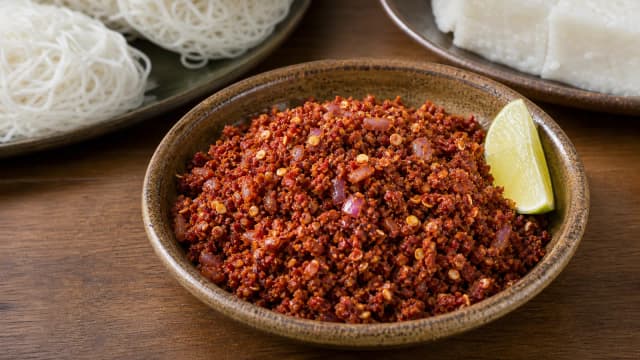
Katta sambol, also known as dry chilli sambol, is the fiercest of all Sri Lankan sambols. Dried red chillies, red onion or shallots, salt and lime get pounded into a dry, crumbly, blazing-hot relish. The name 'katta' points to that sharp, biting heat. Unlike the moist, paste-like lunu miris, katta sambol stays dry and rust-red, made for tiny fiery pinches with rice and curry, string hoppers, pittu, kiribath or a slice of bread.

The fiercest dry chilli sambol you'll put on the table: crumbly, blazing-hot, and built for tiny pinches that wake up rice, string hoppers and bread.
- Total time
- 20 min
- 15 min prep · 5 min cook
- Serves
- 6 people
- Difficulty
- Beginner
- Spice level
- Authentic Hot
- Country help
- USA · UK · AU · CA substitutes included
CeylonCooking
ceyloncooking.com/recipes/katta-sambol
Katta Sambol
Scan to open on your phone
Nutrition
Estimated values, per serving.
About This Dish
Every Sri Lankan kitchen has a hierarchy of heat, and katta sambol sits right at the top. Pol sambol mellows its chilli with coconut. Lunu miris carries it in a moist onion paste. Katta sambol strips everything back to the essentials: dried red chillies, onion, salt and a squeeze of lime, pounded down until dry, crumbly and unapologetically hot. There's nothing to soften the blow, which is exactly the point. A teaspoon on the side of your plate is a quiet warning.
The word 'katta' carries the sense of something sharp and biting, and this sambol lives up to it. This is the relish you reach for when the rest of the meal is gentle: a plate of plain string hoppers or a wedge of kiribath, and you want a jolt of pure chilli to set it alight. Cooks pound it fresh in a mortar so the dried chillies break into coarse, uneven flecks rather than a smooth paste. They keep it deliberately dry so it scatters across rice instead of spreading like a smear.
Because it asks so little, katta sambol is one of the first things many Sri Lankans learn to make. There's no frying, no coconut to scrape, no long simmer. The skill is all in the balance: enough salt to season, enough lime to brighten, just enough onion to round the raw chilli without turning the whole thing wet. Maldive fish is the traditional savoury addition for those who want it. Leave it out, and katta sambol is naturally vegan, and no less fierce for it.
Why Dried Chillies, Not Just Chilli Powder
Katta sambol is built on whole dried red chillies, and that's what gives it both its colour and its character. Pounded by hand, dried chillies break into coarse, glinting flecks of skin and seed you can see and feel in every pinch. So the sambol stays dry and crumbly rather than collapsing into a smooth paste. Chilli powder alone can stand in at a pinch, but it makes a softer, more uniform sambol and misses the rustic, broken texture that defines the real thing. Many cooks use mostly dried chillies with a little powder to deepen the colour.
The heat in those chillies comes from capsaicin, concentrated in the seeds and the pale inner ribs. Leaving the seeds in is the traditional choice, and it's a big part of why katta sambol earns its reputation as the hottest sambol on the table. Toasting the dried chillies briefly in a dry pan before pounding wakes up their oils and adds a smoky depth. It's a small step that makes a real difference to the finished flavour.
What It Should Taste Like
Dry, coarse and searingly hot, with sharp raw onion, bright lime and a clean salt edge. Crumbly rather than wet, so it scatters across rice in fiery flecks. A pinch is a condiment, not a portion.
Ingredients
This recipe makes 6 servings. Change the number and every amount below updates with it. Substitutes for hard-to-find items are in the sidebar.
The US button converts grams, millilitres and centimetres to ounces, cups and inches. Spoon measures stay exactly as they are.
Open this in the recipe converter
- Dried red chilliesstems removed; toast lightly if you like10-12
- Red chilli powderoptional, for colour and extra heat1 tsp
- Red onion or shallotsvery finely chopped1 small
- Maldive fish flakesoptional; pound to a powder1 tbsp
- Limejuiced, plus more to taste½
- Saltto taste
Method
Follow these 5 steps. Each one explains not just what to do, but why it matters.
Ready to Start Cooking?
The screen shows one step at a time, with just the ingredients that step needs at your serving count, a timer you can tap, and your phone kept awake.
- 01
Prepare the Dried Chillies
Snap the stems off the dried red chillies. Leave the seeds in for full heat, or shake some out for a milder sambol. Break the chillies into smaller pieces so they pound more easily.
This is where you decide how fierce the finished sambol will be. The seeds and the pale inner ribs hold most of the capsaicin, so leaving them in gives you the blazing katta sambol Sri Lankans know, while shaking a portion out tempers it without losing the chilli flavour. Breaking the dry pods into rough pieces first saves your arm later, because whole chillies are tough and springy and resist the pestle.

Tip: Wash your hands well after handling dried chillies, and keep them away from your eyes. The oils linger.
- 02
Toast for Depth (Optional)
Warm a dry pan over medium heat and toss the dried chilli pieces for 30 to 60 seconds until they smell toasty and turn a shade darker. Don't let them blacken.
A quick dry toast wakes up the oils in the chillies and lays down a gentle smoky note that raw chilli doesn't have. You're after fragrance and a slightly deeper red, not char, so keep them moving and pull the pan off the heat the moment the kitchen smells of toasted chilli. Skip this step if you prefer a sharper, rawer heat. That's traditional too.

Tip: Open a window. Toasting chillies sends sharp fumes into the air that can catch in your throat.
- 03
Pound the Chilli and Onion
Put the chillies (and Maldive fish, if using) in a mortar with a little salt and pound them to coarse flecks. Add the very finely chopped onion and pound briefly, just enough to bruise it into the chilli.
The salt does double duty here: it seasons and acts as an abrasive that helps break the chillies down. Start with the chilli and Maldive fish so they crush into coarse, even flecks, then add the onion last and pound only lightly. You want the onion bruised and folded through, releasing its sharp juice into the chilli, not mashed to a wet pulp. Stop while the mixture is still dry and crumbly, with visible pieces of chilli skin. That coarse, dry texture is what separates katta sambol from a moist lunu miris paste.

Tip: Chop the onion as finely as you can before it goes in. Big pieces release too much water and turn the sambol wet.
- 04
Add Chilli Powder and Lime
Stir in the chilli powder, if you're using it, then squeeze in the lime juice a little at a time, mixing as you go. Add just enough to brighten and barely moisten, not to soak.
Lime is what lifts katta sambol and stops the raw chilli from tasting flat, but it's also the easiest way to ruin the texture. Add it in small amounts and stir, because a heavy hand turns a dry, crumbly sambol into a wet smear and pushes it toward lunu miris territory. The optional chilli powder deepens the colour to a richer rust-red and nudges the heat up. A little goes a long way.

Tip: If you accidentally add too much lime, fold in a touch more pounded chilli or a pinch of chilli powder to bring it back to a dry, crumbly texture.
- 05
Taste and Adjust
Taste a tiny amount on the tip of a spoon. Adjust salt and lime until it's salty, sharp and very hot all at once. It should stay dry and crumbly, scattering rather than spreading.
Katta sambol is a balancing act between three things: salt to season, lime to brighten and chilli to blaze. Taste only a small fleck, because the heat builds fast and can fool you into thinking it needs more lime when it really needs salt, or the other way round. The finished sambol should look dry and rust-red, hold together loosely when pressed but break apart into flecks, and deliver a clean, fierce hit. Serve it in small mounds. It's a condiment, not a side you pile on.

Tip: Make it fresh and close to serving. Katta sambol is at its brightest within an hour or two of pounding.
Common Mistakes to Avoid
- Too much lime turns the dry, crumbly sambol into a wet paste, and then you've made lunu miris, not katta sambol.
- Chop the onion too coarsely and it releases water, so the sambol loses its dry texture.
- Pounding it to a smooth paste. Katta sambol should stay coarse, with visible flecks of chilli.
- Treating it like a side dish. It's a fiery condiment, eaten in small pinches.
Serving Ideas
- In a small fiery mound on the edge of any rice-and-curry plate.
- Pinch it over plain string hoppers or pittu to wake them up.
- Alongside a wedge of kiribath (milk rice), the classic cooling partner for its heat.
- Scattered over buttered bread or toast for a quick, fierce snack.
Building a whole plate around it? Start from our beginner rice and curry menu, which sets out what to cook alongside it and in what order.
Storage and Make-Ahead
Honestly, this is best eaten fresh, within a day, when the lime and onion are at their brightest. It keeps 2-3 days refrigerated in a sealed jar, but the raw onion softens and the sambol loses some of its sharp edge. Always use a clean, dry spoon. Don't freeze it; the texture suffers.
Two Ways to Cook It
Use chilli flakes (or mostly chilli powder) with very finely chopped onion, skip the Maldive fish, and mix everything in a bowl with just a few drops of lime. You want a dry, crumbly texture, not a wet paste.
Toast whole dried red chillies, then pound them with the Maldive fish, salt and shallots in a stone mortar until coarse and dry. Finish with the smallest squeeze of lime so it stays crumbly and rust-red.
Lighter and Healthier Version
Katta sambol is already one of the lightest things you can put on a plate. A few dried chillies, a little onion, lime and salt, with no oil, no coconut and no sugar. Left vegan, it's naturally plant-based and almost calorie-free. The only things worth keeping an eye on are the salt and the sheer heat.
Go Easy on the Salt
Salt is the main thing to watch with any sambol. Season in small additions and taste as you go, leaning on the lime to carry the flavour instead of reaching for more salt.
Keep It Vegan
Leave out the optional Maldive fish and the sambol is entirely plant-based, with no cholesterol and none of its fierce chilli character lost.
Dial the Heat to Suit You
Shake some seeds out of the dried chillies, or use a milder variety like Kashmiri chilli, for a sambol that still tastes of chilli without the punishing burn.
Make Only What You Need
Because it's best fresh, pound a small batch each time. You'll eat less, waste nothing, and always get the brightest version.
Frequently Asked Questions
Usually too much lime or too much liquid from the onion. The lime should only brighten and barely moisten, so add it in small amounts and stir as you go. Chop the onion very finely and pound it only briefly, just enough to bruise it into the chilli, because big pieces or over-pounding release water. Stop while the mixture is still dry and crumbly with visible chilli flecks.
Cooked It? Tell Us How It Went
Your notes on this katta sambol help the next person get it right: what you swapped, what you would do differently, where the recipe should have warned you. Tap a star if you are in a hurry, or write a few lines if you have a minute.
You Might Also Like


Sri Lankan Home Cooking Starter Pack
40 authentic Ceylon recipes made simple for foreign kitchens: spice guide, pantry checklist, substitute guide, 7-day meal plan and printable shopping lists.