Kos Bath
Sri Lankan Jackfruit Rice (Polos Rice)
Also known as Jackfruit Mixed Rice
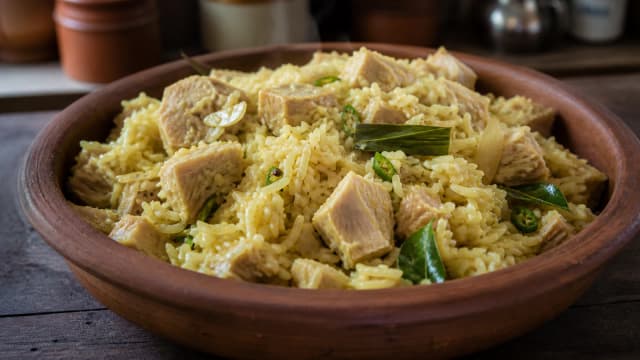
Sri Lankan jackfruit rice, known as kos bath or polos rice, is a one-pot mixed rice. Chunks of jackfruit, onions, whole spices and coconut milk go in together, so the grains soak up the savoury fruit and gentle spice while they steam. It's not a jackfruit curry spooned over plain rice. The jackfruit and rice cook together in a single pot, filling enough to be a meal on its own. Naturally vegan, this jackfruit mixed rice is the one for when you want everything in one pan.

A fragrant one-pot mixed rice cooked with jackfruit, whole spices and coconut milk. It's a solid main by itself, and it wants little more than a sambol on the side.
- Total time
- 60 min
- 25 min prep · 35 min cook
- Serves
- 4 people
- Difficulty
- Medium
- Spice level
- Medium
- Country help
- USA · UK · AU · CA substitutes included
CeylonCooking
ceyloncooking.com/recipes/jackfruit-rice
Sri Lankan Jackfruit Rice (Kos Bath)
Scan to open on your phone
Nutrition
Estimated values, per serving.
About This Dish
Kos bath is what you get when a Sri Lankan cook decides jackfruit and rice should share a pot. Kos means jackfruit and bath means rice, so the name is simply jackfruit rice. Use the younger, firmer fruit and you'll hear it called polos rice too. There's no separate jackfruit curry happening here. The fruit browns with onions and whole spices, the rice gets folded in, and coconut milk turns the whole thing into one fragrant, savoury dish.
This is everyday, lived-in home food, not a celebration centrepiece. Jackfruit trees grow tall in gardens across the island, and a single fruit can feed a household. That's why cooks have always found generous, everyday ways to stretch it. Folding it through rice is one of the best. A handful of jackfruit and a pot of rice become a full, filling meal that wants little more than a sambol and a wedge of lime. It's the sort of one-pot dinner for a busy evening, and it tastes like home whether or not you grew up with it.
Half the charm of jackfruit rice is the fruit itself. It's the same jackfruit at two stages, and Sinhala gives each one its own name. Polos is the very young, green, starchy fruit, firm and almost meaty when cooked. Kos is the more mature flesh, softer and a little sweeter but still savoury. For jackfruit rice, either works beautifully. Polos gives firmer, meatier pieces that hold their shape in the rice. Kos turns tender and melts more into the grains. Both drink up the spice and coconut, and both lend the rice that savoury, faintly fruity depth.
Get it right and jackfruit rice is more than the sum of its parts. The grains should stay separate and fluffy, glossed with coconut and flecked with tender pieces of jackfruit, scented with cinnamon, cardamom, clove and curry leaves. It's rich without being heavy, savoury with a soft fruity sweetness underneath, and substantial in a way plain rice never is. One pot, one spoon, and dinner's on the table.
Polos or Kos? Which Jackfruit for Jackfruit Rice
Jackfruit is really three ingredients in one, and Sinhala names each stage. Polos is the very young, green, unripe fruit. It's picked while the flesh is firm, pale and starchy, and it gets cooked as a vegetable. That dense, meaty texture is what made young jackfruit famous worldwide as a plant-based meat substitute. Kos is the more mature fruit. It's developed but not yet sweet-ripe, firmer and more substantial than polos, still savoury and only faintly sweet. Varaka (or vela) is the fully ripe, golden, sweet jackfruit, eaten fresh as a dessert fruit and never used here.
For jackfruit rice you can use either polos or kos, and the choice pretty much changes the whole character of the dish. Young polos gives you firmer, meatier pieces that hold their shape and keep a bit of bite as the rice cooks, which is why this dish is also called polos rice. Mature kos is softer, turns more tender and melts a little into the grains, lending a gentle fruity sweetness, which is why a lot of cooks call it kos bath. What you need to avoid at both stages is the ripe, sweet fruit and anything tinned in sweet syrup; that stuff is for puddings. If you are buying tinned, grab young green jackfruit in brine or water, it is the most convenient option and works really well.
Fresh jackfruit has one quirk, a sticky, milky white sap (called kiri in Sinhala) that seeps from the cut surface and glues itself to your hands, knife and board. It is harmless but stubborn, and the simple fix Sri Lankan cooks have always used is to rub a little oil on your hands and on the blade before you start. The oil stops the sap sticking, and any that gets on you wipes away with more oil rather than water. Tinned jackfruit has none of this, which is part of why it is such a popular shortcut.
What It Should Taste Like
Soft, separate grains glossed with coconut and studded with tender, savoury jackfruit, scented with cinnamon, cardamom, clove and curry leaves. It is savoury first, with a faint fruity sweetness underneath, and substantial enough to eat on its own with just a sambol.
Ingredients
This recipe makes 4 servings. Change the number and every amount below updates with it. Substitutes for hard-to-find items are in the sidebar.
The US button converts grams, millilitres and centimetres to ounces, cups and inches. Spoon measures stay exactly as they are.
Open this in the recipe converter
Jackfruit
- Young (polos) or mature (kos) jackfruitcut into bite-size chunks400 g fresh, or 2 tins drained
- Ground turmericfor par-boiling fresh jackfruit½ tsp
- Saltfor par-boiling1 tsp
- Oilto handle fresh jackfruit sapfor rubbing hands and knife
Rice and Aromatics
- Basmati or samba ricerinsed and drained2 cups
- Coconut oil2 tbsp
- Onionsliced1 large
- Garlicminced3 cloves
- Cinnamon1 small stick
- Cardamom podsbruised4
- Cloves4
- Pandan (rampe)1 piece
- Curry leaves1 sprig
- Green chilliesslit2
- Sri Lankan curry powderunroasted/mild1 tsp
- Ground turmeric½ tsp
- Chilli powderoptional, for more heat½ tsp
- Thick coconut milk1 cup
- Water2 cups
- Saltor to taste1 tsp
- Maldive fish flakesoptional; omit to keep it vegan1 tbsp
Method
Follow these 8 steps. Each one explains not just what to do, but why it matters.
Ready to Start Cooking?
The screen shows one step at a time, with just the ingredients that step needs at your serving count, a timer you can tap, and your phone kept awake.
- 01
Prep and Par-Boil the Jackfruit
If you are using fresh jackfruit, rub a little oil on your hands and knife first to deal with that sticky sap, then peel it and cut it into bite-size chunks. Boil the chunks with the turmeric and salt for 15-20 minutes until just tender, then drain. If you are using tinned green jackfruit, just drain, rinse and cut into chunks.
Fresh jackfruit is worth the fuss, but it fights back a little. The cut flesh leaks a sticky, milky sap that glues itself to everything, and rubbing oil on your hands and blade is the old, reliable fix that keeps it from making a mess. Par-boiling first softens the firm, starchy flesh so it is already tender when it hits the rice, because that short steam in the rice pot alone will not cook raw jackfruit through. You want the chunks just tender, yielding when pressed but still holding their shape, since they will soften a touch more in the rice. Tinned green jackfruit arrives already soft, which is exactly why it is such a convenient shortcut and needs no boiling.

Tip: Tinned green jackfruit in brine or water is honestly the easiest option by far. Avoid the ripe, sweet jackfruit in syrup, that stuff is meant for desserts and will turn the rice sweet and mushy.
- 02
Rinse the Rice
Rinse the rice in several changes of cold water until it runs almost clear, then drain it really well.
This is the step that separates fluffy jackfruit rice from a sticky clump. Rice grains are coated in loose surface starch, and if you cook them without washing it off, that starch swells into a gluey paste and the grains stick together instead of staying separate. Rinsing until the water runs clear carries it away. Draining well afterwards matters just as much, because clinging water dilutes the oil you are about to toast the rice in and throws off the liquid ratio, which can leave the rice wet and heavy at the bottom of the pot.

Tip: If you have time, soak the rinsed rice for 20 minutes and drain it well. That gives you even longer, more separate grains.
- 03
Brown the Jackfruit
Heat the coconut oil in a wide, heavy pot and fry the par-boiled (or drained tinned) jackfruit chunks until they take on a little golden colour at the edges. Lift them out and set aside.
The quick fry before anything else is what gives jackfruit rice its savoury, almost meaty depth. When the chunks hit the hot oil, their surfaces dry, they catch a little colour, and they develop a faintly caramelised, toasty edge that plain boiled jackfruit never has. That browned flavour then seasons the whole pot. Taking them out before you build the spice base stops them breaking up while the onions cook, so they stay in recognisable, tender pieces in the finished rice. Do not crowd the pot. Give the pieces room, or they steam in a damp heap instead of browning.

Tip: Pat the jackfruit dry before it goes in. Surface water makes it spit and steam instead of browning, and wet pieces never pick up that savoury edge.
- 04
Temper the Aromatics and Spices
In the same oil, fry the cinnamon, cardamom, cloves, pandan and curry leaves for a few seconds until fragrant, then add the onion, garlic and green chillies. Cook gently until the onion is soft and golden. Stir in the curry powder, turmeric and chilli powder for a few seconds.
This is the point where the kitchen starts smelling like a Sri Lankan home. The whole spices and curry leaves crackle the moment they hit the warm oil, releasing their fragrant oils. Cinnamon and cardamom give a warm sweetness underneath the savoury hum of the leaves. Let the onion soften slowly to golden, not browned hard, so it stays sweet and melting. Then bloom the ground spices in the hot oil for just a few seconds. That wakes up their flavour and stops the rice tasting raw and dusty. But don't let them sit alone too long, because turmeric scorches quickly and turns bitter. Keep the curry powder mild and unroasted here so it perfumes the rice without overpowering the jackfruit.

Tip: Bruise the cardamom pods so they release their fragrance, and leave the whole spices in the pot rather than grinding them. Warn diners they're there to push aside.
- 05
Toast the Rice
Add the drained rice to the pot and stir gently for 2-3 minutes, until every grain is coated in the spiced oil and looks glossy.
Toasting the rice in that flavoured oil before any liquid goes in is the trick to grains that stay separate and fluffy instead of clumping. The brief toast firms up the outside of each grain and wraps it in the aroma of onion, whole spices and curry leaves, so the perfume runs right through the rice instead of just sitting on top. As the rice warms you'll see it turn slightly translucent at the edges and smell it turn faintly toasty. Stir gently with a folding motion using a flat spoon, so you coat the grains without breaking them.

Tip: Use a wide, heavy-based pot. A thin pan scorches the coconut milk on the bottom before the rice is done, and the wide base helps it cook evenly.
- 06
Add Coconut Milk and the Jackfruit
Pour in the coconut milk and water, add the salt and the optional Maldive fish, and stir once to settle the rice into an even layer. Return the browned jackfruit to the pot, nestle the pieces into the rice, and bring everything to a gentle boil.
This is the point where everything cooks together in one pot. I combine the coconut milk and water because coconut milk alone gets too heavy over a long simmer and tends to catch. Stir just once to spread the salt and level the rice. Over-stirring knocks the starch off the grains you just toasted and undoes the fluffiness. Taste the liquid before it boils. It should be pleasantly seasoned, a touch saltier than you want the final rice, because the grains absorb it and dilute the flavour as they cook. Settling the jackfruit on top rather than stirring it in hard keeps the tender pieces whole.

Tip: Season the liquid, not the rice after it's cooked. Salt stirred in now gets pulled evenly into every grain. Add it at the end and it just sits on the surface.
- 07
Cover and Cook
The moment it boils, drop the heat to its lowest, cover the pot with a tight lid and cook it gently for about 15 minutes, until the liquid is absorbed and the rice is tender.
Once the lid is on, the rice cooks in trapped steam. The biggest temptation is to peek. Don't. Every time you lift the lid, the steam that's doing the work escapes and the temperature drops. That's how you get grains crunchy on top and mushy at the base. Keep the heat genuinely low. A hard boil will catch the coconut milk on the bottom and scorch it before the grains are cooked through. When the time is up, the surface should be dimpled with little steam holes and most of the liquid gone. The jackfruit will have softened a touch more, and the rice will smell deeply fragrant.

Tip: If your lid doesn't seal tight, lay a clean tea towel under it to trap the steam, or set the pot on a heat diffuser. A well-sealed pot on low heat gives you evenly cooked grains and no scorched base.
- 08
Rest, Then Fluff and Serve
Take the pot off the heat and leave it covered for 10 minutes. Lift out the pandan, the cinnamon stick and the curry leaf stalks. Fluff gently with a fork, fold the jackfruit through, and serve warm.
Resting is what actually finishes the rice. It's not an optional flourish. In those ten quiet minutes, the residual steam settles through the pot, the grains firm up and let go of each other, and any slightly wet rice at the base sets properly. If you fluff straight off the heat, you tear the still-fragile grains and turn the whole thing gummy. Lift out the spent whole aromatics first so nobody bites into a woody piece of cinnamon. Then run a fork through with a lifting, folding motion. The grains should separate into soft, glossy clouds with the tender jackfruit distributed evenly through them. Serve it warm with a sambol and a wedge of lime, and it needs nothing else.

Tip: Fluff with a fork, never a spoon. A spoon presses and smears the grains together. A fork lifts and separates them, so the rice stays light and the jackfruit pieces stay whole.
Common Mistakes to Avoid
- Using ripe, sweet jackfruit or the tinned kind in syrup, which is for desserts and turns the rice sweet and mushy.
- Not par-boiling fresh jackfruit, so it stays firm and undercooked while the rice is done.
- Skipping the toasting step, so the rice clumps instead of cooking up separate and fluffy.
- Too much liquid or stirring while it cooks, which boils the rice into mush.
- Cooking over too high a heat is the usual mistake. The coconut milk scorches on the bottom before the grains are tender.
Serving Ideas
- Serve it as a one-pot main with a fresh sambol, like pol sambol, and a wedge of lime.
- Pile it next to a dhal and a vegetable curry for a fuller plate.
- With a crunchy side salad and pappadam, a proper weeknight dinner.
Building a whole plate around it? Start from our beginner rice and curry menu, which sets out what to cook alongside it and in what order.
Storage and Make-Ahead
It keeps 2 to 3 days in the fridge and reheats well, covered, with a splash of water to loosen it. The flavour deepens overnight as the jackfruit and spices settle into the grains. It also freezes for up to a month. Cool it quickly, freeze in portions, and reheat thoroughly. Always reheat rice until piping hot throughout.
Two Ways to Cook It
Use tinned green jackfruit so there's no sap or par-boiling to deal with. Cook the rice in a rice cooker. Brown the jackfruit and fry the aromatics in a pan, then tip everything into the cooker with the rinsed rice, coconut milk, water and salt, and press cook. Fluff and rest before serving.
Use fresh polos or kos, prepped by hand and par-boiled. Brown the pieces well, fry whole spices and curry leaves in coconut oil, add a little Maldive fish for savoury depth, then cook the rice in a heavy pot on very low heat for a faint golden crust at the base.
Lighter and Healthier Version
Jackfruit rice is already a fairly light one-pot meal, naturally plant-based when you leave out the optional Maldive fish. A few small changes make it lighter still, while keeping its fragrance and the savoury jackfruit at its heart.
Go Easy on the Oil
Use a single tablespoon of coconut oil to brown the jackfruit and fry the aromatics. The whole spices and curry leaves do most of the perfuming, so you lose very little flavour.
Lighten the Coconut Milk
Use half a cup of thick coconut milk made up with more water, or a light coconut milk, for a less rich pot. You keep the coconut fragrance with less fat.
Try a Wholegrain Rice
Brown basmati or Sri Lankan red rice adds fibre and a nuttier flavour. Increase the liquid and the cooking time, as wholegrain rice needs more of both.
Load It with Vegetables
Fold in peas, carrot, green beans or spinach with the jackfruit to stretch the rice, add fibre and colour, and keep the meal balanced rather than carb-heavy.
Frequently Asked Questions
Sri Lankan jackfruit rice, called kos bath or polos rice, is a fragrant one-pot mixed rice cooked together with chunks of jackfruit, onions, whole spices and coconut milk. The jackfruit is browned, the rice is toasted in the spiced oil, and everything steams together so the grains soak up the savoury fruit and spice. It is hearty enough to be a main on its own with just a sambol alongside.
Cooked It? Tell Us How It Went
Your notes on this sri lankan jackfruit rice help the next person get it right: what you swapped, what you would do differently, where the recipe should have warned you. Tap a star if you are in a hurry, or write a few lines if you have a minute.
You Might Also Like


Sri Lankan Home Cooking Starter Pack
40 authentic Ceylon recipes made simple for foreign kitchens: spice guide, pantry checklist, substitute guide, 7-day meal plan and printable shopping lists.