Heen Bovitiya Kenda
Heen Bovitiya Kanda (Heen Bovitiya Porridge)
Also known as Heen Bowitiya Kanda, Bovitiya Kola Kenda
Heen bovitiya kanda is a Sri Lankan herbal porridge, a warm green cup made by blending the leaves of heen bovitiya (Osbeckia octandra) into soft-cooked red rice and coconut milk. It's one of the island's best-loved kola kenda, the leaf porridges sipped at dawn. And this one carries a particular reputation: of all the herbs people reach for, heen bovitiya is the one tied most closely to the liver. It's gently bitter, rounded out by coconut and a little garlic, and honestly, it tastes far better than a porridge with a medicinal job has any right to.

The Sri Lankan herbal porridge people reach for when they want to look after their liver: a warm, green, gently bitter cup of heen bovitiya, red rice and coconut.
- Total time
- 40 min
- 15 min prep · 25 min cook
- Serves
- 4 people
- Difficulty
- Beginner
- Spice level
- Mild
- Country help
- USA · UK · AU · CA substitutes included
CeylonCooking
ceyloncooking.com/recipes/heen-bovitiya-kanda
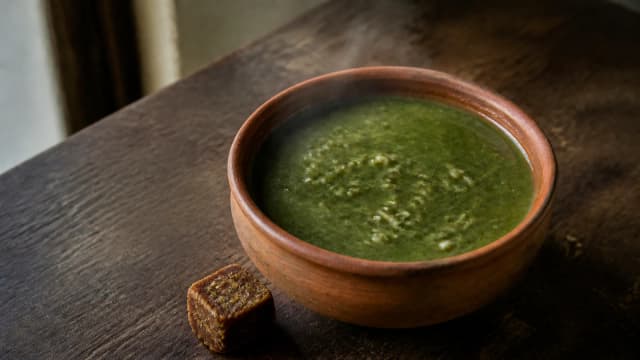
Heen Bovitiya Kanda (Heen Bovitiya Kenda)
Scan to open on your phone
Nutrition
Estimated values, per serving.
About This Dish
So what is heen bovitiya kanda, really? At its simplest, it's leaf porridge. Kola kenda, the family of warm green drinks Sri Lankans make by blending a healthy leaf into rice and coconut, and kanda (or kenda) just means porridge. What sets this one apart is the leaf. Heen bovitiya is a small wild shrub, Osbeckia octandra, and 'heen' means small or fine, which is how you tell it from its bigger cousin, maha bovitiya. You take the leaves, blend them, build a soft, savoury-leaning porridge around them, and that's the whole idea.
Here's the thing that makes this one special, though. Most kola kenda are general feel-good drinks. This one has a job. For generations, Sri Lankan households have leaned on heen bovitiya for the liver, for jaundice, for that heavy, sluggish feeling, and these days you'll hear it talked about for fatty liver too. Whether you're drinking it as a deliberate tonic or just because you've come to like it, that long association with liver health is why a cup of heen bovitiya kanda turns up so often when someone's feeling run down.
Now, I won't pretend it's as easygoing as a sweet porridge. Heen bovitiya is more bitter than mild gotu kola, with a clean, green, slightly astringent edge. But that's exactly where the coconut milk and a clove or two of garlic earn their keep, pulling the bitterness round into something savoury and properly drinkable. Get the balance right and it's genuinely good: grassy, warm, a little earthy, the kind of cup that makes you feel like you've done something kind for yourself before the day's even started.
It belongs to the morning. Made fresh, drunk warm, often with a nibble of jaggery on the side to take the edge off. Don't make a big batch to keep in the fridge, that's not really how it works, the colour dulls and the freshness goes. Five minutes of blending and a gently warmed pot, and you've got it. Simple, old, and quietly trusted on the island long before anyone thought to call a leaf a superfood.
What Is Heen Bovitiya (Osbeckia Octandra)?
Heen bovitiya is a small shrub that grows wild across Sri Lanka's wetter regions, with slim green leaves and little purple-pink flowers. Botanically it's Osbeckia octandra, in the Melastomataceae family. 'Heen' means small or fine in Sinhala, and that word does real work, because there's a larger relative, maha bovitiya (Osbeckia aspera), and the two get muddled all the time. For this porridge you want heen bovitiya, the small-leaved one. It's the leaves you're after, blended for their green juice. And since the plant is foraged or grown rather than stacked in supermarkets, that's half the reason the dried powder has caught on.
What gives heen bovitiya its name is its place in traditional Sri Lankan medicine as a liver herb. People have long taken it for jaundice, hepatitis and a tired, congested liver. That reputation has carried it into modern kitchens, where you'll now see it talked about for fatty liver and as a gentle detox tonic. Some laboratory and animal studies have looked at antioxidant and liver-protective effects in Osbeckia octandra, which keeps the interest alive. Just stay honest with yourself: this is traditional tonic food, not a medicine, and it's no substitute for a doctor if something's genuinely wrong with your liver.
It tastes noticeably bitter and astringent on the tongue, more than gotu kola. That's exactly why nobody drinks it plain. Coconut milk, a pinch of salt and a little garlic turn that medicinal bitterness into a savoury, sippable cup. And if you can't get fresh leaves, which is most people outside Sri Lanka, heen bovitiya powder (dried, ground leaf) is a genuinely good stand-in. It's how the porridge travels.
What It Should Taste Like
Warm, green, savoury-leaning. There's a clean, distinctly bitter, faintly astringent edge from the heen bovitiya, softened by creamy coconut milk, a little garlic and just enough salt. It's more bitter than gotu kola porridge, earthy rather than sweet, and light but quietly filling thanks to the red rice.
Ingredients
This recipe makes 4 servings. Change the number and every amount below updates with it. Substitutes for hard-to-find items are in the sidebar.
The US button converts grams, millilitres and centimetres to ounces, cups and inches. Spoon measures stay exactly as they are.
Open this in the recipe converter
- Fresh heen bovitiya leavespacked, washed well; or 2-3 tbsp heen bovitiya powder2 cups
- Red rice (rathu kekulu)rinsed; or any cooked rice½ cup
- Waterfor cooking the rice and blending3 cups
- Thick coconut milkor full-fat tinned¾ cup
- Garlicoptional, but it tames the bitterness2 cloves
- Saltto taste½ tsp
- Limeto serve, optional1
- Jaggeryon the side, optionala small piece per person
Method
Follow these 6 steps. Each one explains not just what to do, but why it matters.
Ready to Start Cooking?
The screen shows one step at a time, with just the ingredients that step needs at your serving count, a timer you can tap, and your phone kept awake.
- 01
Wash the Leaves Really Well
Pick the heen bovitiya leaves off the tough stems. Wash them in two or three changes of water until the water runs clear, then drain well. (Using powder? Skip straight to the rice.)
Heen bovitiya is wild and foraged, so the leaves come with their share of grit, the odd insect, sometimes a bit of bark. This wash is the only thing standing between you and a muddy-tasting porridge, so don't rush it. Swish the leaves around, lift them out, tip away the dirty water, go again until it stays clean. The toughest stems are fibrous and won't blend smoothly, so strip the leaves off those. This is the faff the dried powder saves you, and fair enough.

Tip: Got limp leaves? Soak them in cold water for ten minutes first. They perk up, and the green comes out brighter in the blend.
- 02
Cook the Red Rice Soft
Put the rinsed red rice in a pot with about 2 cups of water. Bring it to a boil, then cover and simmer gently for 20-25 minutes, until it's very soft and starting to break down.
The rice is the body of the porridge, the thing that turns a green juice into an actual kanda. Cook it well past fluffy. You want it soft enough to mash, almost collapsing. Red rice (rathu kekulu) is the traditional choice here. It brings a nutty depth and fibre, but it's stubborn and slow. Keep the heat low, the lid on, and give it time. Short on patience? A cup of leftover cooked rice does the job fine and nobody will know.

Tip: Soak the red rice briefly beforehand and it softens up, which shaves time off the simmer.
- 03
Blend the Heen Bovitiya
Put the washed leaves (or the powder) in a blender with about 1 cup of water and the garlic. Blend to a smooth, deep green liquid.
This is the heart of it. Blend until the leaves break right down and the water turns a rich, dark green with no flecks left. The smell is green and herbaceous with a sharp, bitter note underneath. That's the heen bovitiya, and it's meant to be there. The garlic might sound odd in a wellness porridge, but trust it. A clove or two blended in turns the whole thing savoury and rounds off the bitter edge. Do this just before you combine, because the colour and freshness fade fast once it's blended.

Tip: No blender? Pound the leaves in a mortar with a splash of water, then squeeze the green juice out through a cloth. The old way.
- 04
Strain It, or Keep It Textured
If you want a smooth, sippable porridge, strain the blended leaf through a fine sieve or muslin and press out all the green liquid. For a thicker, fibre-rich version, don't bother straining.
This is where you choose, and both ways work. Straining gives you a silky green cup you drink rather than spoon, and it suits heen bovitiya because it leaves the worst bitterness behind in the pulp. Leave it unstrained and you keep all the leaf fibre and goodness, but it's thicker and a good bit more bitter. For a first try, I'd strain. It's the gentler introduction.

Tip: If you strain, don't throw the leftover pulp away. Stir it into a mallung or tip it on the compost.
- 05
Combine and Warm It Gently
Stir the green liquid into the soft rice with the thick coconut milk and salt. Warm it over low heat, stirring, just until hot. Don't let it boil hard.
Gentle is the whole word here. You want it hot and the flavours married, but a hard boil does two annoying things: it turns the bright green a sad khaki, and it can split the coconut milk into grainy little curds. So keep the heat low, keep stirring, and pull it off the second it steams and looks creamy. Too thick? Loosen it with a splash of water. Heen bovitiya kanda should pour from the cup, not sit there in a sulky lump.

Tip: Add the coconut milk and the green liquid near the very end and barely simmer. That keeps the colour alive and the coconut smooth.
- 06
Serve It Warm, Right Away
Pour into cups or bowls and drink it warm, fresh off the stove, with a wedge of lime and a small piece of jaggery on the side if you like.
This is morning food, so drink it warm and drink it now. A squeeze of lime lifts the green, and a nibble of jaggery between sips is the classic trick for taking the bitter edge off. Take it as a separate bite rather than stirred in, so the porridge itself stays savoury. Made fresh it's at its brightest and best. Left to sit, it loses both its colour and its charm. So don't save it. Make it, drink it, get on with your day.

Tip: Serve it the moment it's done. The colour is most vivid and the flavour cleanest straight after blending.
Common Mistakes to Avoid
- Boiling it hard after the greens go in. That dulls the bright green to khaki and can split the coconut milk.
- Skimping on or skipping the coconut milk. The bitterness comes through harsh and medicinal.
- Piling in a mountain of leaves for 'extra benefit' just makes it punishingly bitter. More is not better here.
- Not washing the foraged leaves properly. You get a gritty, muddy taste.
- Don't confuse heen bovitiya with maha bovitiya. They're different plants, and it's heen bovitiya you want for this.
- Don't make a big batch planning to store it. This is a fresh, same-morning drink, not a keeper.
Serving Ideas
- Drink it warm and plain, first thing, as a gentle morning tonic.
- Set a small piece of jaggery on the side and nibble it between sips.
- Stir in a squeeze of lime right before you drink it. It brightens the whole cup.
- Follow it with kiribath and lunu miris for a fuller, more celebratory morning.
- Try it with a hunk of pittu and some pol sambol for a heartier herbal breakfast.
Building a whole plate around it? Start from our sri lankan breakfast menu, which sets out what to cook alongside it and in what order.
Storage and Make-Ahead
Honestly, this one's best made and drunk fresh, the same morning, while the green is vivid. It'll keep for up to a day, covered, in the fridge, but the colour dulls and the fresh flavour fades. Warm it gently without boiling and add a splash of water to loosen it. It doesn't freeze well. The smart move is to keep heen bovitiya powder instead. It lasts for months sealed, and you can make a fresh cup from that whenever you want one.
Two Ways to Cook It
Use heen bovitiya powder and a cup of leftover cooked rice. That means no foraging, no washing and no long simmer. Whisk or blend 2-3 tbsp of the powder into water, then stir it into the warm rice with tinned coconut milk, a clove of garlic and salt. Warm it gently and skip the straining. It's quick and forgiving, and you still get that green, earthy character.
Pick or grow fresh heen bovitiya. Cook red rice (rathu kekulu) soft in a clay pot. Blend the washed leaves and strain them through muslin so you get a silky green cup. Finish with thick milk pressed from a freshly scraped coconut, and serve it warm with lime and a piece of kithul jaggery on the side.
Lighter and Healthier Version
Look, heen bovitiya kanda is already about as light and wholesome as breakfast gets. It's naturally vegan and built around one herb. A few small tweaks can shape it to what you need without losing its character.
Naturally Vegan and Dairy-Free
The richness comes from coconut milk, not dairy. So it's already vegan and dairy-free as written. No swaps needed.
Lighten the Coconut
Use part light coconut milk, or just a bit less of the full-fat, to cut the fat. Keep at least a little coconut milk in there, or the bitterness comes through sharp and thin.
Keep It Unstrained for More Fibre
Skip the straining and keep all the leaf fibre in. You get a thicker, more filling porridge and more of the whole leaf. Just expect more bitterness.
Skip the Jaggery
Skip the jaggery and use a squeeze of lime instead. That gives you a fully savoury, lower-sugar cup.
Frequently Asked Questions
I'll say it plainly: heen bovitiya kanda is a Sri Lankan herbal porridge. You blend the leaves of heen bovitiya (Osbeckia octandra) into red rice cooked soft with coconut milk, a little garlic and salt. It's a warm, green, gently bitter cup, drunk fresh in the morning, and it's one of the island's kola kenda (leaf porridges). Of all the herbal kenda, this is the one most associated with liver health. Kanda, also spelled kenda, simply means porridge.
Cooked It? Tell Us How It Went
Your notes on this heen bovitiya kanda help the next person get it right: what you swapped, what you would do differently, where the recipe should have warned you. Tap a star if you are in a hurry, or write a few lines if you have a minute.
You Might Also Like


Sri Lankan Home Cooking Starter Pack
40 authentic Ceylon recipes made simple for foreign kitchens: spice guide, pantry checklist, substitute guide, 7-day meal plan and printable shopping lists.