Hathawariya Kanda
Hathawariya Kenda (Wild Asparagus Porridge)
Also known as Shatavari Porridge
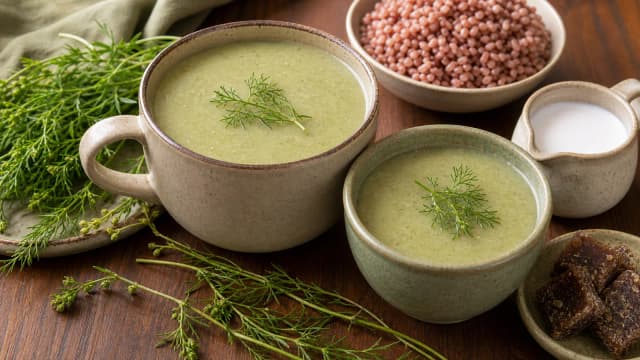
Hathawariya kenda is a Sri Lankan herbal porridge. You blend hathawariya, the wild asparagus known to botanists as Asparagus racemosus and in Ayurveda as shatavari, into soft-cooked red rice and coconut milk. It's mild, faintly grassy and soothing, part of the kola kenda family of green breakfast tonics. What sets it apart is hathawariya's long reputation as a restorative, traditionally given to new mothers and anyone needing to build back strength. Also written hathawariya kanda, it's a quiet, nourishing way to start the day.

Hathawariya kenda is a soft green herbal porridge made with wild asparagus, the plant long valued as a restorative tonic, especially for new mothers and women's health.
- Total time
- 40 min
- 15 min prep · 25 min cook
- Serves
- 4 people
- Difficulty
- Beginner
- Spice level
- Mild
- Country help
- USA · UK · AU · CA substitutes included
CeylonCooking
ceyloncooking.com/recipes/hathawariya-kenda
Hathawariya Kenda (Hathawariya Kanda)
Scan to open on your phone
Nutrition
Estimated values, per serving.
About This Dish
In Sinhala, kenda or kanda just means porridge or gruel, and Sri Lanka has a whole family of them made by pounding a fresh green herb into cooked rice and coconut milk. Hathawariya kenda is one of the more specialised members of that family. Everyday kola kenda can use whatever leafy greens you have, gotukola kenda leans on the brightening pennywort leaf, but hathawariya kenda is built around one specific plant: hathawariya, the wild climbing asparagus that scrambles through hedgerows and forest edges across the island.
That plant is what gives the porridge its reputation. Hathawariya is the Sinhala name for Asparagus racemosus, the same herb Ayurveda calls shatavari. It's been used for centuries as a rasayana, a restorative or rejuvenating tonic. It's most strongly associated with women's health and the postpartum period, when a new mother is fed gentle, building foods to help her recover. In that tradition, a bowl of hathawariya kenda is less a breakfast than a small act of care: easy to digest, warming, and made from a plant believed to nourish and strengthen.
For all that heritage, the porridge itself is humble and quick. You wash a handful of tender shoots and leaves (and sometimes the root), pound or blend them with coconut milk, strain, then stir that into rice cooked soft into a loose gruel. The result is a pale, sage-green drinkable porridge, mild and a little earthy. It's usually drunk warm from a mug rather than eaten from a plate. Gentle enough for early morning, substantial enough to carry you to lunch.
Like the other kenda, hathawariya kenda is traditionally taken on an empty stomach first thing. It's often paired with a piece of jaggery or a date to round out that mild, grassy taste. It's a breakfast, a tonic and a piece of living folk medicine all at once. The kind of thing a grandmother makes without a recipe and a new mother is gently encouraged to finish.
What Is Hathawariya (Wild Asparagus, Shatavari)?
Hathawariya is the Sinhala name for Asparagus racemosus, a climbing wild relative of the asparagus you eat as a vegetable. Instead of fat green spears, it grows as a thin scrambling vine with fine, feathery foliage and small needle-like leaves. The tender young shoots, leaves and sometimes the tuberous roots are what get used. In Tamil it's known as thanneervittan kizhangu. In Ayurveda and across much of South Asia it goes by shatavari, the name it's sold under worldwide as a supplement. They're all the same plant.
Hathawariya has a long-standing reputation as a restorative or rejuvenating herb, a rasayana in Ayurvedic terms. It's especially valued in women's health and is traditionally given during the postpartum period to help new mothers recover and to support breastfeeding. It's also taken more generally as a cooling, building tonic for anyone run down or convalescing. Those are traditional uses with a long history, not proven medical treatments, so think of it as nourishing food with cultural meaning, not a cure. The shoots and leaves have a mild, green, faintly bitter flavour that completely mellows once blended with coconut milk and rice.
What It Should Taste Like
It should be mild, smooth and warming, with a soft sage-green colour. The taste from the wild asparagus is gentle, grassy and faintly earthy. The coconut milk rounds off any bitterness, and the rice gives it a comforting, drinkable body. It should taste clean and soothing, never sharp.
Ingredients
This recipe makes 4 servings. Change the number and every amount below updates with it. Substitutes for hard-to-find items are in the sidebar.
The US button converts grams, millilitres and centimetres to ounces, cups and inches. Spoon measures stay exactly as they are.
Open this in the recipe converter
For the Porridge Base
- Red rice (rathu kekulu)Rinsed, or any white rice.½ cup
- Water3 cups
- GarlicOptional, lightly crushed.2 cloves
- SaltTo taste.¼ tsp
For the Green Herbal Extract
- Fresh hathawariya (wild asparagus) shoots and leavesTightly packed, washed.1 generous cup
- Thick coconut milkOr ½ cup tinned plus ¼ cup water.¾ cup
- WaterFor blending.¼ cup
To Serve
- Jaggery or a dateOptional, on the side.1 small piece per person
Method
Follow these 6 steps. Each one explains not just what to do, but why it matters.
Ready to Start Cooking?
The screen shows one step at a time, with just the ingredients that step needs at your serving count, a timer you can tap, and your phone kept awake.
- 01
Clean and Prepare the Hathawariya
Pick over the hathawariya and toss any tough or woody stems. Wash the tender shoots and leaves well in a few changes of water. If you're using the root, scrub it clean and chop it small.
Wild-foraged or shop-bought, the plant needs a careful sort and rinse. It grows close to the ground and that fine foliage traps grit, so take your time with it. Keep the soft, bright young shoots and the leaves, they blend down smoothly. Set aside anything stringy. The tuberous root is the part more strongly associated with restorative shatavari preparations. You can add it, but it's firmer, so chop it small or give it a brief simmer to soften before blending.

Tip: Smell and taste a leaf raw. It should be green and mildly bitter, not acrid. That clean, grassy bitterness is exactly what mellows into the finished porridge.
- 02
Cook the Rice into a Soft Gruel
Put the rinsed rice in a pot with the 3 cups of water, the crushed garlic if using, and a pinch of salt. Bring it to a boil, then lower the heat and simmer, partly covered, for 20-25 minutes. You want the rice very soft and the mixture loose and porridgey.
Kenda is meant to be drunk, not chewed, so cook the rice well past where you'd stop for a plate of rice. Keep going until the grains collapse and the liquid turns starchy and a little thick. Red rice gives a nuttier, more traditional and more nourishing base, but it takes longer to break down. Give it the full time and add a splash more water if it tightens up. The optional garlic is a common Sri Lankan touch, a gentle savoury warmth.

Tip: You want a pourable, soupy consistency. If it thickens too much as it cooks, loosen it with a little hot water. You can always reduce it again later.
- 03
Blend the Green Herbal Extract
While the rice cooks, put the cleaned hathawariya in a blender with the coconut milk and the ¼ cup of water. Blend until you have a smooth, bright green puree.
This step is what makes it hathawariya kenda rather than any other porridge. Blending the shoots straight into the coconut milk draws out their green colour and grassy character, and the coconut fat softens any bitterness. Traditionally the leaves were pounded in a mortar and the juice squeezed out by hand. A blender does the same job in seconds. Aim for a vivid, even green with no large pieces left.

Tip: No blender? Pound the leaves in a mortar and pestle with a splash of the coconut milk, then mix with the rest and strain through a sieve. Press hard to extract all the green liquid.
- 04
Strain for a Smooth Porridge
Push the green puree through a fine sieve into a bowl. Use the back of a spoon to press out every bit of liquid, then discard the fibrous pulp.
Straining is what gives hathawariya kenda that smooth, drinkable texture. Wild asparagus is fibrous, so even a good blend leaves stringy bits that catch in the throat. Passing it through a sieve keeps only the smooth, coconut-rich green extract. Skip this only if you blended very finely and you don't mind a more rustic, textured porridge.

Tip: Press the pulp firmly. There's a surprising amount of flavourful green liquid still hiding in there. A small splash of water through the sieve rinses out the last of it.
- 05
Combine off the Heat
Take the pot of cooked rice off the heat and give it a moment to stop bubbling. Stir in the strained green coconut extract, mix it well, then put it back over very gentle, low heat just to warm through. Don't let it boil.
Adding the green extract off the boil is the key to keeping that fresh colour and gentle character. High heat dulls the bright green and can split the coconut milk. So the extract goes in only after the fierce bubbling has stopped, and the porridge gets warmed back to drinking temperature, never simmered hard. You'll see it turn an even, soft sage-green as it comes together.

Tip: If it boils after the greens go in, the colour fades to khaki and the coconut can curdle. Keep the heat low and stir gently.
- 06
Season and Serve Warm
Taste and adjust the salt, then pour the warm kenda into mugs. Serve with a small piece of jaggery or a date on the side.
Hathawariya kenda is traditionally drunk warm from a mug or cup, first thing in the morning on an empty stomach. That's the way these herbal porridges have always been taken as a daily tonic. The mild, grassy porridge is usually balanced by something sweet bitten on the side rather than stirred in, most often a nugget of dark jaggery. Savoury and sweet get to play against each other.

Tip: Drink it freshly made and warm. It thickens and loses its bright colour as it sits, so it's at its best straight from the pot.
Common Mistakes to Avoid
- Boiling the porridge after adding the greens, which dulls the bright green to khaki and can split the coconut milk.
- Not cooking the rice soft enough, so the kenda ends up grainy instead of smooth and drinkable.
- Skipping the straining step. The fibrous wild asparagus stays stringy in the porridge.
- Using woody stems or unwashed foliage. That makes it bitter and gritty.
- Letting it sit too long before serving. It thickens, separates and loses colour.
Serving Ideas
- Drunk warm from a mug first thing in the morning, on an empty stomach, as a daily tonic.
- With a small piece of jaggery or a date bitten on the side to balance the mild, grassy taste.
- Alongside a light breakfast of kiribath or a piece of kurakkan pittu for a more filling start.
- Followed later by a spoonful of pol sambol if you prefer the day's first proper meal savoury.
Building a whole plate around it? Start from our sri lankan breakfast menu, which sets out what to cook alongside it and in what order.
Storage and Make-Ahead
Look, hathawariya kenda is really best made fresh and drunk warm the same morning. The bright green fades and the coconut can separate as it stands. If you must keep it, refrigerate it for up to a day in a sealed container and rewarm it very gently without boiling, stirring to bring it back together. The plain rice base alone keeps better, so cook that ahead and blend in fresh greens just before serving. It doesn't freeze well.
Two Ways to Cook It
Cook white rice soft into a loose porridge. Blend a handful of well-washed hathawariya with tinned full-fat coconut milk, strain it, then stir it into the rice off the heat and warm through. Sweeten the side with jaggery and you're done.
Use red rice cooked in a clay pot until it collapses into a gruel. Pound fresh wild hathawariya shoots and a bit of the root in a stone mortar, squeeze and strain the juice by hand into freshly pressed thick coconut milk, then stir it through off the heat so the colour stays a living green.
Lighter and Healthier Version
Hathawariya kenda is already a light, plant-based, naturally vegan breakfast, and that's part of why it's valued as a gentle tonic. A few small tweaks make it lighter still or fit it to different needs, without losing its restorative character.
Naturally Vegan and Dairy-Free
The richness comes from coconut milk, not dairy, so the porridge is plant-based and dairy-free exactly as it is. No swaps needed.
Use Red Rice for More Fibre
Stay with wholegrain red rice rather than white. It adds fibre and slows how quickly the porridge releases its energy, which suits a steady, sustaining start to the day.
Lighten the Coconut
Use part light coconut milk, or thin the thick milk with extra water, to cut the fat. Keep at least some full-fat in there so it still softens the green, grassy edge.
Skip the Added Sweetener
The jaggery on the side is optional. Left plain, the kenda is low in sugar and barely sweet, a clean savoury-green tonic.
Keep the Portion Sensible
A mug is plenty. This porridge is meant as a gentle morning drink, not a large bowl, so let its lightness be the point.
Frequently Asked Questions
Hathawariya kenda is a Sri Lankan herbal porridge made by blending hathawariya, the wild asparagus also called shatavari, with coconut milk and stirring it into soft-cooked rice. It's a mild, warming, drinkable green porridge taken at breakfast and valued as a restorative tonic, traditionally given to new mothers and anyone building back their strength. It's naturally vegan and is also spelled hathawariya kanda.
Cooked It? Tell Us How It Went
Your notes on this hathawariya kenda help the next person get it right: what you swapped, what you would do differently, where the recipe should have warned you. Tap a star if you are in a hurry, or write a few lines if you have a minute.
You Might Also Like


Sri Lankan Home Cooking Starter Pack
40 authentic Ceylon recipes made simple for foreign kitchens: spice guide, pantry checklist, substitute guide, 7-day meal plan and printable shopping lists.