Sri Lankan Seafood Fried Rice (Mixed Seafood Fried Rice)
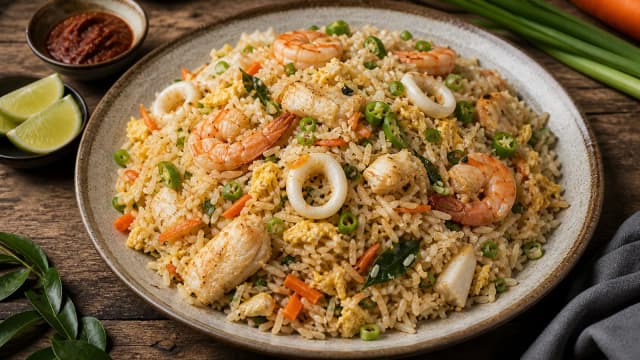
Sri Lankan seafood fried rice, also called mixed seafood fried rice, is cold cooked rice tossed in a screaming-hot wok with prawns, cuttlefish and fish, scrambled egg, crisp vegetables and a splash of soy and chilli. The trick is speed: a hot wok and fast high-heat cooking keep the prawns plump and the cuttlefish tender, not rubbery. Smoky, savoury and just a little fiery, this fried rice turns a handful of mixed seafood into a quick one-pan meal.

This is restaurant-style wok-tossed fried rice: prawns, cuttlefish and fish cooked fast over high heat so the seafood stays tender and the grains stay separate.
- Total time
- 40 min
- 25 min prep · 15 min cook
- Serves
- 4 people
- Difficulty
- Medium
- Spice level
- Medium
- Country help
- USA · UK · AU · CA substitutes included
CeylonCooking
ceyloncooking.com/recipes/seafood-fried-rice
Sri Lankan Seafood Fried Rice
Scan to open on your phone
Nutrition
Estimated values, per serving.
About This Dish
Walk past a busy Sri Lankan rice-and-noodle joint in the evening and you'll hear it before you see it: the clatter of a steel ladle against a glowing wok, the hiss of seafood hitting hot oil, the quick scrape and toss that throws rice into the air. Seafood fried rice is street-corner and family-table food at once, the dish you order when you want something fast, generous and a little bit special, with prawns and rings of cuttlefish tumbling through every spoonful.
Fried rice came to the island through Chinese cooks and stayed, the way good food does, picking up a Sri Lankan accent along the way. The plain version leans on soy and pepper, but the island style reaches for green chilli, a curl of curry leaf, sometimes a spoon of chilli paste, so there's a gentle heat under the smoke. Coastal kitchens, with the sea at the doorstep, naturally turned it toward seafood: whatever the morning catch offered, a few prawns, a small cuttlefish, a fillet of firm fish, all went into the same pan.
The soul of this dish is wok hei, that faintly smoky breath of the wok you only get from very high heat and a pan you don't crowd. And it's also the secret to the seafood. Prawns need barely a minute, cuttlefish even less, and the moment they overcook they go from sweet and springy to chewy and rubbery. So you sear the seafood fast and lift it out, fry the rice separately, then bring everything back together at the very end, just long enough to fold and warm through.
Done well, mixed seafood fried rice is a whole meal in one bowl: long, separate grains glossed with seasoning, sweet prawns, tender cuttlefish, flakes of fish, ribbons of egg, and the crunch of spring onion and carrot. It's the dish that uses up last night's rice and turns a small bag of seafood into dinner for the family, with very little fuss and a lot of flavour.
Why Cold Day-Old Rice Is the Secret
The single biggest thing that separates restaurant fried rice from the mushy version at home is the rice itself. Freshly cooked rice is warm, damp and soft, and when you toss it in a wok it clumps, sticks and steams into a sticky mass. Cold rice that has spent a night in the fridge has dried out a little, the grains firmed up and separated, so they fry into distinct, glossy grains that take on smoke and seasoning instead of turning to paste.
If you don't have day-old rice, cook a batch of long-grain rice like basmati or Sri Lankan samba, spread it thin on a tray and chill it uncovered for an hour or two until the surface feels dry. Rinse the raw rice before cooking and use slightly less water than usual so it cooks on the firm side. The goal is the same either way: dry, separate, firm grains that can take the heat of the wok without collapsing.
What It Should Taste Like
Savoury, lightly smoky and gently spiced, with long separate grains glossed in soy, sweet plump prawns, tender rings of cuttlefish, soft flakes of fish, ribbons of egg and the fresh crunch of spring onion and carrot. It's a quick, generous plate.
Ingredients
This recipe makes 4 servings. Change the number and every amount below updates with it. Substitutes for hard-to-find items are in the sidebar.
The US button converts grams, millilitres and centimetres to ounces, cups and inches. Spoon measures stay exactly as they are.
Open this in the recipe converter
Seafood
- Prawnspeeled and deveined200 g
- Cuttlefish or squidcleaned, cut into rings or strips150 g
- Firm white fishsuch as tuna or seer, cut into bite-size cubes150 g
- Salt and pepperto season the seafooda pinch
- Lime juiceoptional, to season1 tsp
Rice and Aromatics
- Cold cooked riceday-old, basmati or samba4 cups
- Eggslightly beaten2
- Oildivided3 tbsp
- Garlicfinely chopped3 cloves
- Gingerfinely chopped1 tsp
- Oniondiced1 small
- Green chilliesfinely sliced2
- Curry leavesoptional1 sprig
- Carrotfinely diced1
- Spring onionssliced, white and green kept separate3
- Leeks or beansfinely sliced, optional½ cup
Seasoning
- Soy sauce2 tbsp
- Oyster sauceoptional1 tbsp
- Chilli paste or chilli sauceoptional, to taste1 tsp
- White pepper½ tsp
- Saltto taste
Method
Follow these 7 steps. Each one explains not just what to do, but why it matters.
Ready to Start Cooking?
The screen shows one step at a time, with just the ingredients that step needs at your serving count, a timer you can tap, and your phone kept awake.
- 01
Prep Everything First
Pat the seafood dry, then season the prawns, cuttlefish and fish lightly with salt, pepper and a squeeze of lime. Use your fingers to break up the cold rice, chop the vegetables, beat the eggs, and set everything out by the stove.
Fried rice is fast. Start to finish, you're usually cooking for under ten minutes, so there's no time to chop mid-wok. Everything has to be ready and within reach before the pan gets hot, because once the seafood goes in, you'll be moving nonstop. Drying the seafood properly isn't fussiness: surface water steams instead of searing, and steamed prawns go grey and rubbery instead of browning and staying sweet. Breaking up the cold rice now means no clumps to fight later.

Tip: Spread the seafood out on paper towel and press another sheet on top to pull off every bit of moisture. Dry seafood is the difference between a sear and a stew.
- 02
Sear the Seafood Fast and Lift It Out
Heat a tablespoon of oil in a wok over the highest heat until it just begins to shimmer. Add the prawns, cuttlefish and fish in a single layer, sear for about a minute, tossing once or twice, then lift everything out the moment the prawns turn pink and the cuttlefish turns opaque.
This is the step that makes or breaks the dish. Seafood cooks in seconds, and a hot, uncrowded wok sears the outside while the inside stays just done and tender. Prawns are ready when they curl into a loose C and turn pink, no more. A tight O means they're overcooked. Cuttlefish and squid need even less, barely a flash, because they toughen the instant they go past opaque. Cooking them first and removing them keeps them from sitting in the pan and turning to rubber while the rice fries.

Tip: If your pan is small, sear the seafood in two batches rather than crowding it. A crowded wok loses heat fast, and the seafood steams in its own juices instead of searing.
- 03
Scramble the Egg
Add a little more oil to the same wok, pour in the beaten egg, let it set for a few seconds, then scramble it into soft, just-set curds. Push it to the side or scoop it out.
Cooking the egg separately gives you tender, distinct ribbons running through the finished rice instead of a thin coating that makes everything claggy. Let it sit undisturbed for a moment so it puffs, then break it up gently. You want it barely set and still glossy, because it'll warm through again at the end and you don't want it dry and bouncy.

Tip: Keep the egg soft and slightly underdone here. It finishes cooking when the hot rice hits it later.
- 04
Fry the Aromatics and Vegetables
Add the last of the oil, then the garlic, ginger, onion, green chilli and curry leaves. Stir-fry for thirty seconds until fragrant. Add the carrot, leeks or beans and the white parts of the spring onion, and toss for another minute so they soften but keep their crunch.
Chuck the aromatics into a hot wok and keep them moving, so the garlic and ginger perfume the oil but never scorch and go bitter. Leave the veg with a bit of bite; that fresh crunch is what stops fried rice being soft and dull. The green chilli and curry leaves are the Sri Lankan accent here, and they set it apart from plain soy fried rice.

Tip: Cut the carrot and beans small and even, so they cook through in that short hot toss and you don't end up with raw bits.
- 05
Toss in the Rice over High Heat
Tip in the cold rice and crank the heat to maximum. Toss and press it against the hot wok, spread it out, flip it, and repeat for two to three minutes until the rice is heated through, glossy, lightly toasted and free of cold clumps.
This is your shot at wok hei, that faint smoky smell that makes restaurant fried rice taste so good. You only get it over fierce heat with the rice spread thin, so it sears rather than steams. Keep moving: press the rice onto the hot metal, then flip and spread it again. Cold firm grains can take that heat and go glossy and separate. Don't be tempted to add liquid. If it sticks, add a touch more oil, never water.

Tip: Don't stir gently here. You want aggressive, nonstop tossing over the highest heat your stove can give, so every grain gets a turn against the hot pan.
- 06
Season the Rice
Drizzle the soy sauce, oyster sauce and chilli paste down the hot side of the wok, add the white pepper, and toss for another minute so the seasoning coats every grain and caramelises a little.
Adding soy down the side of the hot wok, not straight onto the rice, lets it sizzle and toast for a second before it hits the grains. That quick toast deepens the flavour. Tossing it through evenly stops the rice going patchy, with some grains soaked and others bare. Taste as you go: soy sauces vary in saltiness, so add a little, taste, then add more only if you need it.

Tip: Go light at first. You can always add more soy and salt, but once the rice is over-seasoned you can't take it back out.
- 07
Fold the Seafood Back in and Finish
Return the seared seafood and the egg to the wok, add the green parts of the spring onion, and fold it all together for just thirty seconds to a minute. That's all it needs to warm the seafood through.
The seafood goes in at the very last moment for a reason. It's already cooked, and every extra second over the heat takes it closer to rubbery. You're not re-cooking it, just getting it back together with the hot rice so the flavours can marry. Fold rather than stir hard, so the prawns stay whole, the cuttlefish stays intact and the egg stays in ribbons. Pull the wok off the heat while everything still looks bright and fresh.

Tip: Taste one last time for salt and heat, scatter over the spring onion greens, and serve right away while the wok smoke is still on it.
Common Mistakes to Avoid
- Overcooking the seafood, so the prawns and cuttlefish turn tough and rubbery instead of sweet and tender. Sear them fast and lift them out straight away.
- Using warm, freshly cooked rice, which clumps and turns mushy in the wok instead of frying into separate grains.
- Crowding the wok, which drops the heat so the seafood and rice steam instead of sear, and you lose that smoky flavour.
- Not patting the seafood dry, so it weeps water and stews grey instead of browning.
- Adding the seafood back too early and cooking it a second time is what makes it chewy.
- Don't pour the soy straight onto the rice in one spot. Some grains end up drenched, others completely bare.
Serving Ideas
- On its own, as a complete one-bowl meal. Add a wedge of lime and extra chilli sauce on the side and you're sorted.
- With a fresh cucumber and onion salad or a sharp sambol to cut the richness.
- Alongside a fiery seafood or fish curry when you want a bigger spread.
- Top it with a fried egg and scatter over some fried shallots for an indulgent version.
Building a whole plate around it? Start from our beginner rice and curry menu, which sets out what to cook alongside it and in what order.
Storage and Make-Ahead
It keeps for 1 to 2 days refrigerated in an airtight container. Reheat it quickly in a hot wok or pan, not the microwave, or the rice goes soft. Because there is cooked seafood in it, cool it fast, store it cold and do not reheat it more than once. It does not freeze well either, the seafood and rice both suffer.
Two Ways to Cook It
If you don't have a wok, use a large non-stick frying pan and cook in stages. Sear the seafood and take it out, scramble the egg and take it out, then fry the vegetables and rice before folding everything back in. Start with just prawns, since they're the most forgiving seafood, and use a ready-made chilli sauce for easy seasoning.
Get a carbon-steel wok over the fiercest heat you can manage and use fresh prawns, cuttlefish and firm fish. Sear the seafood in batches so you get wok hei. Fry the rice hard until it's lightly toasted and smoky. Lean on green chilli, curry leaves and a spoon of chilli paste for the island accent, and finish with plenty of spring onion.
Lighter and Healthier Version
Seafood fried rice is already one of the leaner fried rices because seafood is high in protein and low in fat. A few small changes make it lighter still, without losing the smoke and flavour.
Use Less Oil
A well-seasoned wok or non-stick pan over high heat needs only a tablespoon or two of oil total. It's the high heat, not extra fat, that gives fried rice its character.
Load up the Vegetables
Double the carrot, leeks, beans and spring onion, or add cabbage and capsicum. More vegetables mean more fibre and bulk for fewer calories, and they keep the dish feeling fresh.
Try a Wholegrain Rice
Cold cooked brown basmati or Sri Lankan red rice adds fibre and a nuttier bite. Cook it firm and chill it well so it still fries into separate grains.
Go Easy on the Soy and Sauces
Soy and oyster sauce are salty, so use a low-sodium soy, keep the oyster sauce optional and lean on green chilli, pepper and lime for flavour instead of more salt.
Let the Seafood Lead
Keep the rice to a modest portion and increase the prawns, cuttlefish and fish, so the meal is protein-forward rather than carb-heavy.
Frequently Asked Questions
The classic mix is prawns, cuttlefish (or squid) and firm white fish such as tuna or seer. That gives you a range of textures, from sweet and plump to tender and flaky. You can use any combination, including crab meat or just prawns. Whatever you choose, keep the pieces bite-size and cut them evenly so they cook in the same short time.
Cooked It? Tell Us How It Went
Your notes on this sri lankan seafood fried rice help the next person get it right: what you swapped, what you would do differently, where the recipe should have warned you. Tap a star if you are in a hurry, or write a few lines if you have a minute.
You Might Also Like


Sri Lankan Home Cooking Starter Pack
40 authentic Ceylon recipes made simple for foreign kitchens: spice guide, pantry checklist, substitute guide, 7-day meal plan and printable shopping lists.