Malay Achcharu
Sri Lankan Malay Pickle (Achcharu)
Also known as Sri Lankan Mixed Pickle
Sri Lankan Malay pickle, Malay achcharu, is a sharp, sweet and fiery mixed pickle from the island's Malay community. Carrot, beans, cauliflower, shallots and green chilli get blanched, then packed into a thick paste of ground mustard, vinegar, chilli and sugar. A handful of dates or raisins gives it that sweet-sour Malay lift, the thing that sets it apart from a plainer achcharu. A jar keeps for weeks and brightens biryani, rice and curry, and lamprais.

Also in our Muslim Sri Lankan collection.
A sharp, sweet, fiery jar of crunchy pickled vegetables that brightens biryani, rice and curry, and lamprais.
- Total time
- 45 min
- 30 min prep · 15 min cook
- Serves
- 12 people
- Difficulty
- Medium
- Spice level
- Authentic Hot
- Country help
- USA · UK · AU · CA substitutes included
CeylonCooking
ceyloncooking.com/recipes/malay-pickle
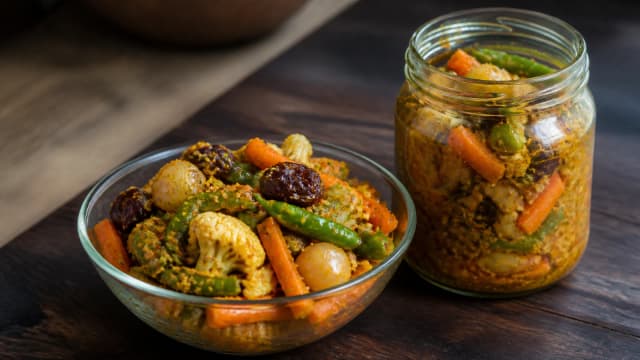
Sri Lankan Malay Pickle (Malay Achcharu)
Scan to open on your phone
Nutrition
Estimated values, per serving.
About This Dish
Open the fridge in a Sri Lankan Malay home and you'll almost always find a jar of achcharu. Bright, glassy vegetables sit in a golden, mustard-flecked paste that's sweet, sharp and properly hot all at once. Achcharu is the broad Sri Lankan word for pickle, borrowed and reshaped over centuries, but the Malay version has a character all its own. The Malay community descended from soldiers, exiles and traders who arrived from the islands of Southeast Asia, and they brought a love of vinegar, mustard and that sweet-sour balance. Malay pickle is one of the most delicious things they gave the island's table.
What marks it as Malay rather than a generic mixed pickle is the base and the sweetness. The vegetables aren't sitting in a thin brine. They're bound in a thick, ground mustard and vinegar paste that's sharp and pungent, then lifted with dates or raisins so the finished pickle carries a fruity, almost jammy sweetness behind the heat. You taste that same instinct across Malay cooking: heat and sour pulled into balance by something sweet. Every family guards its own ratio of mustard to sugar to chilli, and a good cook is quietly proud of theirs.
Malay pickle earns its keep because it lasts and because it brightens everything around it. A spoonful next to a biryani cuts through the rich, ghee-laden rice. Tucked into a lamprais parcel, it gives the sharp note against the curries and frikkadels. On an ordinary rice and curry plate, it wakes the whole thing up. It's essentially a preserve: vegetables blanched crisp and sealed under vinegar and oil. A batch made on the weekend sits happily in the fridge for weeks and only deepens in flavour.
The craft is in the contrast. The vegetables have to stay crunchy, never soft, so they get blanched only briefly and dried thoroughly before they meet the paste. The mustard must be freshly ground so its pungent bite reads clearly, the vinegar sharp, the chilli generous, and the sweetness from the dates just enough to round it all rather than turn it into a chutney. When it's right, every forkful crunches, stings, sours and sweetens in the same bite. That's exactly why a jar never lasts as long as you plan.
The Mustard-Vinegar Base and the Sweet Malay Lift
The soul of Malay pickle is the base: mustard seeds ground fresh and loosened with vinegar into a thick, pungent paste that coats every piece of vegetable. Grinding the mustard yourself matters more than almost anything else in the recipe. Whole mustard seeds are mild and almost sweet until you break them open. The moment they're crushed and meet a cold acidic liquid like vinegar, they release the sharp, sinus-clearing pungency that defines the pickle. Pre-made mustard paste is a fine shortcut, but it's already mellowed in the jar, so a freshly ground base always reads brighter and sharper.
And then there's the sweet touch of dates or raisins. That's the other Malay signature, the thing that tells you this isn't just a plain sharp achcharu. A plainer achcharu leans almost entirely sharp and hot, but the Malay style folds in soft dried fruit so the pickle ends with a fruity, caramel-edged sweetness that works against the vinegar and mustard. The dates soften in the warm paste and give a rounder, jammier sweetness than sugar alone, which is the same sweet-sour instinct you get all through Malay cooking. So it's the pungent mustard base plus that sweet dried-fruit lift that marks a pickle as Malay and not just mixed.
What It Should Taste Like
Crunchy, glassy vegetables sit in a thick golden mustard-and-vinegar paste that is sharp, pungent and properly hot, with a fruity sweetness from dates or raisins rounding it off. Every bite crunches, sours, stings and sweetens all at once. Bright and concentrated, never soft or watery.
Ingredients
This recipe makes 12 servings. Change the number and every amount below updates with it. Substitutes for hard-to-find items are in the sidebar.
The US button converts grams, millilitres and centimetres to ounces, cups and inches. Spoon measures stay exactly as they are.
Open this in the recipe converter
For the Vegetables
- Carrotscut into batons2
- Green beanscut into short lengths150 g
- Cauliflowerbroken into small florets½ small head
- Shallotspeeled, left whole or halved12
- Green chilliesleft whole or slit6
- Saltfor blanching and drying1 tsp
For the Mustard-Vinegar Paste
- Mustard seedsground fresh, or 2 tbsp mustard paste3 tbsp
- Garlic6 cloves
- Ginger2 cm piece
- White vinegarplus a little for grinding200 ml
- Chilli powderadjust for heat2 tbsp
- Ground turmeric½ tsp
- Sugaror to taste3 tbsp
- Soft pitted dates or raisins6 dates or 3 tbsp raisins
- Oilcoconut or any neutral oil4 tbsp
- Saltor to taste1 tsp
Method
Follow these 8 steps. Each one explains not just what to do, but why it matters.
Ready to Start Cooking?
The screen shows one step at a time, with just the ingredients that step needs at your serving count, a timer you can tap, and your phone kept awake.
- 01
Cut the Vegetables to Match
Cut the carrots into batons, the beans into short lengths, and break the cauliflower into small, even florets. Peel the shallots and leave them whole or halved, and slit or leave the green chillies whole.
Here's the thing: your knife is deciding how the finished pickle will eat. Cut everything to a similar size and the vegetables blanch in the same breath and crunch together in the same forkful. Leave the cauliflower in great craggy lumps and the carrot in thin coins and you get a pickle that's half mush and half raw. Aim for pieces that look like they belong in the same jar, slim enough to take on the paste yet chunky enough to keep a real bite. The shallots can stay whole because their job is little glassy bursts of sweetness against the sharper vegetables.

Tip: Keep the harder vegetables (carrot, cauliflower) a touch smaller than the softer beans, so they all reach the same just-tender crunch in the blanch.
- 02
Blanch the Vegetables Crisp, Not Soft
Bring a pot of water to the boil with a teaspoon of salt. Drop in the carrots and cauliflower first for about a minute, then the beans, shallots and chillies for 30 seconds, and lift everything out while it's still firm and bright.
This step decides whether you get crunch or surrender, so treat the timer with respect. The boiling water is there only to take the harsh raw edge off the vegetables and set their colour to a vivid, glassy brightness, not to cook them through. Watch the carrot turn a deeper orange and the beans flash an electric green. That's your signal to move, because seconds later they start going limp. They should still squeak against your teeth when you test a piece. A pickle is meant to crunch, and a soggy vegetable can never crisp back up once it has gone.

Tip: Have a colander ready in the sink before you start. The difference between crisp and overcooked here is measured in seconds, not minutes.
- 03
Dry the Vegetables Thoroughly
Drain the blanched vegetables well, spread them out on a clean cloth or tray, and leave them to dry completely. Pat them with a towel and give them time to lose every trace of surface water.
Don't skip this bit. Any water left on the vegetables dilutes the vinegar and mustard paste, and that does two things: it blunts the flavour and, worse, weakens the acidity that keeps the pickle safe and sharp for weeks. As they sit and air-dry you'll see the bright wet sheen fade to a matt, dry surface. That dry surface is what lets the paste cling instead of sliding off in a watery puddle. In a hurry you can spread them in front of a fan. Traditional cooks even sun them for a while.

Tip: Don't rush from the colander straight to the paste. Ten or fifteen minutes of air-drying, or longer, really does change how well the pickle keeps.
- 04
Grind the Mustard Base
Grind the mustard seeds with the garlic, ginger and a splash of the vinegar into a thick, smooth paste.
Here's where the pickle declares itself Malay. Whole mustard seeds smell of almost nothing. But the instant the grinder cracks them open and the cold vinegar hits, they bloom into that sharp, nose-tingling pungency that no jarred mustard quite matches. You want a thick paste, not a runny one, so add the vinegar in small splashes and let the garlic and ginger grind down with the seeds into one smooth, fragrant mass. Give it a sniff: it should make your nose prick. That bite is the backbone the rest of the pickle is built on.

Tip: Grind your own mustard if you possibly can. That fresh, fierce pungency is the soul of Malay pickle, and pre-made paste, while convenient, is always a milder stand-in.
- 05
Cook the Vinegar, Sugar and Chilli Paste
Heat the oil in a wide pan. Stir in the ground mustard base, then add the chilli powder, turmeric, the rest of the vinegar, the sugar, the dates or raisins and the salt. Simmer gently until it thickens into a glossy, jammy paste.
As the paste warms through, the kitchen fills with the sharp, bracing smell of cooking vinegar. That's exactly right. It softens and rounds as the sugar dissolves and the chilli blooms into a deep, brick-red glaze. The dates slowly melt at the edges and thicken the paste with their fruity sweetness, pulling against the mustard and vinegar so the whole thing tastes layered rather than simply sour. Keep it at a gentle simmer and stir often, because a thick, sugary paste catches and scorches in a moment. You're looking for a paste that coats the spoon and just holds its shape, not a thin sauce.

Tip: Taste and chase the four-way balance now, while it's loose. Sharp, sweet, hot and salty should all land at once, with no single note shouting over the rest.
- 06
Combine the Vegetables and Paste
Add the dried, blanched vegetables to the warm paste and fold gently until every piece is coated. Cook for just a minute or two so they warm through without softening.
Fold, don't stew. The vegetables are crisp and you want them to stay that way. So this is a quick, gentle toss to slick each piece in the glossy paste, not a simmer that would steam the crunch right out of them. As you turn them over you'll watch the carrot, beans and cauliflower take on the golden, mustard-flecked colour of the paste and start to glisten. A minute or two over low heat is all it takes for the warmth to help the flavour grip. Any longer and you undo the careful blanching you just did.

Tip: Pull the pan off the heat while the vegetables still have a clear, audible crunch. They'll keep absorbing the paste cold in the jar.
- 07
Jar It in a Sterilised Jar
Pack the pickle into a clean, sterilised glass jar, pressing it down so the paste and oil rise to cover the vegetables. Then seal and cool completely.
Sterilising the jar isn't fussiness, it's what lets the pickle keep for weeks instead of days. Wash the jar and lid in hot soapy water, then dry them in a low oven or rinse with boiling water so no stray microbes get sealed inside with the vegetables. Pressing the pickle down so the vinegary, oily paste covers everything keeps air off the vegetables, same logic as any good preserve. And let the jar cool fully before sealing it tight, because trapping warm steam inside is the fastest way to spoil a batch.

Tip: Keep the vegetables under the paste and oil, not poking out above it. Any piece exposed to air spoils first.
- 08
Let It Mature
Leave the sealed jar in the fridge for at least a day, ideally two or three, before you eat it, so the vegetables drink up the mustard and vinegar and the flavours marry.
Like all good pickles, this one rewards patience. Straight from the pan it's already sharp and good, but give it a day or two in the cold and it transforms: the vinegar and mustard work their way into the heart of every vegetable, the dates dissolve more fully into the paste, and the harsh edges of the fresh vinegar soften into something rounder and more complex. The crunch holds while the flavour deepens, which is the whole magic of an achcharu. The jar you open on day three almost always tastes better than the spoonful you stole from the pan.

Tip: Always dip in with a clean, dry spoon. Crumbs and moisture from a used spoon shorten a pickle's life in the fridge.
Common Mistakes to Avoid
- Over-blanching the vegetables so they go soft and limp. A pickle is meant to crunch, and once gone the crunch never comes back.
- Not drying the vegetables before they meet the paste, so trapped water dilutes the vinegar and mustard and shortens how long the pickle keeps.
- Using pre-made mustard instead of grinding the seeds fresh, which leaves the base milder and less pungent than a real Malay pickle.
- Cooking the vegetables in the paste instead of just folding them through, which steams out the crunch you worked to keep.
- Skimping on vinegar to make it less sharp, which weakens the acidity that preserves the pickle.
- Jarring it in an unsterilised jar or sealing it while still warm, both of which spoil the batch faster.
Serving Ideas
- A spoonful on the side of biryani, to cut through the rich, ghee-laden rice.
- Tucked into a lamprais parcel as the sharp note against the curries and frikkadels.
- On any rice and curry plate, as a bright, crunchy contrast to creamy dhal and spicy curries.
- Alongside grilled or fried meat and fish, where the vinegar and mustard cut the richness.
- With bread, roti or a simple plate of rice when a meal needs a fiery, tangy lift.
Building a whole plate around it? Start from our beginner rice and curry menu, which sets out what to cook alongside it and in what order.
Storage and Make-Ahead
Keeps for 3 to 4 weeks in a clean, sterilised, sealed jar in the fridge, and the flavour deepens over the first few days as the vegetables soak up the mustard and vinegar. Keep the vegetables submerged under the paste and oil, cool the jar fully before sealing, and always use a clean, dry spoon. The high vinegar content is what preserves it, so don't water it down.
Two Ways to Cook It
Grab a couple of tablespoons of ready-made mustard paste or Dijon and skip the seed grinding. Stick to easy vegetables like carrot, beans and shallots, and sweeten with raisins or a little extra sugar instead of dates. Blanch the vegetables briefly, dry them well, fold them through the cooked paste, and jar it. It's faster, and still a proper sharp-sweet Malay pickle.
Grind whole mustard seeds fresh with garlic and ginger into a sharp paste. Use the full mix of carrot, beans, cauliflower, shallots and green chilli, blanched just crisp, and sweeten with soft dates. Cook the vinegar-chilli paste down until glossy, then seal the jar and leave it to mature for two or three days before eating so the flavours fully marry.
Lighter and Healthier Version
Malay pickle is naturally vegetable-led and, left without any animal products, fully plant-based with no cholesterol. The two things worth going easy on are the oil and the sugar. You can ease back on both without losing that sharp, crunchy, sweet-hot character that defines it.
Use Less Oil
Cook the paste in a good non-stick pan with half the oil and a little extra vinegar. It still comes together glossy and keeps well, because the vinegar does most of the preserving work.
Sweeten with Dates Alone
Skip the added sugar and let the soft dates carry all the sweetness. They melt into the paste, add natural sweetness and a little fibre, and bring a deeper, more caramel-like note than refined sugar.
Lean on the Vegetables
This is mostly crunchy blanched vegetables in a sharp dressing, so it's light by nature. Pack in plenty of carrot, beans and cauliflower and keep the paste portion modest for a fresher, lower-calorie pickle.
Go Easy on the Salt
Season the paste in small additions and taste as you go. Lean on the mustard, vinegar and chilli for punch rather than reaching for more salt.
Frequently Asked Questions
Malay pickle, or Malay achcharu, is a sharp, sweet and fiery Sri Lankan mixed pickle from the island's Malay community. Crunchy vegetables like carrot, beans, cauliflower, shallots and green chilli get blanched, then packed in a thick paste of ground mustard, vinegar, chilli and sugar, lifted with dates or raisins for a sweet-sour finish. It keeps for weeks and is served alongside biryani, rice and curry, and lamprais.
Cooked It? Tell Us How It Went
Your notes on this sri lankan malay pickle help the next person get it right: what you swapped, what you would do differently, where the recipe should have warned you. Tap a star if you are in a hurry, or write a few lines if you have a minute.
You Might Also Like


Sri Lankan Home Cooking Starter Pack
40 authentic Ceylon recipes made simple for foreign kitchens: spice guide, pantry checklist, substitute guide, 7-day meal plan and printable shopping lists.