Kesel Bada Mallum (Banana Stem Mallum)
Also known as Plantain Stem Mallung
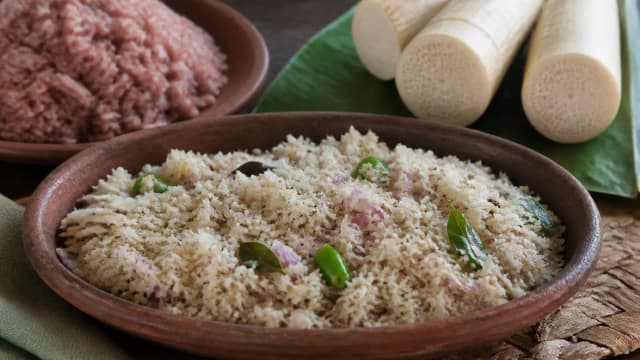
Kesel bada mallum is banana stem, chopped as small as you can manage, boiled with a pinch of turmeric until tender, then mixed through pounded coconut with shallots, garlic, green chilli, curry leaves, mustard, cumin and pepper. Two rules run the whole dish. Every piece goes straight into water as you cut it, or the stem browns and turns astringent. And salt goes in at the very end, never earlier, or the mallum turns wet instead of dry and light.

Finely chopped banana stem, boiled with turmeric, then folded through a pounded coconut mix. High in fibre, barely any oil, and salt only goes in at the end.
- Total time
- 40 min
- 25 min prep · 15 min cook
- Serves
- 4 people
- Difficulty
- Beginner
- Spice level
- Mild
- Country help
- USA · UK · AU · CA substitutes included
CeylonCooking
ceyloncooking.com/recipes/kesel-bada-mallum
Kesel Bada Mallum
Scan to open on your phone
About This Dish
The banana stem is the part most people throw away. Under those tough fibrous layers there's a pale, tender core about the width of your wrist, and that core is what this dish is made of. It's cheap, mostly fibre and water, and in Sri Lankan homes it turns up as a mallum. Chopped fine, cooked briefly, finished with coconut, not stewed into a curry.
Two things separate a good kesel bada mallum from a grey, sulky one. The first is the bowl of water you keep beside the board. Cut banana stem browns almost as you watch, and once it does it tastes tannic and rough, the kahata edge nobody wants. The second is holding the salt until the end. Salt pulls water out of everything it touches, and a mallum is supposed to be dry and separate, so seasoning early leaves you with a damp pan and coconut that has gone claggy.
The pounding matters too, more than it looks like it should. Shallots, garlic, green chilli and curry leaves go into the mortar first and get bruised together, then the coconut and the whole spices join them. A blender chops. A pestle crushes, and that breaks the oils out of the curry leaves and the onion and drives them through the coconut, so the mix smells like something before it ever reaches the pot.
This is everyday food, not special-occasion food. It sits on a rice plate as the fresh, fibrous, slightly peppery thing next to a dhal and something fried. And it's one of the few dishes on this site that uses almost no oil at all, which is worth knowing when the rest of the plate is heavier.
Getting to the Tender Core, and Keeping It Pale
A banana stem is built in layers, like a leek that never loosened up. The outer sheaths are stringy and tough, none of them worth eating, so peel them away until you reach a smooth, pale, solid core, usually a good deal narrower than the stem looked from outside. That core is the whole yield. Slice it thinly and you'll see fine threads lift away as you go. Catch them on a finger and pull them out, because they stay stringy however long you boil them.
Cut stem oxidises fast, the way an apple or a raw jackfruit does, and browned pieces bring an astringent, tannic taste with them. So the bowl of water goes on the board before the knife does, and every piece goes in as you cut it. Some cooks add a squeeze of lime or a pinch of turmeric to the water, which helps a little. What helps most is simply not letting the pieces sit in the air, and draining them well before they meet the pot.
What It Should Taste Like
Light, dry and fibrous, with the coconut fresh rather than cooked into anything. Pepper and cumin come through first, then the sweetness of the shallots and the grassy hit of pounded curry leaves. The stem itself tastes of very little, which is the point. It carries the coconut and the aromatics, and it should crunch faintly, not go soft and stringy.
Ingredients
This recipe makes 4 servings. Change the number and every amount below updates with it. Substitutes for hard-to-find items are in the sidebar.
The US button converts grams, millilitres and centimetres to ounces, cups and inches. Spoon measures stay exactly as they are.
Open this in the recipe converter
To Boil
- Banana stem inner core (කෙසෙල් බඩ)about 400 g once peeled down, chopped very fine and dropped into water as you cut1 core
- Turmeric powder (කහ කුඩු)1/4 tsp
- Water (වතුර)Just enough to steam it, not to swim inabout 1/2 cup
To Pound
- Grated coconut (පොල්)fresh, or frozen and thawed1 cup
- Red onions (රතු ලූනු)chopped6 small
- Garlic (සුදු ලූනු)3 cloves
- Green chillies (අමු මිරිස්)chopped2
- Curry leaves (කරපිංචා)1 sprig
- Mustard seeds (අබ)1/2 tsp
- Cumin seeds (සුදුරු)1/2 tsp
- Black pepper (ගම්මිරිස්)whole or coarsely ground1/2 tsp
- Turmeric powder (කහ කුඩු)a pinch
At the End
- Salt (ලුණු)added last, off the boil, never at the start3/4 tsp
Method
Two rules carry this one. Chop into water so the stem stays pale, and hold the salt back until the very last stir. Everything else is 15 minutes at the stove.
Ready to Start Cooking?
The screen shows one step at a time, with just the ingredients that step needs at your serving count, a timer you can tap, and your phone kept awake.
- 01
Peel Down to the Tender Core
Strip the tough outer layers off the banana stem until you reach the pale, smooth core inside. Then chop that core as finely as you can into a bowl of water.
Don't stop peeling when it feels wasteful. The fibrous sheaths never soften and one left in the mix is enough to spoil a mouthful. What you want is the smooth centre, which is usually much narrower than the stem looked. As you slice, fine threads will lift off the blade: wind them round a finger and pull them out as you go, boiling does nothing to them. Chop small, roughly the size of a grain of rice, because a mallum wants fine pieces that mix through the coconut rather than chunks sitting in it.

Tip: Fill the water bowl before you pick up the knife. Cut stem browns in the time it takes you to fetch one.
- 02
Boil It with Turmeric
Drain the chopped stem well, then put it in a pot with the turmeric and about half a cup of water. Stir, cover, and boil over medium heat until the pieces are tender.
Not much water goes in here. The stem holds plenty of its own and you're steaming it as much as boiling it, so half a cup is enough to get things going under a lid. Turmeric keeps the colour up and does a little of the same work the soaking water was doing. Test a piece between your fingers rather than guessing: it should give easily but still have the faintest bite left, since the coconut still has a couple of minutes to go with it afterwards. A little water left in the bottom of the pot at this stage is fine.

Tip: Keep the lid on. The steam trapped under it does most of the cooking.
- 03
Pound the Coconut Mix
While the stem boils, pound the red onions, garlic, green chillies and curry leaves in a mortar until bruised. Add the grated coconut, mustard, cumin, pepper and a pinch of turmeric, then pound again until everything smells fragrant and comes together.
Aromatics first, coconut second, and the order matters. Onion, garlic, chilli and curry leaves need a bit of violence to break their oils out, and doing that against bare stone works far better than doing it against a bowl of coconut. Once they're bruised, the coconut goes in and the pounding turns gentler, more folding than crushing, so the coconut picks up the colour and the smell without turning to paste. A food processor will get you close, though it chops rather than crushes and the result smells noticeably flatter.

Tip: Use whole mustard and cumin, not powder. Pounded whole seed keeps a little texture and releases as you eat.
- 04
Fold the Coconut Through the Stem
When the stem is tender, tip in the pounded coconut mix and stir it through until everything's evenly combined.
Get it mixed properly while the pot is still hot, so the coconut warms through rather than sitting on top as a cold layer. The colour changes as you stir: the pale stem takes on the yellow of the turmeric and the whole thing goes from two things in a pot to one dish. If the mortar has coconut and spice stuck to it, swill it out with a tablespoon of water and add that to the pot. That's both thrifty and useful, since that splash gives you the steam for the next step.

Tip: Fold, don't beat. Heavy stirring at this point mashes the softened stem.
- 05
Cover and Steam for 2 to 3 Minutes
Turn the heat right down, put the lid back on, and leave it for 2 to 3 minutes so the raw coconut and the spices steam through.
That short covered spell is what takes the raw edge off the coconut and cooks the mustard and cumin just enough to lose their harshness. Two to three minutes, no more. Go longer and the coconut starts to dry out and toughen, and that fresh, almost salad-like quality that makes a mallum a mallum disappears. Keep the flame low. There is barely any liquid in the pot, and the bottom catches quickly.

Tip: If it looks completely dry when you lift the lid, add a tablespoon of water instead of more heat.
- 06
Dry It off, Then Salt It
Take the lid off and let any remaining moisture cook away until the mallum looks dry and separate. Add the salt now, stir it through once, and take the pot off the heat.
This is the step people get wrong by doing it first. Salt draws water out of both the stem and the coconut, so salted early it steams in its own liquid and you end up with a wet, heavy mallum instead of a light one. Hold it back to the end and the salt seasons what is already there, nothing turns soggy. Let the pot dry out properly before it goes in, taste after one stir, and stop there. A mallum should look loose and separate on the spoon, not clumped.

Tip: Taste it warm rather than hot. Coconut mutes salt while it is very hot, and an over-salted mallum cannot be walked back.
Common Mistakes to Avoid
- Letting the cut stem sit in the air, so it browns and turns astringent before it reaches the pot.
- Salting at the start, which draws out water and leaves the mallum wet and heavy.
- Leaving the stringy fibres in. They never soften, no matter how long you boil them.
- Chopping the stem coarsely, so it sits in the coconut as chunks instead of mixing through it.
- Drowning it. Half a cup of water is enough, since the stem releases plenty of its own.
- Steaming the coconut for too long, which dries it out and costs you the fresh quality of a mallum.
- Blending the coconut mix into a paste rather than pounding it to a coarse, loose mixture.
Serving Ideas
- On a rice plate as the fresh, fibrous dish beside a dhal and something fried.
- With plain rice and a fried egg, which is a whole lunch and takes twenty minutes.
- Next to a dry fish curry, where the salt and heat play off how mild the mallum is.
- Spooned onto a plate with red rice and a coconut sambol for a plain, high-fibre meal.
Building a whole plate around it? Start from our vegetarian rice and curry menu, which sets out what to cook alongside it and in what order.
Storage and Make-Ahead
Kesel bada mallum keeps 2 days in the fridge in a covered container, though it is at its best the day it is made, while the coconut still tastes fresh. Reheat it briefly in a dry pan rather than a microwave, which makes the coconut rubbery. It does not freeze: the stem goes soft and watery on thawing. Raw banana stem browns within hours of being cut, so buy it whole and prepare it the day you cook.
Two Ways to Cook It
If your grocer sells peeled banana stem, go ahead and buy it that way. Keep a big bowl of water beside the board so you never have to hurry. Use thawed frozen grated coconut and pulse the coconut mix in a food processor instead of pounding it. Boil the stem with turmeric until it gives easily, fold the coconut through, cover for two minutes, dry it off, then salt it. Honestly, that last order is the only bit that really matters.
Cut the stem from the garden, peel it down to the core, and chop it fine as rice straight into water, pulling the threads off as you work. Scrape a fresh coconut and pound the shallots, garlic, chilli and curry leaves in a wangediya before folding in the coconut and whole spices. Cook it in a clay pot, steam the coconut for two minutes only, and salt it at the very last stir.
Lighter and Healthier Version
This is a light one. Nothing is fried, no oil goes in at any point, and the bulk of the dish is fibre and water. What carries the calories is the coconut, and that is also what makes it taste like a mallum, so go carefully.
Less Coconut, More Stem
Take the coconut down to two-thirds of a cup and the mallum still holds together. Go below that and it stops being a mallum, it becomes boiled banana stem with onions in it.
No Oil at All
Unlike most Sri Lankan vegetable dishes, there's no temper here and nothing is fried, so no cooking fat goes into the dish at any point.
Fibre Is the Point
Banana stem is mostly fibre and water, so a plate of this fills you up without much behind it. That's the reason the dish exists in the first place.
Go Easy on the Salt
Because the salt goes in last, you're seasoning a finished dish instead of guessing at the start. Add half, stir, taste, then decide.
Watch How to Make It
Read the steps already? Watch the whole process from start to finish to see the texture, colour and timing at each stage.
Kesel Bada Mallum, Step by Step
Narrated in Sinhala (සිංහල)
The whole method on camera: peeling down to the tender core, chopping it into water, boiling with turmeric, pounding the coconut mix, and folding the two together.
සිංහලෙන් කෙටියෙන්
කෙසෙල් බඩ මැල්ලුම හදනකොට වැදගත් දේවල් දෙකක් තියෙනවා. පළවෙනි එක, කපන හැම කෑල්ලක්ම වහාම වතුරට දාන්න. නැත්නම් කළු වෙලා කහට ගතියක් එනවා. දෙවෙනි එක, ලුණු දාන්නේ අන්තිමට විතරයි. කලින් දැම්මොත් වතුර ගහලා මැල්ලුම තෙත් වෙනවා.
පිටත තද කොපු ටික ගලවලා ඇතුළේ තියෙන මෘදු කොටස අරගෙන හරි කුඩාවට කපාගන්න. කපනකොට එන ලනු වගේ නූල් ටික ඇඟිල්ලේ ඔතලා අයින් කරගන්න. ඊට පස්සේ වතුර බේරලා, කහ කුඩු ටිකකුයි වතුර ටිකකුයි දාලා, මූඩිය වහලා මෙළෙක් වෙනකන් තම්බාගන්න.
වංගෙඩියට රතු ලූනු, සුදු ලූනු, අමු මිරිස් සහ කරපිංචා දාලා තලාගන්න. ඊට පොල්, අබ, සුදුරු, ගම්මිරිස් සහ කහ ටිකක් දාලා ආයෙත් තලාගන්න. තම්බාගත්ත කෙසෙල් බඩට මේ පොල් මිශ්රණය දාලා කලවම් කරලා, පොඩි ගින්නේ විනාඩි 2-3ක් වහලා තියන්න. මූඩිය අරලා තෙතමනය වියලෙන්න දීලා, අන්තිමට ලුණු දාලා කලවම් කරලා බාගන්න.
- පිටත කොපු ගලවලා ඇතුළේ මෘදු කොටස අරගන්න
- හරි කුඩාවට කපලා වහාම වතුරට දාන්න, නූල් ටික අයින් කරන්න
- වතුර බේරලා කහ කුඩු සහ වතුර ටිකක් දාලා මෙළෙක් වෙනකන් තම්බාගන්න
- රතු ලූනු, සුදු ලූනු, අමු මිරිස්, කරපිංචා වංගෙඩියේ තලාගන්න
- පොල්, අබ, සුදුරු, ගම්මිරිස්, කහ දාලා ආයෙත් තලාගන්න
- තම්බාගත්ත කෙසෙල් බඩට පොල් මිශ්රණය දාලා කලවම් කරන්න
- පොඩි ගින්නේ විනාඩි 2-3ක් වහලා තියලා, තෙතමනය වියලාගන්න
- අන්තිමට ලුණු දාලා කලවම් කරලා ලිපෙන් බාගන්න
Filmed by Anoma's Kitchen. We did not make this video, we are linking to theirs.
Watch on YouTubeFrequently Asked Questions
It's a Sri Lankan banana stem mallum. The tender inner core of a banana stem is chopped very fine, boiled with turmeric until tender, then folded through pounded coconut with shallots, garlic, green chilli, curry leaves, mustard, cumin and pepper. The dish is dry rather than saucy, meant to be eaten with rice, and it uses no oil at all. Salt goes in only at the end.
Cooked It? Tell Us How It Went
Your notes on this kesel bada mallum help the next person get it right: what you swapped, what you would do differently, where the recipe should have warned you. Tap a star if you are in a hurry, or write a few lines if you have a minute.
You Might Also Like


Sri Lankan Home Cooking Starter Pack
40 authentic Ceylon recipes made simple for foreign kitchens: spice guide, pantry checklist, substitute guide, 7-day meal plan and printable shopping lists.