Wattakka Kola Mallum
Pumpkin Leaf Mallum (Pumpkin Leaf Mallung)
Also known as Pumpkin Leaves Sri Lanka
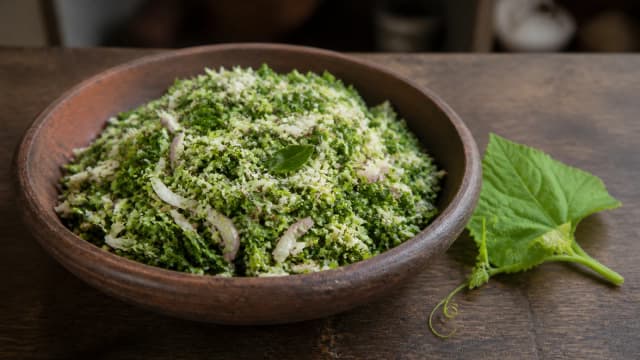
Pumpkin leaf mallum, known in Sinhala as wattakka kola mallum, is a dry Sri Lankan side of tender young pumpkin leaves and shoots. You shred them finely, toss them quickly over heat with freshly grated coconut, onion, green chilli, turmeric and a little mustard, then finish with a squeeze of lime. The leaves wilt to a vibrant green and the coconut clings loosely through them, so it tastes earthy, fresh and lightly nutty. If you've ever looked for a pumpkin leaves recipe Sri Lanka style, this is the everyday one. It uses the leaves of the plant, not the gourd, and it's naturally vegan. 'Mallum' (Sinhala mallung) simply means a shredded green tossed with coconut.

A bright green, dry leafy side made from tender young pumpkin leaves tossed with fresh coconut: earthy, nutty and the green your rice and curry plate needs.
- Total time
- 25 min
- 15 min prep · 10 min cook
- Serves
- 4 people
- Difficulty
- Beginner
- Spice level
- Medium
- Country help
- USA · UK · AU · CA substitutes included
CeylonCooking
ceyloncooking.com/recipes/pumpkin-leaf-mallum
Pumpkin Leaf Mallum (Wattakka Kola Mallum)
Scan to open on your phone
Nutrition
Estimated values, per serving.
About This Dish
In a Sri Lankan home garden, very little of the pumpkin plant goes to waste. Long before the gourd is ready to cut, the vine sends out soft new shoots and broad young leaves. You pick those, shred them and turn them into wattakka kola mallum. Wattakka is the Sinhala word for pumpkin and kola means leaves, so the name literally means 'pumpkin leaf mix-up'. It's thrift and good eating at the same time: a free, green side that comes off the same plant that will later give you a pumpkin curry.
Mallum is one of the quiet workhorses of the Sri Lankan plate. The word mallung comes from the Sinhala for a 'mix-up', and that's exactly what it is: a leaf or vegetable finely chopped or shredded and tossed through fresh grated coconut, onion, chilli and a little turmeric, then cooked briefly over heat until just wilted and dry. Gotukola mallum made with pennywort is the famous one, but the same idea works well with whatever tender greens the garden offers, and pumpkin leaves are a much-loved choice. There is no coconut milk and no gravy: a mallum is meant to be dry, with the coconut loose and separate rather than swimming in anything.
Pumpkin leaf mallum tastes fresh and alive for so little effort. The leaves go into the pan a deep, slightly furry green. Within a minute or two they collapse into a soft, glossy tangle, releasing a clean, grassy, almost spinach-like smell as they wilt. The fresh coconut brings gentle sweetness and a nutty bite, the green chilli hums underneath, and a final squeeze of lime lifts the whole thing. Earthy, lightly nutty and bright all at once, it's the green corner of the plate that keeps a meal of richer curries from feeling heavy.
Let's be clear about what this dish is and is not. A mallum is dry and built around fresh coconut, so it is closer to a warm sambol than a curry, quite different from a wattakka kenda, the soothing pumpkin-leaf or rice porridge you sip. It's also different from pumpkin curry, which simmers chunks of the orange gourd in a spiced coconut gravy. Pumpkin curry uses the fruit; pumpkin leaf mallum uses the leaves. On a traditional spread it plays the same role as kos mallum or a gotukola mallum, the dry, lime-bright green that balances everything saucier around it.
Young Pumpkin Leaves and Shoots, and What 'mallum' Means
Here's the thing about a good pumpkin leaf mallum: the leaves matter. Pick young, tender leaves and the soft growing shoots near the tips of the vine, not the big, tough, leathery older leaves lower down. Young ones are bright, pliable and mild. Old ones turn fibrous and slightly bitter and never soften nicely. Both leaf and tender stalk are edible, but the stalks and the central leaf rib run with stringy fibres, like threads, so the usual preparation is to snap each stalk and peel those strings away, much as you would de-string celery, before shredding the leaves finely. That small step is the difference between a soft, pleasant mallum and a chewy, stringy one.
Mallum, written mallung in Sinhala, simply means a 'mix-up': a green finely shredded and tossed through freshly grated coconut, onion, chilli and turmeric, then cooked briefly until wilted and dry. It names a whole family of Sri Lankan dishes, gotukola mallum, cabbage mallum, kale mallum and many more, and pumpkin leaf mallum is the version made with young pumpkin greens. Because fresh coconut is the defining ingredient and there is no gravy at all, a mallum sits much closer to a warm sambol than to a curry. That is the single most useful thing to understand about it.
What It Should Taste Like
Soft, just-wilted pumpkin leaves in a vivid green tangle, coated in loose, sweet fresh coconut. It is earthy and lightly nutty, savoury from onion, gently hot with green chilli, finished bright and tangy with lime. It should be dry, not saucy: the coconut stays separate and fluffy, never wet or clumped, and the green stays alive and bright, never grey and overcooked.
Ingredients
This recipe makes 4 servings. Change the number and every amount below updates with it. Substitutes for hard-to-find items are in the sidebar.
The US button converts grams, millilitres and centimetres to ounces, cups and inches. Spoon measures stay exactly as they are.
Open this in the recipe converter
Greens
- Young pumpkin leaves and shootstender young leaves and soft vine tips, de-stringed and finely shredded1 large bunch, about 250 g
Mallum
- Freshly grated coconutor frozen, thawed¾ cup
- Onionfinely chopped1 small
- Green chilliesfinely chopped2
- Curry leaves1 sprig
- Mustard seeds½ tsp
- Ground turmeric½ tsp
- Chilli flakes or powderoptional½ tsp
- Limejuice, to finish½
- Maldive fish flakesoptional, omit for vegan1 tsp
- Oil1 tbsp
- Saltto taste
Method
Follow these 7 steps. Each one explains not just what to do, but why it matters.
Ready to Start Cooking?
The screen shows one step at a time, with just the ingredients that step needs at your serving count, a timer you can tap, and your phone kept awake.
- 01
Pick and Sort the Leaves
Pick only the young, tender pumpkin leaves and the soft growing shoots from the vine tips. Set aside any large, tough, leathery older leaves for the compost.
This first choice decides how the whole dish turns out. Young pumpkin leaves are bright, soft and pliable, with a mild grassy flavour. The big old leaves further down the vine have turned papery and fibrous and carry a bitter edge that no amount of cooking will fix. Run the bunch through your hands and you'll feel the difference at once: the good ones fold softly, the old ones feel stiff and dry. Keep the slim, tender stalks attached to the young leaves, because they are edible too once de-stringed.
Tip: If a leaf feels rough and leathery or its stalk snaps woody and dry rather than crisp and green, it's too old for mallum. Keep only the supple ones.
- 02
De-String and Wash
Snap each stalk near the leaf and peel away the stringy fibres that run down the stalk and the central rib. Wash the leaves well in a few changes of water and shake them dry.
Pumpkin stalks and the thick central vein of each leaf are threaded with tough, hairy strings, much like the strings in celery, and they won't soften in the quick cooking a mallum gets. Snapping the stalk part way and pulling downward lifts these strings away in long threads, leaving you with soft, tender stalk and leaf that wilt sweetly. The leaves can also be slightly furry and hold grit, so wash them in several changes of water, then shake or pat them properly dry. Any water clinging to them will steam in the pan and make the finished mallum wet instead of bright and fluffy.
Tip: Don't skip the de-stringing. It's the single step that keeps your pumpkin leaf mallum soft and pleasant rather than stringy and chewy.
- 03
Shred the Leaves Finely
Stack a few leaves at a time, roll them up, and slice across into fine ribbons. Chop the tender stalks small too, so everything shreds evenly.
Fine shredding is what gives mallum its signature texture. It also means the leaves cook in seconds. Roll the leaves into a loose cigar and slice across, the way you would shred any leafy green. You get thin, even ribbons that wilt uniformly and catch the coconut and the temper. Cut the stalks a little smaller than the leaves, because they take a touch longer to soften. Even shreds mean every forkful tastes the same: leaf, coconut and aromatics in each bite, not long awkward strands.
Tip: Keep the shreds fine and even. Big pieces wilt unevenly and feel ropey. Fine ribbons turn soft and silky almost the moment they hit the heat.
- 04
Temper the Aromatics
Heat the oil over medium-high heat and add the mustard seeds. Once they pop, add the onion, green chilli and curry leaves. Fry for a minute or two until the onion softens.
This quick temper is the flavour engine of the dish. The mustard seeds need genuinely hot oil to pop and turn nutty. The curry leaves crackle and give off that savoury, grassy perfume. The onion softens and sweetens. It only takes a minute or two, but it's the step that turns a plain bowl of greens and coconut into something distinctly Sri Lankan. Keep the heat up so the aromatics fry and scent the oil, not stew pale and limp in it.
Tip: Let the mustard seeds finish popping before you add the onion. Stand back a little, because they like to jump out of the pan.
- 05
Wilt the Leaves
Add the shredded pumpkin leaves, the turmeric, chilli flakes, Maldive fish if using, and a little salt. Toss over the heat for 2-3 minutes until the leaves wilt down and any moisture cooks off.
This is the moment the dish comes alive. The leaves go in looking voluminous and a slightly dull, furry green. Within a minute they collapse into a soft, glossy, vivid green tangle as the heat hits them. They smell clean and grassy, almost like spinach. Keep them moving so they wilt evenly, and any water clinging to them sizzles away. That's what keeps the mallum dry. Don't walk away and let them stew into a grey, soggy heap. You want them just wilted and bright, cooked through but still lively. The turmeric coats everything a warm gold as you toss.
Tip: Cook the leaves just until they collapse and turn bright green, then stop. Overcooked greens go dull, grey and bitter, and they lose the fresh character that makes the dish.
- 06
Fold in the Coconut
Turn the heat down, add the freshly grated coconut, and fold it gently through the wilted leaves just until warmed and evenly mixed.
Fresh coconut is the heart of any mallum, and it wants a light touch. Fold it in over low heat so it warms through and soaks up the flavours without going oily, dry or toasted. You want loose, separate coconut that clings lightly to the green ribbons, not a dense, clumped mass. A minute is plenty. Keep it on the heat too long and the coconut dries out and toasts, losing that sweet, fresh, nutty character that's the whole point of the dish.
Tip: Take it off the heat the moment the coconut is warmed through. The mallum should look fluffy and dry, with the coconut still bright, not greasy or browned.
- 07
Finish with Lime and Serve
Take the pan off the heat, squeeze over the lime juice, and fold once. Taste for salt and lime, then serve warm or at room temperature.
Look, the lime goes in right at the end, off the heat, so its fresh, tangy lift doesn't cook off. That squeeze is what pulls the sweet coconut and earthy leaf together into a proper mallum. Add it gradually and taste. The right amount depends on the lime itself and the rest of your meal. Serve pumpkin leaf mallum warm or at room temperature alongside rice and curry.
Tip: Add the lime little by little and taste. You want it bright and lifted, not sour. You can always add more, but you can't take it back.
Common Mistakes to Avoid
- Using big, tough, older pumpkin leaves. They stay fibrous and slightly bitter. Pick only young, tender leaves and shoots.
- Skipping the de-stringing. Then the stalks and central ribs stay stringy and chewy in the finished mallum.
- Leaving the washed leaves wet. The mallum turns soggy instead of dry and bright.
- Overcooking the leaves into a grey, soggy heap. They should be just-wilted and vivid green.
- Overcooking the coconut. It dries out and toasts away the fresh, sweet character that defines a mallum.
- Forgetting the lime. Without that final tang, the dish tastes flat.
Serving Ideas
- Serve it as the fresh, light green on a rice and curry plate, balancing the richer, saucier dishes.
- With red rice, a dhal and a sambol. It makes a wholesome, mostly-plant meal.
- With a pumpkin curry for a 'two ways with pumpkin' spread, one made from the leaves, one from the gourd.
- Next to a creamy coconut curry. Its dry, earthy freshness cuts through the richness.
Building a whole plate around it? Start from our vegetarian rice and curry menu, which sets out what to cook alongside it and in what order.
Storage and Make-Ahead
Eat it fresh on the day if you can, while the green is bright and the coconut sweet. It keeps 1 to 2 days refrigerated in a sealed container, though the colour dulls. Reheat gently in a hot pan rather than the microwave to keep it dry, and add a small squeeze of lime before serving. It does not freeze well, as the wilted leaves and coconut texture suffer.
Two Ways to Cook It
Use ready-picked young pumpkin leaves, or baby spinach as an easy substitute. De-string and shred them, then toss through a quick temper of mustard seeds, onion, chilli and curry leaves. Fold in frozen grated coconut and finish with lime. It is a simple version, ready in about ten minutes.
Pick young pumpkin leaves and tender shoots straight from the vine. Snap and peel away every string by hand, shred them finely. Temper with fresh curry leaves and a little Maldive fish, fold in freshly scraped coconut, and finish with lime juice for a bright, dry, fragrant wattakka kola mallum.
Lighter and Healthier Version
Pumpkin leaf mallum is already one of the lighter dishes on a Sri Lankan plate. It is a dry, leaf-forward side cooked in barely any oil, with no coconut-milk gravy. A few small choices keep it that way while preserving its fresh, earthy, satisfying character.
Naturally Light and Dry
There is no coconut milk and no simmered-down sauce, so pumpkin leaf mallum is far lighter than any coconut-gravy curry. The tablespoon of oil for the temper is all the fat the dish itself adds.
Packed with Greens
A mallum is mostly leafy green, so it brings fibre and the vitamins and minerals of dark leaves for very few calories. It's an easy way to get a generous serving of greens onto the plate.
Lighten the Coconut
The fresh coconut does a lot of the work here, but you can use a little less, or reach for fresh or frozen rather than dry desiccated coconut, and keep the texture without it turning heavy.
Vegan and Gluten-Free
Skip the optional Maldive fish and the mallum is entirely plant-based and gluten-free: just pumpkin leaves, coconut, aromatics, spices and lime. That's it.
Frequently Asked Questions
Pumpkin leaf mallum is a dry Sri Lankan side made from tender young pumpkin leaves and shoots, finely shredded and tossed with freshly grated coconut, onion, green chilli, turmeric, curry leaves and popped mustard seeds. It gets quickly cooked until wilted and finished with lime. There's no gravy: it's light, earthy, fresh and naturally vegan, more like a warm sambol than a curry. In Sinhala it's called wattakka kola mallum, and it's also written pumpkin leaf mallung.
Cooked It? Tell Us How It Went
Your notes on this pumpkin leaf mallum help the next person get it right: what you swapped, what you would do differently, where the recipe should have warned you. Tap a star if you are in a hurry, or write a few lines if you have a minute.
You Might Also Like


Sri Lankan Home Cooking Starter Pack
40 authentic Ceylon recipes made simple for foreign kitchens: spice guide, pantry checklist, substitute guide, 7-day meal plan and printable shopping lists.