Jaffna Isso Curry
Jaffna Prawn Curry (Isso Curry)
Also known as Jaffna Shrimp Curry
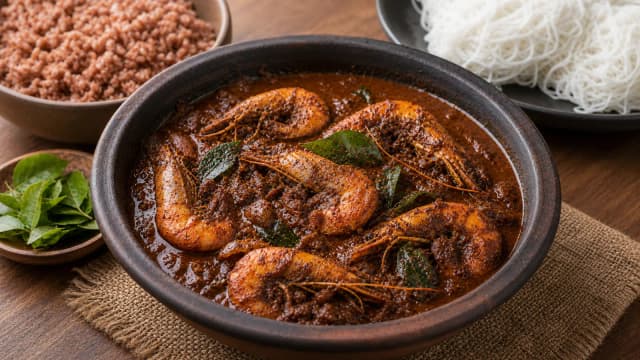
Jaffna prawn curry, or Jaffna isso curry, is plump prawns simmered in a dark, fiery gravy built on heavily roasted Jaffna curry powder and tamarind. This is the Northern Tamil style: deeper, hotter and far more roasted than a standard Sri Lankan prawn curry, with a tangy red gravy that clings to the shellfish. You'll see it called Jaffna shrimp curry or just isso curry. It's intense and unapologetically spiced, balanced by the natural sweetness of the prawns and the sour lift of tamarind.

Also in our Jaffna collection.
The fiery Northern prawn curry: dark, deeply roasted and tamarind-sharp, for cooks who want their seafood with real heat.
- Total time
- 45 min
- 20 min prep · 25 min cook
- Serves
- 4 people
- Difficulty
- Medium
- Spice level
- Authentic Hot
- Country help
- USA · UK · AU · CA substitutes included
CeylonCooking
ceyloncooking.com/recipes/jaffna-prawn-curry
Jaffna Prawn Curry (Jaffna Isso Curry)
Scan to open on your phone
Nutrition
Estimated values, per serving.
About This Dish
Ask for isso curry in a Jaffna home and you're handed something darker and fiercer than the coconut prawn curries of the south. Isso means prawn, and the Northern style leans hard into roasted spice and sour tamarind rather than a soft, creamy gravy. The peninsula sits surrounded by some of the richest prawn grounds on the island, so isso is everyday food here. But the way it is cooked is unmistakably Tamil: spice-forward, tangy and built for heat. You will see it written as Jaffna prawn curry, Jaffna shrimp curry or just isso curry, but it is always the same deep red, tamarind-sharp dish.
What sets the Jaffna kitchen apart is the curry powder. In the dry, sun-baked north, cooks roast their spices darker than almost anywhere else on the island, until the coriander, cumin and fennel turn nearly black and smell of toasted earth and coffee. Extra dried chilli goes in for fire, and a generous hand of fennel gives the blend its sweet, aniseed-like signature. That dark Jaffna curry powder is the backbone of the region's food, from crab curry to this prawn curry, and it is what gives the gravy its brooding colour and its grown-up, smoky depth.
Tamarind is the other half of the Northern character. Where southern seafood curries often reach for goraka and rely on coconut for richness, the Jaffna style uses tamarind for a brighter, fruitier sourness and keeps the gravy leaner and sharper. The sourness is not a background note here, it is a defining flavour, cutting through the roasted spice and the sweetness of the prawns so every mouthful lands hot, sour and savoury all at once. A little coconut milk rounds the edges, but it never takes over.
What makes a good Jaffna prawn curry is the same restraint that defines all prawn cookery: build a deep, fiery, tangy base first, then add the prawns at the very last moment so they stay sweet and tender. The gravy can take its time and reward you for it. The prawns cannot. Get the timing right and you have a curry that tastes like the north of the island in a single bowl: dark, hot, sour and alive.
Jaffna Curry Powder and Tamarind: The Northern Signature
The single ingredient that defines this curry is Jaffna curry powder, and it is a different animal from a standard Sri Lankan roasted blend. Northern cooks roast the coriander, cumin and fennel much darker, until the spices are deep brown to almost black and carry a heavy, smoky, toasted aroma. The blend also leans on two things in particular: extra dried red chilli, which is where the famous Jaffna heat comes from, and a generous dose of fennel seed, which gives the powder its sweet, faintly aniseed perfume. That dark, fiery, fennel-forward mix is what makes a Jaffna curry taste like the north rather than the south.
Tamarind is the other half of what makes this curry Northern. You soak the pulp in warm water, squeeze out the sour brown liquid, and stir it into the gravy. That gives a bright, fruity tang, much sharper and more forward than the deep, smoky sourness goraka brings to a southern curry. Here the tamarind doesn't hide. It pushes back against the heavy roast of the spice and the natural sweetness of the prawns, and that tension keeps the whole dish lively. Dark roasted powder plus proper tamarind is what separates a Jaffna prawn curry from the milder, coconut-led versions.
What It Should Taste Like
You get dark, deeply roasted spice and proper chilli heat first, then a bright tamarind sourness cuts through it, and the sweet prawns hold their own in the middle. The gravy is red-brown, clingy, intense. Not thin, never creamy-mild. Every bite should land hot, sour and savoury at the same time.
Ingredients
This recipe makes 4 servings. Change the number and every amount below updates with it. Substitutes for hard-to-find items are in the sidebar.
The US button converts grams, millilitres and centimetres to ounces, cups and inches. Spoon measures stay exactly as they are.
Open this in the recipe converter
The Prawns
- Raw prawnsshell-on or peeled, deveined500 g
- Ground turmeric¼ tsp
- Salt½ tsp
The Gravy
- Coconut oil2 tbsp
- Onionfinely sliced1
- Garliccrushed4 cloves
- Gingergrated1 tbsp
- Curry leaves2 sprigs
- Pandan (rampe)optional5 cm piece
- Tomatochopped1
- Jaffna curry powderdark, heavily roasted2 tbsp
- Chilli powderto taste1-2 tsp
- Fenugreek seeds¼ tsp
- Tamarindsoaked in 100 ml warm water1 tbsp pulp
- Thick coconut milk150 ml
- Water100 ml
- Saltto taste
Method
Follow these 8 steps. Each one explains not just what to do, but why it matters.
Ready to Start Cooking?
The screen shows one step at a time, with just the ingredients that step needs at your serving count, a timer you can tap, and your phone kept awake.
- 01
Clean and Devein the Prawns
Peel the prawns if you want them peeled, or leave the shells on. Run a small knife along the back of each one and lift out the dark vein. Rinse, drain and pat them dry, then toss with the turmeric and salt and set aside.
A good prawn curry starts with clean, dry prawns. That dark line along the back is the digestive tract. It's harmless, but on larger prawns it can taste gritty or a bit bitter, so you'll want to lift it out. A shallow cut along the curve of the back exposes the vein, and you can pull it away in one piece. Drying matters just as much. Any water left on the prawns will thin the gravy and stop them taking on colour. The turmeric and salt season the flesh and build a warm golden base. You'll see the surface turn glossy and yellow within a minute, which is the sign the seasoning has done its work.

Tip: If you're going shell-on, keep the tail shell on but still devein through that slit in the back. The shells add real sweetness to the gravy, and they're worth the slightly messier eating.
- 02
Soak the Tamarind
Soak the tamarind pulp in 100 ml of warm water for 10 minutes. Then squeeze and mash it with your fingers, strain out the seeds and fibre, and keep that dark, sour liquid.
Tamarind is the souring agent in this Northern style, and you get the most out of it by working the pulp into the water, not just dropping it in. Warm water loosens the sticky pulp until it dissolves into a cloudy, brown, intensely sour liquid. Squeezing it with your fingers pulls every bit of tang out of the fibre. Strain it properly, so no stray seeds or stringy bits sneak into the curry. That dark liquid is what gives a Jaffna prawn curry its bright, fruity sharpness, quite different from the deep, smoky sourness of goraka. Don't skimp on it, and don't pour any of it away.

Tip: Taste the strained tamarind water. It should be aggressively sour on its own, because it has to cut through all that roasted spice and the sweetness of the prawns once it hits the pot.
- 03
Build the Spiced Base
Heat the coconut oil and fry the fenugreek seeds, curry leaves and pandan until they crackle and smell really fragrant. Then add the onion and cook until soft and deep golden. Stir in the garlic and ginger and fry for about a minute.
Look, everything that gives this curry its depth is built here, so don't rush the onion. Fenugreek goes in first, only needs a few seconds, just until it turns golden and that faintly bitter, maple-like smell lifts off. Push it too far and it scorches into something harsh. Curry leaves and pandan crackle in the oil and perfume everything else that will cook in it. Then the onion goes slowly to a real, deep gold, well past translucent, because that caramelised sweetness is the savoury backbone of the gravy. The prawns themselves will spend almost no time in the pan. When the garlic and ginger hit, they sharpen, then mellow, and that's your cue the base is ready for the spice.

Tip: Keep the fenugreek count low. A quarter teaspoon is plenty: it gives that lovely Northern bitterness and aroma. Any more and the whole gravy turns bitter, so resist the urge to add extra.
- 04
Bloom the Dark Spices
Lower the heat slightly. Stir in the Jaffna curry powder and chilli powder and fry for about 30 seconds. Then add the chopped tomato and cook until it breaks down into the base.
This is where the curry turns properly Jaffna. The dark roasted powder is already deeply toasted, so it only needs a brief bloom in the hot oil to wake up. A calmer pan buys you the seconds you need before it catches, because heavily roasted spice burns even faster than a lighter blend. You'll see the base turn a deep rust-brown and smell that smoky, fennel-scented depth come alive. The tomato does double duty: its juice stops the spices scorching, and as it collapses it adds gentle body and a touch of sweet-sour that gives the fiery gravy somewhere to settle. Cook until the pieces lose their shape and melt into a thick, glossy paste.

Tip: If the spices look like they might catch and burn, splash in a spoonful of the tamarind water, not more oil. Burnt spice turns the whole curry acrid and bitter, and with a dark roasted powder there's no way back.
- 05
Build the Tamarind Gravy
Pour in the tamarind water and plain water, bring to a gentle simmer, and cook for about 5 minutes. The raw edge cooks off, the gravy darkens and concentrates. Season with salt.
Now the curry starts to look like itself. When the tamarind water hits the spiced base, the whole pan darkens to a deep red-brown and the smell turns sharp and sour. These few minutes of gentle simmering let the spices and tamarind marry into one savoury, tangy gravy, and it reduces slightly to concentrate the flavour, all before any delicate prawns go near it. Taste it now. It should already be punchy, hot and aggressively sour, almost too much on its own, because the coconut milk and sweet prawns to come will round it right off. Build all the seasoning and sourness at this stage, while there is no prawn to overcook.

Tip: Sort the salt and sour-heat balance now, before the prawns go in. Once they're in the pot you won't want to stir much, so the gravy should already taste right.
- 06
Loosen with Coconut Milk
Stir in the thick coconut milk, bring back to a gentle simmer for 2-3 minutes. Keep the heat low so it doesn't boil hard.
Coconut milk has a supporting role in the Northern style, not the lead it takes in a southern coconut curry, but it still matters. A modest pour softens the sharp edges of the tamarind and chilli and turns the dark broth glossy and a touch richer, without ever letting it drift into creamy-mild territory. Keep the heat gentle. The moment thick coconut milk gets a hard boil, it splits into grainy curds and oily streaks. A couple of minutes at a lazy simmer is all it needs to warm through and thicken slightly. The gravy should stay dark and tangy with the coconut rounding it, not dominating, and that is what makes this curry different from a mild, coconut-led prawn curry.

Tip: Take the pan off the fierce heat before you add the coconut milk and stir gently. If you're after a leaner, sharper, more traditional Jaffna gravy, use even less coconut milk and let the tamarind do the leading.
- 07
Add the Prawns at the Last Moment
Slip the prawns into the gravy in a single layer and simmer gently for just 4-5 minutes, until they turn pink and opaque and curl into a loose C shape. Don't let them overcook.
This is the moment the dish either works or does not. Prawns are basically muscle, and as soon as they cook through they keep tightening into rubber, so you're aiming to pull them at the exact point of doneness, not a minute later. Watch them closely: raw grey turns coral pink and the flesh goes from glassy to opaque from the outside in. A loosely curled C is perfect. A tight, clenched O means they've gone too far. Keep the heat gentle so the gravy never boils hard around them, which would both toughen the prawns and risk splitting the coconut milk. Shell-on prawns take a touch longer than peeled, so judge by colour rather than the clock.

Tip: If you're unsure, cut one prawn in half at four minutes. The centre should be just opaque, not glassy. They carry on cooking in the hot gravy after the heat is off, so err on the side of underdone.
- 08
Rest Briefly, Then Serve
Take the pan off the heat, leave it a minute or two, then taste once more for salt and sour and serve while the prawns are at their tender best.
A short rest off the heat lets the gravy settle and the flavours pull together, and the residual warmth finishes the prawns gently without toughening them. This is your last chance to balance the curry, and a Jaffna prawn curry that tastes slightly flat almost always wants a touch more salt or another squeeze of tamarind rather than more spice. Don't let it sit hot on the stove for long, though: the longer cooked prawns stay in hot gravy, the firmer they get, so get it to the table while they're still juicy and just-set.

Tip: If the heat has crept up too far for your table, a small extra spoon of coconut milk stirred in at the end takes the edge off without flattening the tamarind tang.
Common Mistakes to Avoid
- Overcooking the prawns until they go tight and rubbery. They need only 4-5 minutes and keep cooking in the residual heat.
- The biggest mistake is adding the prawns too early. They toughen as the curry simmers, so get the gravy finished and tasting right first, then drop them in.
- Don't use a mild, raw or light curry powder here. You need a dark, heavily roasted Jaffna blend. Anything else leaves the gravy flat and pale instead of deep and fiery.
- Skimp on the tamarind and you lose the sharp Northern sourness that makes this curry what it is. It just becomes a generic coconut curry.
- Watch the dark spices when you bloom them. Heavily roasted powder scorches in seconds and turns acrid, so keep the heat moderate and keep the spoon moving.
- Too much coconut milk mutes the heat and tang, and you end up with a mild southern-style prawn curry instead of a Jaffna one.
Serving Ideas
- Serve it with steamed red rice and a fiery lunu miris for a proper Northern plate.
- Over plain rice with a spoonful of pol sambol to balance the heat.
- With string hoppers to soak up the dark, tangy gravy.
- Alongside a crab curry and a sambol for a Jaffna seafood feast.
- With warm bread or roti to mop up every bit of the spiced gravy.
Building a whole plate around it? Start from our seafood rice and curry menu, which sets out what to cook alongside it and in what order.
Storage and Make-Ahead
This curry is best eaten fresh, the day it is made. It keeps for 1 day refrigerated in a sealed container; reheat very gently over low heat just until warm so the prawns do not toughen. The gravy deepens overnight as the tamarind and roasted spice settle, but the prawns suffer, so it is a same-day dish. Not recommended for freezing, as cooked prawns turn watery and rubbery once thawed.
Two Ways to Cook It
If you're just starting out, use peeled frozen raw prawns and a decent shop-bought roasted curry powder, then boost it with extra chilli and a pinch of fennel. Skip the pandan and fenugreek, and use tamarind paste straight from the jar. Get the gravy tasting hot, sour and savoury before the prawns go in, then simmer them gently for five minutes. Start with 1 tsp of chilli powder and add more next time once you know your tolerance.
For a more traditional pot, use shell-on prawns and simmer the peeled shells with a little water for ten minutes to make a quick stock in place of the plain water. That deepens the seafood sweetness. Use a freshly ground, heavily roasted Jaffna curry powder with extra dried chilli and fennel, real soaked tamarind rather than paste, and keep the coconut milk modest so the tamarind and roasted spice lead. Finish it in a clay pot over a low flame for an earthier, rounder result.
Lighter and Healthier Version
Jaffna prawn curry is already fairly lean. Prawns are low in calories and high in protein, and the gravy uses less coconut than a southern curry. The richness that's left comes from the coconut milk and frying oil, and both are easy to trim. A few small swaps keep all the fiery, tangy character while cutting the fat.
Lean into the Tamarind
Let the tamarind and roasted spice carry the curry, not the coconut. A sharper, more sour gravy needs little or no coconut milk to taste satisfying, and it's closer to the traditional Northern style anyway.
Use Light Coconut Milk
If you want a bit of richness, swap the thick coconut milk for a light or reduced-fat version, or dilute it with extra water. You keep a little body on far less fat.
Ease off the Oil
Fry the base in 1 tablespoon of oil instead of 2. Use a non-stick pan and a splash of tamarind water to stop the onion catching. The roasted spices carry the flavour, not the fat.
Bulk It Out with Veg
Stir a handful of spinach, green beans or okra into the gravy with the prawns to add fibre and stretch the dish further on the same amount of coconut milk and oil.
Frequently Asked Questions
Jaffna prawn curry is the Northern Tamil style of Sri Lankan prawn curry, made with a dark, heavily roasted Jaffna curry powder and soured with tamarind. The gravy is deep red-brown, fiery and tangy, quite different from the milder, coconut-led prawn curries of the south. It's also called Jaffna isso curry, isso being the word for prawn, or Jaffna shrimp curry.
Cooked It? Tell Us How It Went
Your notes on this jaffna prawn curry help the next person get it right: what you swapped, what you would do differently, where the recipe should have warned you. Tap a star if you are in a hurry, or write a few lines if you have a minute.
You Might Also Like


Sri Lankan Home Cooking Starter Pack
40 authentic Ceylon recipes made simple for foreign kitchens: spice guide, pantry checklist, substitute guide, 7-day meal plan and printable shopping lists.