Alu Kesel Moju
Ash Plantain Moju (Green Banana Moju)
Also known as Plantain Moju
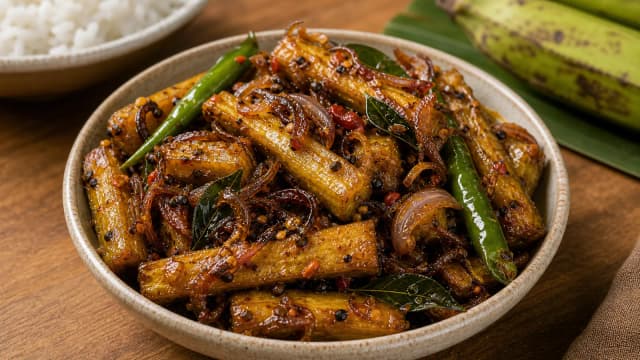
Ash plantain moju, or alu kesel moju, is what you get when you give a plain green cooking banana the full pickle treatment. You fry ash plantain (alu kesel, the starchy green banana Sri Lankans cook as a vegetable) into crisp-edged golden batons, then fold them through a sticky, glossy glaze of onion, green chilli, mustard, vinegar, chilli and a little sugar. It is the same moju treatment that makes eggplant moju famous, just done with green banana, which holds its shape better. Naturally vegan (the Maldive fish is optional), and here is the thing about moju: it only gets better as it sits.

Crisp-edged fried green banana in a sweet-sour-hot glaze. Sticky, proper moreish, and it keeps for days, getting better as it sits.
- Total time
- 40 min
- 20 min prep · 20 min cook
- Serves
- 4 people
- Difficulty
- Medium
- Spice level
- Medium
- Country help
- USA · UK · AU · CA substitutes included
CeylonCooking
ceyloncooking.com/recipes/ash-plantain-moju
Ash Plantain Moju (Alu Kesel Moju)
Scan to open on your phone
Nutrition
Estimated values, per serving.
About This Dish
Ask for alu kesel moju in a Sri Lankan home and you'll get a small dish of golden, sticky fried banana batons that taste sweet, sour and quietly fiery all at once. Alu kesel is the Sinhala name for ash plantain, the green, starchy banana that gets cooked as a vegetable rather than eaten as fruit, and moju just means a sweet-sour pickle. Put the two together and you've basically got 'ash plantain pickle'. You'll also see it called green banana moju or plantain moju, but it is always the same thing: crisp-edged fried plantain, fried onion and green chilli tangled up in a mustard and vinegar glaze.
Moju is celebration food. It is the bright, sharp note tucked in next to yellow rice and a row of curries at weddings, almsgivings and New Year tables, and it is almost always the first thing to vanish from the plate. Part of that is practical. Because moju is essentially a pickle, you can make a batch days ahead and it only gets better while it waits, which is exactly why it ended up a fixture in lamprais parcels and festive spreads. Most people know eggplant moju best, but ash plantain moju is its sturdier cousin, with a firmer, more potato-like bite that stands up beautifully to the same glaze.
A good ash plantain moju is all about contrast. You fry the plantain until it is deep golden with crisp edges and a creamy, starchy centre, then fold it into a syrupy mustard and vinegar glaze that is sharp, a little sweet and properly hot. Caramelised onion rounds it off, and curry leaves give it that back note you can't quite place but would miss instantly. Because ash plantain is starchier and holds its shape far better than soft eggplant, the pieces stay distinct and sticky instead of melting into the sauce. Honestly, that's why a lot of cooks prefer it.
Serve it cool or at room temperature against a plate of warm rice and curry and it wakes up everything around it. It is the kind of side that makes someone go back for a second spoonful and then ask how you made it, because a plain green banana, fried and pickled the Sri Lankan way, turns into something far more interesting than it has any right to be.
What Ash Plantain Actually Is (Alu Kesel)
Ash plantain, alu kesel in Sinhala, is a green, starchy cooking banana you treat as a vegetable, not the sweet yellow thing you peel and eat raw. It's picked firm and unripe, so the flesh is pale, dense and starchy, much closer to a potato than to dessert. The skin is thick and green, often with a faint dusty, ashy bloom (that's where the English name comes from), and it needs peeling and usually a soak before it cooks. All over Sri Lanka it gets simmered into curries, mashed into mallum, and, like here, fried and pickled into moju.
Right, let's keep three things straight. A ripe banana is the soft, sweet fruit you eat out of hand. Plantain in the wider sense is a larger, firmer cooking banana that you find used across the tropics, usually fried as a savoury staple and sweeter once fully ripe. Ash plantain is a specific green Sri Lankan cooking banana, picked young and starchy, and it's always cooked as a vegetable. Can't find it? Your closest stand-in is an unripe, fully green regular plantain.
Ash plantain browns the second you peel and cut it, like a cut apple. The starchy flesh oxidises fast in air. To stop the pieces going grey, drop them straight into a bowl of water as you cut. Ideally stir in a little turmeric or a squeeze of lime, then keep the pieces under water until you fry. Do that and they hit the oil pale, then turn an appetising gold instead of an ugly grey.
What It Should Taste Like
Crisp-edged golden plantain with a creamy, starchy centre, folded into a glossy sweet-sour-hot glaze. You get mustardy tang, caramelised onion, the bite of green chilli. It's sticky, sharp and moreish, and firmer and more substantial than eggplant moju.
Ingredients
This recipe makes 4 servings. Change the number and every amount below updates with it. Substitutes for hard-to-find items are in the sidebar.
The US button converts grams, millilitres and centimetres to ounces, cups and inches. Spoon measures stay exactly as they are.
Open this in the recipe converter
Plantain
- Ash plantain (alu kesel)Green and firm, peeled and cut into batons.3 medium
- Turmeric or limeFor the anti-browning soak.½ tsp turmeric, or juice of 1 lime
- Ground turmericFor seasoning before frying.½ tsp
- Salt1 tsp
- Oilfor frying
Moju Glaze
- Red onionSliced.1
- Green chilliesHalved.3
- GarlicSliced.3 cloves
- Curry leaves1 sprig
- Mustard seedsGround, or 1 tsp mustard paste.1 tsp
- Chilli powderTo taste.1 tsp
- Vinegar3 tbsp
- Sugar2 tbsp
- Maldive fish flakesOptional, omit for vegan.1 tbsp
- Saltto taste
Method
Follow these 5 steps. Each one explains not just what to do, but why it matters.
Ready to Start Cooking?
The screen shows one step at a time, with just the ingredients that step needs at your serving count, a timer you can tap, and your phone kept awake.
- 01
Peel and Cut the Ash Plantain
Rub a little oil on your hands and knife, then top and tail the plantains. Slit the thick green skin lengthways and peel it off. Cut the flesh into batons or thick chips, about finger-sized.
Ash plantain skin is tough and clings far more than a ripe banana's, and the flesh leaks a sticky, starchy sap that stains your hands and your blade. A thin film of oil makes the whole job much easier. Slit the skin lengthways and prise it off in strips: it's far quicker than trying to peel it like fruit. Cut the batons evenly too, so every piece fries at the same rate. Too thin and they go hard, too thick and the centres stay raw while the edges brown.

Tip: That same oil on your hands lifts off the sticky sap afterwards, which otherwise leaves dark marks on your skin.
- 02
Soak to Stop Browning
As you cut, drop the batons straight into a bowl of water with the turmeric (or lime juice) stirred in. Keep them under until you're ready to fry, then drain and pat them really dry.
Ash plantain oxidises the instant it's cut and turns grey within minutes, just like a sliced apple. The soak keeps air off the cut surfaces. Turmeric water protects it and gives a warm golden base colour, while lime juice slows the browning. Leave the pieces submerged until the last second. And dry them well before they fry, because any surface water will spit in the hot oil and steam the plantain instead of crisping it.

Tip: No turmeric or lime? Plain water still helps, and a splash of vinegar works too. You just want to keep the cut surfaces away from air.
- 03
Season and Fry the Plantain
Toss the drained, dried batons with the ground turmeric and salt, then deep-fry or shallow-fry until deep golden with crisp edges and a tender centre. Drain on paper. Fry the sliced onion and green chilli briefly in the same oil and set aside.
Okay, this is where you win or lose the dish. You want deep, even gold, crisp edges, and a creamy centre that's fully cooked. Not pale, oily pieces still raw inside. Work in batches so the oil stays hot and the plantain browns instead of stewing in a crowded pan. The turmeric and salt season the flesh and lay down a golden base before frying even starts. The onion and chilli only need a quick turn through the oil, just enough to knock off their raw edge and pick up a little colour.

Tip: Don't guess with the oil. Drop in one baton first. It should sizzle steadily, not violently, not feebly. Plantain takes a touch longer than eggplant to cook through, so don't pull it too early.
- 04
Build the Moju Glaze
Get a pan with a little oil. Fry the curry leaves and garlic, then stir in the ground mustard, chilli powder, vinegar, sugar, the Maldive fish if you're using it, and a splash of water. Simmer until glossy and syrupy.
This is where moju gets its personality. The second the curry leaves hit the oil they crackle and perfume the whole kitchen, and the garlic turns nutty and golden. When the vinegar goes in it'll smell sharp and bracing, which is exactly right. It mellows as the sugar dissolves and the sauce reduces to a glossy glaze that coats a spoon. Keep tasting as it goes. You're chasing the point where sweet, sour and hot all land at once and none of them bullies the others.

Tip: Grind your own mustard seeds if you can. That fresh, pungent heat is the soul of this dish. Ready-made paste is a fine shortcut, just a bit milder.
- 05
Toss Everything Together and Finish
Add the fried plantain, onion and green chilli to the glaze and fold gently until every piece is coated and sticky. Off the heat, taste for salt and the sweet-sour balance, then let it rest before serving.
Fold, don't stir hard. Those crisp edges need to survive, and each baton should end up slicked in dark, shiny glaze. Because ash plantain is firmer than eggplant, it holds its shape and the pieces stay distinct and glossy rather than collapsing. A minute or two of gentle turning over low heat lets the glaze cling and the plantain drink it up. And moju rewards patience: give it a few hours, or overnight in the fridge, and the vinegar and mustard work deeper in, the edges start to pickle, and the whole thing turns rounder and more interesting.

Tip: Serve it cool or at room temperature, never piping hot. Moju is the bright, sharp note against warm rice and curry, and it's even better on day two.
Common Mistakes to Avoid
- Skipping the soak. Cut plantain oxidises and turns grey before it even reaches the pan, so get it under turmeric water fast.
- Frying unevenly, or pulling the batons too early. The edges colour while the starchy centres stay raw. Give them time.
- Crowding the pan. The plantain stews in cooling oil and goes greasy instead of crisp and golden. Fry in batches.
- Ignoring the sugar-vinegar balance. Moju lives or dies on sweet, sour and hot all landing together.
- Stirring too hard at the end. It knocks off the crisp edges and breaks the pieces up. Fold gently instead.
- Using ripe, sweet plantain or banana. It goes mushy and turns the whole pickle cloying. Keep it green and firm.
Serving Ideas
- On any rice-and-curry plate, next to a dhal and a fresh sambol.
- Serve it with yellow rice and a meat or cashew curry when you're putting on a spread.
- Serve as a sticky, tangy contrast to creamy dhal or a mild coconut curry.
- Spoon it over plain rice or bread when you just want a quick, punchy bite.
Building a whole plate around it? Start from our vegetarian rice and curry menu, which sets out what to cook alongside it and in what order.
Storage and Make-Ahead
It keeps a week or more in a sealed jar in the fridge, and honestly it improves with time, since it's basically a pickle. The fried plantain softens a little as it sits, but the flavour deepens. Always dig in with a clean, dry spoon to keep the batch fresh. You can freeze it for up to a month, though the texture is best in the first few days.
Two Ways to Cook It
For an easy version, shallow-fry the batons in a non-stick pan until golden, use a little Dijon for the mustard note, and skip the Maldive fish. Soak the cut pieces in plain water with a pinch of turmeric while you prep, and keep the glaze simple: just vinegar, sugar, chilli powder and a splash of water simmered until sticky.
Go the full route: deep-fry the plantain in coconut oil until deep golden and crisp-edged, use freshly ground mustard seeds and a spoonful of Maldive fish, fry the onion and chilli in the same oil, then let the finished moju pickle overnight before serving so the flavours settle and the edges take on a gentle tang.
Lighter and Healthier Version
Moju is traditionally deep-fried, but it takes beautifully to lighter methods. Because the dish is naturally plant-based and cholesterol-free (just leave out the optional Maldive fish), a few small changes turn it into a genuinely heart-friendly side without losing the sweet-sour-hot character that makes it moju.
Air Fryer (Least Oil)
You'll want to toss the soaked, well-dried batons with just 1 tbsp of oil and air-fry at 200C/400F for 15 to 18 minutes, shaking the basket halfway, until deep golden. Ash plantain is starchier than eggplant, so it needs a few minutes longer, but this uses far less oil and is the easiest route to a low-fat moju.
Oven-Roasted
No air fryer? Spread the batons on a lined tray, brush lightly with oil, and roast at 220C/425F for 25 to 30 minutes, turning once, until golden and crisp at the edges and tender inside.
Cut the Sugar
You really don't need moju to be very sweet. Halve the sugar and let the caramelised onion carry it, or skip refined sugar entirely and sweeten with dates instead.
Lighter Glaze
Make the sauce in a non-stick pan with a teaspoon of oil and an extra splash of water, so the glaze stays glossy on far less fat.
Naturally Cholesterol-Free
Left vegan, ash plantain moju has zero dietary cholesterol and brings the fibre and resistant starch of green banana. Use a heart-healthy oil such as rice bran or olive oil, keep the oil and salt modest, and you have a side that suits most heart-conscious diets.
Frequently Asked Questions
Ash plantain is alu kesel in Sinhala, and it's a green, starchy cooking banana you eat as a vegetable, not as sweet fruit. It gets picked while firm and unripe, so the flesh is pale, dense and starchy, closer to a potato than a dessert banana. The green skin often has that faint dusty, ashy bloom, which is where the English name comes from. In Sri Lanka it's peeled, soaked, then curried, mashed or, for moju, fried and pickled.
Cooked It? Tell Us How It Went
Your notes on this ash plantain moju help the next person get it right: what you swapped, what you would do differently, where the recipe should have warned you. Tap a star if you are in a hurry, or write a few lines if you have a minute.
You Might Also Like


Sri Lankan Home Cooking Starter Pack
40 authentic Ceylon recipes made simple for foreign kitchens: spice guide, pantry checklist, substitute guide, 7-day meal plan and printable shopping lists.