Elawalu Kottu
Sri Lankan Vegetable Kottu (Veg Kottu Roti)
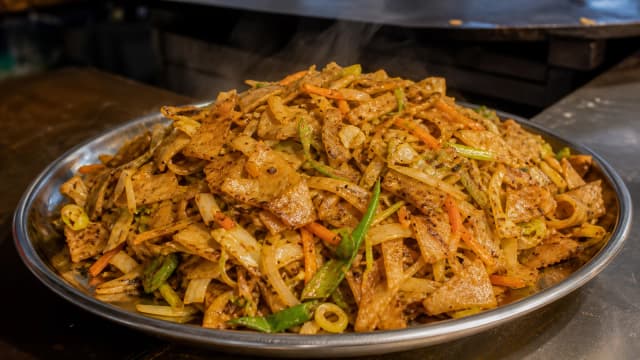
Sri Lankan vegetable kottu, or elawalu kottu, is the meat-free version of the country's most famous street food. Shredded godamba roti gets chopped and stir-fried on a hot griddle with leeks, carrot, cabbage and onion, spiced and bound with savoury gravy. It's smoky, hearty, and easy to make vegan: just skip the egg. You don't need chicken or beef for a kottu that satisfies.

The meat-free kottu that doesn't lose a thing: chopped roti griddled with leeks, carrot and cabbage, and it's easy to make fully vegan.
- Total time
- 35 min
- 20 min prep · 15 min cook
- Serves
- 3 people
- Difficulty
- Medium
- Spice level
- Medium
- Country help
- USA · UK · AU · CA substitutes included
CeylonCooking
ceyloncooking.com/recipes/vegetable-kottu
Sri Lankan Vegetable Kottu (Elawalu Kottu)
Scan to open on your phone
Nutrition
Estimated values, per serving.
About This Dish
Long before kottu became a meat lover's order, it was a way to stretch a few vegetables and a stack of leftover roti into a full evening meal. Elawalu kottu, the vegetable version, sits right at that humble heart of the dish. Elawalu simply means vegetables in Sinhala, so the name is literally 'vegetable chopped roti'. It's the kottu you reach for on a meat-free night, during a fasting period, or simply when the fridge has more greens than gravy.
The vegetables are the whole point here, not a curry built around meat. Leeks bring gentle sweetness, carrot adds colour and a little crunch, cabbage melts down to lace the roti with body. Onion and green chilli sharpen everything, and curry leaves and curry powder carry that Sri Lankan backbone. Done well, nobody misses the chicken.
Like all kottu, the technique is the soul of it. Godamba roti gets shredded into ribbons and worked over a hot flat surface with two metal blades, chopped and folded until the strips break down, catch a little char and drink up the gravy. That clatter of blades is the same theatre you hear at any night-market stall, only here the pile is bright with vegetables. It's street food at its most generous and most forgiving.
The vegan question comes up constantly, and the answer is easy: vegetable kottu is nearly there already. Leave out the egg, use a plant-based gravy like dhal or a coconut vegetable curry, cook in plain oil instead of ghee, and you've got a fully vegan kottu that tastes every bit as smoky and satisfying as the original. It's one of the most reliable vegan meals in the whole Sri Lankan street-food repertoire.
What Makes a Kottu 'vegetable'?
Vegetable kottu isn't just regular kottu with the meat left out. The vegetables move from supporting act to lead, so the mix is more generous and varied: leeks, carrot, cabbage and onion at a minimum, often with green beans, capsicum or spring onion thrown in. With no rich meat curry doing the heavy lifting, the gravy and spices have to carry more flavour, which is why a good dhal curry or coconut vegetable curry makes such a difference.
It's built on the same godamba roti as every other kottu. Godamba (also spelled godhamba) is a thin, stretchy wheat flatbread, oiled and flung out paper-thin before griddling, a cousin of Malabar paratha and roti canai. Shredded into strips, it's sturdy enough to take the relentless chopping without turning to paste, which is exactly what kottu needs. Frozen paratha is the easiest stand-in and shreds beautifully. From this one base come all the styles: chicken kottu, egg kottu, the gravy-soaked cheese kottu, and this lighter vegetable kottu.
What It Should Taste Like
Savoury and smoky, with sweet softened leeks and onion, ribbons of roti catching char on the griddle, and just enough gravy to keep every strip moist. Bright, spiced and hearty without any meat.
Ingredients
This recipe makes 3 servings. Change the number and every amount below updates with it. Substitutes for hard-to-find items are in the sidebar.
The US button converts grams, millilitres and centimetres to ounces, cups and inches. Spoon measures stay exactly as they are.
Open this in the recipe converter
For the Kottu
- Godamba roti or parathashredded into thin strips3
- Leeksthinly sliced1 large
- Carrotjulienned1
- Cabbageshredded2 cups
- Onionsliced1
- Garlicchopped3 cloves
- Gingerchopped1 tbsp
- Green chilliessliced2
- Curry leaves1 sprig
- Sri Lankan curry powder1 tsp
- Chilli powderOptional, for extra heat.½ tsp
- Soy sauce1 tbsp
- Oil2 tbsp
- Salt and pepperto taste
For Binding (Choose One)
- EggsBeat it for a vegetarian kottu (skip for vegan).2
- Vegetable or dhal curry with gravyKeeps it moist. Use a vegan curry to keep it vegan.¾ cup
Method
Follow these 6 steps. Each one explains not just what to do, but why it matters.
Ready to Start Cooking?
The screen shows one step at a time, with just the ingredients that step needs at your serving count, a timer you can tap, and your phone kept awake.
- 01
Prep Everything First
Shred the roti into thin strips and get all the vegetables sliced, the curry measured out and the eggs beaten (if you're using them) within arm's reach before you turn the heat on.
This is the single most important step, and it's the one home cooks always skip. Once the pan is hot, kottu comes together in a few frantic minutes. There's no time to chop a leek or hunt for the soy sauce. Street cooks line everything up in little piles for exactly this reason. Treat it like a stir-fry: everything ready first, cook second. With a vegetable kottu you've got more to chop than usual, so the prep pays off even more.

Tip: Shred the roti when it's at room temperature, not warm, so it tears into clean ribbons instead of squashing together.
- 02
Char the Vegetables
Heat the oil in your largest flat pan or griddle over high heat. Fry the curry leaves for a few seconds, then add the onion, leeks, carrot, cabbage, garlic, ginger and green chilli. Cook until they're softened with charred edges.
High heat and a wide pan do the real work here, and with vegetable kottu they matter even more, because the vegetables are the whole point. You want them to catch and char at the edges rather than steam, since that smoky note is half of what makes kottu taste like kottu, not a soft stir-fry. Add the firmer vegetables first and let the cabbage go in last so it keeps a little body. Keep everything moving, but let it sit just long enough between tosses to take on colour.

Tip: If your pan is small, cook in two batches. A crowded pan steams and you lose the char entirely, and that's the most common reason home vegetable kottu turns out limp.
- 03
Scramble the Egg (or Skip for Vegan)
For a vegetarian kottu, push the vegetables to one side, pour the beaten egg into the cleared space and scramble it until just set, then fold it through. For a vegan kottu, skip this step entirely.
Scrambling the egg directly on the griddle, rather than stirring it in raw, gives you distinct ribbons of egg through the finished kottu instead of a damp coating. Let it set into soft curds before you fold it back in. If you're going vegan, you don't lose anything essential. The egg adds protein and richness, but the charred vegetables, gravy and spices carry the dish on their own. A handful of crumbled firm tofu scrambled in its place is a good plant-based stand-in if you want that texture back.

Tip: A pinch of salt on the egg as it scrambles seasons it from the inside; the rest of the dish gets seasoned at the end.
- 04
Stir in the Curry and Spices
Stir in the vegetable or dhal curry with its gravy, the curry powder, the optional chilli powder and the soy sauce, and let it all heat through.
The gravy is not optional. It's what keeps the roti from drying out, and in a meat-free kottu it has to work harder. Without a rich chicken or beef curry in the mix, a well-spiced dhal or a coconut vegetable curry is what gives this version its depth, so don't stint on it. The curry powder and soy sauce round everything out and add the savoury, almost meaty note that makes people forget there is no meat. Taste as you go and add a splash of water or coconut milk if it looks at all dry.

Tip: Dhal curry is the secret weapon here. The creamy, spiced gravy clings to the roti and gives a vegetable kottu the body a meat curry would otherwise provide.
- 05
Chop in the Roti
Now add the shredded roti and toss-chop everything together with two metal spatulas (or a sturdy turner and spoon), cutting and folding for 4-5 minutes until combined and heated through.
This is the signature move, and the rhythm is everything. Grab two spatulas and use them like blades: chop down through the pile, fold it over, again and again, until the roti breaks into short strips and every piece gets coated in gravy and catches the heat. That clatter isn't just theatre. The constant cutting is what gives kottu its texture. You don't need the famous twin blades at home, two metal spatulas in a big flat pan do the same job.

Tip: Stop while the strips still have some chew. Chop too long and the roti turns to mush, which is the one thing a good kottu never is.
- 06
Season and Serve
Season with salt and pepper, give it one more toss, and serve hot, ideally with extra curry gravy on the side.
Taste before you season, because the curry powder and soy sauce have already done much of the work. Kottu waits for no one, so plate it the moment it is done, while the edges are still crisp and the whole thing is steaming. A little extra gravy poured over at the table is exactly how it is meant to be eaten, and with a vegetable kottu that extra dhal or coconut gravy stops it tasting dry.

Tip: Go straight from pan to plate to table. Kottu sitting in a serving bowl loses its crisp edges within minutes.
Common Mistakes to Avoid
- Not having everything prepped, as kottu cooks in minutes and can't wait.
- Skimping on gravy, which is what keeps a meat-free kottu from tasting dry.
- Steaming the vegetables in a crowded pan instead of charring them on high heat.
- Over-chopping the roti to mush; you want strips with some chew.
Serving Ideas
- With extra dhal or coconut vegetable curry poured over at the table.
- With a fresh lunu miris or pol sambol on the side for a kick.
- Alongside a cooling cucumber salad to balance the spice.
Building a whole plate around it? Start from our sri lankan party menu menu, which sets out what to cook alongside it and in what order.
Storage and Make-Ahead
Best fresh and hot. Keeps 1 day refrigerated; reheat in a hot pan with a splash of water or gravy to loosen it. Doesn't freeze well, as the roti turns soft.
Two Ways to Cook It
Use frozen paratha and a tin or carton of leftover dhal. Keep the veg to onion, carrot and cabbage, add an egg if you like, and chop with two metal spatulas in a big non-stick pan.
Use freshly made godamba roti, plenty of leeks and cabbage, a properly spiced dhal or coconut vegetable curry for the gravy, and chop on a hot flat griddle with two blades for that classic kottu rhythm and char.
Lighter and Healthier Version
Vegetable kottu is already the lighter end of the kottu family, since the vegetables do the heavy lifting and there is no rich meat curry. A few small tweaks make it lighter still without losing the smoky, savoury character.
Load up the Vegetables
Double the leeks, cabbage, carrot and onion and cut the roti by a third. You keep the volume and flavour while lightening the plate, and the extra veg adds fibre.
Go Easy on the Oil
A wide non-stick pan or griddle needs only a tablespoon of oil to char the vegetables. Most of the moisture comes from the gravy, not from frying in a lot of oil.
Keep It Vegan
Skip the egg and use a dhal or coconut vegetable curry for the gravy. The shredded roti, charred veg and spices carry the dish on their own, and you get a fully plant-based meal.
Add Plant Protein
Fold in a scoop of cooked dhal, chickpeas or crumbled firm tofu. It lifts the protein, makes the kottu more filling and keeps it meat-free.
Try a Wholemeal Roti
A wholemeal godamba roti or wholewheat paratha adds fibre and keeps you full longer, with the same chewy texture once it is chopped through.
Frequently Asked Questions
Vegetable kottu, or elawalu kottu in Sinhala, is the meat-free version of Sri Lankan kottu roti. Shredded godamba roti gets chopped and stir-fried on a hot griddle with leeks, carrot, cabbage, onion and spices, then bound with a vegetable or dhal gravy. The name comes from the chopping sound of the metal blades used to mix it. You can keep it vegetarian with egg, or go fully vegan without.
Cooked It? Tell Us How It Went
Your notes on this sri lankan vegetable kottu help the next person get it right: what you swapped, what you would do differently, where the recipe should have warned you. Tap a star if you are in a hurry, or write a few lines if you have a minute.
You Might Also Like


Sri Lankan Home Cooking Starter Pack
40 authentic Ceylon recipes made simple for foreign kitchens: spice guide, pantry checklist, substitute guide, 7-day meal plan and printable shopping lists.