Maalu Ambul Thiyal
Ambul Thiyal (Sour Fish Curry)
Also known as Fish Ambul Thiyal
Ambul thiyal, Sri Lanka's celebrated sour fish curry, is firm cubes of fish slow-cooked in a thick, dark paste of goraka (dried garcinia), black pepper and spices until almost dry. It's tangy, intensely peppery and glossy black, and it comes from the southern coast, where the sour goraka was originally used to preserve the catch so it would keep for days without a fridge. Also called maalu ambul thiyal, it is one of the island's great seafood dishes.

Also in our Southern collection.
It's Sri Lanka's famous sour fish curry: firm fish in a dark, peppery goraka glaze that keeps for days without refrigeration.
- Total time
- 60 min
- 20 min prep · 40 min cook
- Serves
- 4 people
- Difficulty
- Medium
- Spice level
- Medium
- Country help
- USA · UK · AU · CA substitutes included
CeylonCooking
ceyloncooking.com/recipes/ambul-thiyal
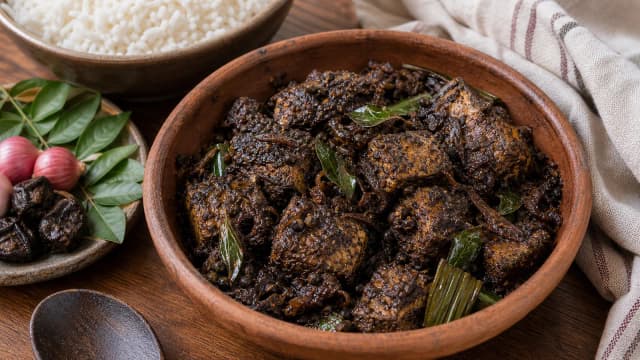
Ambul Thiyal (Maalu Ambul Thiyal)
Scan to open on your phone
Nutrition
Estimated values, per serving.
About This Dish
Ambul thiyal means, quite literally, 'sour fish' in Sinhala. That name tells you almost everything. It's a dry-cooked fish curry built around goraka, the smoke-dried fruit of the garcinia tree, which stains the fish a deep, glossy near-black and gives it a sharp, almost smoky sourness unlike any other curry. In English it is usually called sour fish curry, though nothing quite captures the way the pepper and goraka hit at once.
The dish was born on Sri Lanka's southern coast, in fishing towns like Ambalangoda, as a way to make a fresh catch last. Before refrigeration, the combination of acidic goraka, a heavy hand of black pepper and slow cooking until every drop of liquid evaporates kept the fish safe to eat at room temperature for a week or more. What started as preservation became prized for its flavour. A good ambul thiyal is still judged by how dark, how dry and how fiercely peppery it is.
This is not a saucy curry. The fish comes out coated in a thick, clinging black paste, firm-fleshed and packed with tart, peppery intensity, the kind of dish you eat in small, flavour-loaded pieces. It's built to sit alongside plain, mild staples that soften its punch: a mound of white rice, a slice of milk rice, or warm coconut roti. And one piece goes a long way, which is exactly how it was meant to be.
What Is Goraka?
Goraka (Garcinia cambogia), also called brindle berry or Malabar tamarind, is the soul of ambul thiyal and the reason it tastes like nothing else. It's a small, pumpkin-shaped fruit that's smoke-dried until it turns hard and almost black, then soaked and ground to a paste. It brings a deep, sour, faintly smoky tang, far earthier than lime or tamarind, and it's what turns the fish that signature dark colour. It also works as a natural preservative, which is how ambul thiyal earned its long, fridge-free shelf life.
If you can't find goraka, tamarind is the usual stand-in: use a thick tamarind paste for a similar sourness, though the colour will be lighter and the flavour brighter and less smoky. Whatever you use, ambul thiyal leans on black pepper rather than chilli for its heat, so grind the pepper fresh and don't hold back, because that bold, peppery sourness is the whole point.
Goraka has a second life outside the kitchen. Sinhala Ayurvedic writing calls it vrukshamla, the sour tree fruit, and lists it among the foods held to be kind to the heart, with a long traditional use for digestion, sluggish appetite and intestinal worms. What is not traditional is the capsule. The weight-loss supplements sold as Garcinia cambogia are a concentrated extract of the same rind, and those have been tied to rare but serious liver injury. Eight pieces of dried rind flavouring a pot of fish for four people is a souring agent, the way tamarind or lime is. Cook ambul thiyal because it tastes extraordinary, not as a diet.
What It Should Taste Like
Sharp, sour and intensely peppery, with the deep, smoky tang of goraka and firm fish that has soaked up a thick, near-black glaze. It's bold and concentrated, meant for small pieces against plenty of plain rice.
Ingredients
This recipe makes 4 servings. Change the number and every amount below updates with it. Substitutes for hard-to-find items are in the sidebar.
The US button converts grams, millilitres and centimetres to ounces, cups and inches. Spoon measures stay exactly as they are.
Open this in the recipe converter
Goraka and Spice Paste
- Goraka (dried garcinia)soaked, or 2 tbsp goraka paste8-10 pieces
- Black peppercornsfreshly ground2 tbsp
- Garlic4 cloves
- Gingergrated1 tbsp
- Ground turmeric½ tsp
- Chilli powderoptional1 tsp
- Salt1 tsp
Fish and Pot
- Firm fish (tuna, kingfish or sailfish)cut into 5 cm cubes500 g
- Curry leaves1 sprig
- Pandan (rampe)5 cm piece
- Cinnamon1 small stick
- Waterabout ½ cup
Method
Follow these 5 steps. Each one explains not just what to do, but why it matters.
Ready to Start Cooking?
The screen shows one step at a time, with just the ingredients that step needs at your serving count, a timer you can tap, and your phone kept awake.
- 01
Soak and Grind the Goraka
Soak the goraka in warm water for 15-20 minutes until it's softened, then grind it to a thick paste with the black pepper, garlic, ginger, turmeric, chilli powder and salt.
Dry goraka is rock-hard, so soak it before you try to grind it. You want a thick, dark, spoonable paste, not a watery one, because this is what coats and flavours every piece of fish. Grind the pepper in now too. That way its heat works right through the paste instead of sitting on top.

Tip: Keep the dark soaking water. A splash later gives you extra sourness and colour without turning the paste thin.
- 02
Coat the Fish
Pat the fish cubes dry, then turn them gently in the goraka paste until every piece is fully coated. If you have 10 minutes, let them sit.
Drying the fish first helps the paste cling instead of sliding off. Be gentle. Firm fish like tuna or kingfish holds its shape, but rough handling now means broken pieces in the pot later. A short rest lets the goraka and pepper start working into the surface, which deepens the colour and the flavour.

Tip: Use a firm, meaty fish. Tuna, kingfish or sailfish all work. Soft, flaky fish will fall apart during that long, dry cook.
- 03
Layer the Pot
Layer the coated fish in a clay pot or heavy pan, tucking the curry leaves, pandan and cinnamon between the pieces. Add a small splash of water, just enough to stop it catching.
Traditionally this is cooked in a clay pot, which holds a gentle, even heat and adds its own earthy note. Any heavy-based pan works too. The curry leaves, pandan and cinnamon perfume the fish as it cooks. Go easy on the water. Ambul thiyal is a dry curry, and too much liquid means a long wait for it to cook off, with mushy fish at the end.

Tip: Do not stir with a spoon once the fish is in the pot. Swirl the pot gently instead so the cubes stay whole.
- 04
Simmer Until Dry
Cover and cook over low heat for 25-30 minutes, swirling the pot now and then, until the liquid has almost completely evaporated and the fish is dark and glossy.
This slow, low simmer is where ambul thiyal is made. The goraka and pepper concentrate as the water cooks away, the colour deepens to near-black, and the paste tightens into a thick coat on the fish. You're done when the bottom of the pot is almost dry and the fish looks lacquered instead of wet. Rush it over high heat and the paste scorches, leaving the inside under-seasoned.

Tip: Keep the heat low and resist lifting the lid too often. It is ready when there is barely any liquid left and the kitchen smells sharply of pepper and goraka.
- 05
Rest, Then Serve
Take it off the heat and let it stand for at least a few hours, or overnight, before serving. Ambul thiyal tastes better the next day.
Like many preserved dishes, ambul thiyal rewards patience. Resting lets the sour, peppery paste settle deep into the fish, so the flavour rounds out and intensifies. This is why it was traditionally made ahead and kept on the shelf. A piece on day two or three is even better than fresh. Serve it at room temperature in small pieces against plenty of plain rice.

Tip: Stored in a clean, dry, airtight jar it keeps for several days at cool room temperature, and a week or more refrigerated.
Common Mistakes to Avoid
- Using soft, flaky fish that breaks apart during the long, dry cook. Choose firm tuna or kingfish instead.
- Adding too much water, so it stays saucy instead of cooking down to a dark, dry coat.
- Stirring with a spoon, which shreds the fish. Swirl the pot instead.
- Going easy on the black pepper. Ambul thiyal is meant to be boldly peppery.
Serving Ideas
- With a big mound of plain white rice to balance the sour, peppery punch.
- Alongside milk rice (kiribath) for a traditional southern plate.
- Have it with warm coconut roti (pol roti) for breakfast or a light meal.
Building a whole plate around it? Start from our seafood rice and curry menu, which sets out what to cook alongside it and in what order.
Storage and Make-Ahead
The goraka and the dry cooking do the preserving, so ambul thiyal keeps for several days in a clean, dry jar at cool room temperature, and a week or more refrigerated. Let it sit and the flavour deepens. It is not suited to freezing.
Two Ways to Cook It
Reach for ready-made goraka paste (or thick tamarind paste), a regular heavy pan instead of a clay pot, and firm tuna steaks cut into cubes. Keep the water minimal and the heat low.
Grind the soaked whole goraka by hand, cook it in a seasoned clay pot over a low flame with curry leaves and pandan, then let it rest a full day before serving for the deepest, darkest result.
Lighter and Healthier Version
Ambul thiyal is already one of the lighter Sri Lankan curries. No coconut milk, very little oil, and lean fish carries most of the dish. A few notes keep it that way and make it work for different needs.
Naturally Low in Fat
There is no coconut milk and barely any oil here, so the richness comes from flavour, not fat. That makes ambul thiyal a genuinely light, heart-friendly way to eat fish.
Lean and High in Protein
Firm fish like tuna and kingfish gives you plenty of protein and omega-3s. Since the dish is mostly fish and spice, it sits well in a high-protein, lower-carb meal.
Make It Oil-Free
You can skip the oil entirely. The goraka paste and the fish's own moisture are enough for the gentle, low simmer, and the flavour does not suffer.
Mind the Salt, Not the Fat
Because goraka and pepper carry so much flavour, you need less salt than a creamy curry. Season carefully and let the sour-pepper balance do the work.
Frequently Asked Questions
Ambul thiyal means 'sour fish' in Sinhala. 'Ambul' means sour, and 'thiyal' refers to this style of dark, dry-cooked fish. So the name describes a tangy, slow-cooked fish curry built around the sour fruit goraka.
Cooked It? Tell Us How It Went
Your notes on this ambul thiyal help the next person get it right: what you swapped, what you would do differently, where the recipe should have warned you. Tap a star if you are in a hurry, or write a few lines if you have a minute.
You Might Also Like


Sri Lankan Home Cooking Starter Pack
40 authentic Ceylon recipes made simple for foreign kitchens: spice guide, pantry checklist, substitute guide, 7-day meal plan and printable shopping lists.