Veralu Juice (Ceylon Olive Juice)
Also known as Ceylon Olive Drink
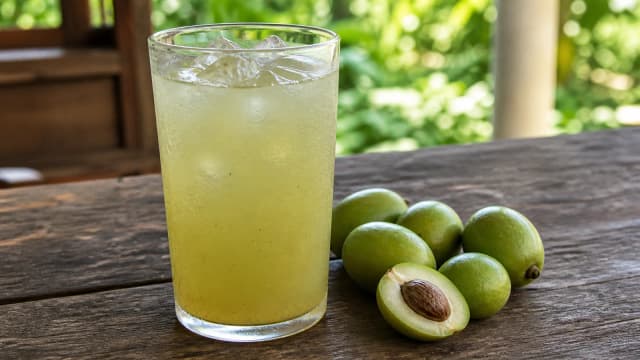
Veralu juice, also called Ceylon olive juice, is a properly refreshing, tangy Sri Lankan drink made from veralu, the small green Ceylon olive (Elaeocarpus serratus). It is a firm, ovoid fruit with a single hard stone. You deseed the fruit and crush or blend it with water, sweeten it with sugar, and balance it with a pinch of salt and a hint of ginger or lime, then strain it into a cool, pale, antioxidant-rich nectar for hot days. Bright and sour at first sip, then mellow and sweet behind it, veralu juice is the up-country cousin of the island's fruit coolers, made from a fruit that is just as loved as a salty-sour pickle.

A tangy, cooling up-country drink crushed from veralu, the small green Ceylon olive. Sharp and sour at first, then sweet and reviving, served ice cold for the heat.
- Total time
- 15 min
- 15 min prep · 0 min cook
- Serves
- 2 people
- Difficulty
- Beginner
- Spice level
- Mild
- Country help
- USA · UK · AU · CA substitutes included
CeylonCooking
ceyloncooking.com/recipes/veralu-juice
Veralu Juice
Scan to open on your phone
Nutrition
Estimated values, per serving.
About This Dish
Up in the cooler hill country, where the mist sits in the valleys and the home gardens crowd the slopes, there is a season when the veralu trees hang heavy with small green fruit. Children knock them down with sticks, vendors heap them in glistening mounds by the roadside, and in kitchens they get turned two ways. One is a fiery, salty-sour pickle that makes your mouth water just to think of it, the other is this cooling, tangy juice. The first cold sip of veralu juice is a small jolt, sharp and green and sour, before a soft sweetness rises behind it and turns the whole glass reviving.
Veralu is the Ceylon olive, known to botanists as Elaeocarpus serratus, and the name can mislead you. It is not a true olive at all. It is a small, firm, oval fruit, green-skinned and pale-fleshed, with a single hard, ridged stone at its heart, and it grows on tall trees scattered through the gardens and forests of the island, most abundantly in the up-country. The flesh is crisp and intensely tart when raw, the kind of sourness that puckers the cheeks, which is exactly why it works so well in a sweetened, balanced juice.
Here's the thing about veralu juice: it takes that fierce, astringent tartness and turns it into something cool and drinkable. There is no cooking involved. Just firm fruit, water, a little sweetening, and a few balancing touches. A pinch of salt lifts the flavour, a hint of ginger adds warmth, a squeeze of lime brightens it. The whole craft is coaxing the tart flesh free of that hard stone, crushing or blending it loose with water, then straining away the skins and fibre to leave a clean, pale, pleasantly sour nectar.
For many Sri Lankans, veralu carries the taste of a particular season and a particular place. It belongs to the hill country in the way king coconut belongs to the lowlands. A glass of veralu juice is the gentler, thirst-quenching answer to the same fruit eaten as a tongue-tingling pickle. Made well, it is light, tangy and genuinely cooling. It's a homemade glass to reach for on a hot afternoon rather than a rich treat, and a lovely way to meet a fruit that rarely travels far beyond the island.
What Is Veralu? The Ceylon Olive, Elaeocarpus Serratus
Veralu is the fruit of the Ceylon olive tree, Elaeocarpus serratus. It is a tall tree, the kind you see growing through gardens and forests in Sri Lanka, especially up in the cooler hill country. The fruit itself is small and ovoid, about the size of a large olive or a small plum, with a smooth green skin. Inside, the flesh is firm, pale and crisp, and it is sharply sour when raw. Right at the centre sits one hard, woody, ridged stone, much like an olive pit. You have to prise that out before the flesh can be crushed for juice. The fruit appears for a few months of the year, when the trees crop heavily and the markets pile up with green mounds of it.
Here's the thing people want to settle first: is veralu a true olive? It isn't. The English name Ceylon olive makes it sound related to Mediterranean olives, but it is not related to them at all. It just looks like one, same size, same shape, same single hard stone, and that is how the name stuck. A true olive is oily and usually cured in brine, while veralu is crisp, watery and bracingly tart. Honestly, it is much closer in spirit to a sour green fruit than to anything off an antipasto plate. And that tartness, rich in vitamin C and natural antioxidants, is exactly why it works so well sweetened into a cooling juice, or salted into the famous veralu pickle, achcharu.
What It Should Taste Like
This is pale and lightly cloudy, bright and sour right up front with a green, fresh tartness. Then a soft sweetness comes up behind it to balance the sharpness. It is cooling and thirst-quenching, not rich, lifted by a pinch of salt and a hint of ginger or lime. Serve it properly ice cold and it should taste clean, tangy and reviving, sour enough to wake you up but never harsh or puckering.
Ingredients
This recipe makes 2 servings. Change the number and every amount below updates with it. Substitutes for hard-to-find items are in the sidebar.
The US button converts grams, millilitres and centimetres to ounces, cups and inches. Spoon measures stay exactly as they are.
Open this in the recipe converter
- Firm veralu (Ceylon olive)fresh, green, just-ripe12 to 15
- Cold waterfor crushing and loosening the flesh1.5 to 2 cups
- Sugarto taste3 to 4 tbsp
- Pinch of saltlifts the flavour1 pinch
- Fresh gingera small piece, for warmthoptional
- Limea squeeze, to brightenoptional
- Iceto serve
Method
Follow these 6 steps. Each one explains not just what to do, but why it matters.
Ready to Start Cooking?
The screen shows one step at a time, with just the ingredients that step needs at your serving count, a timer you can tap, and your phone kept awake.
- 01
Choose Good Veralu
Pick veralu that are firm, smooth and green, just ripe rather than hard and immature or soft and going over. Rinse them well and pass over any that are bruised, blemished or shrivelled.
This fruit is the whole drink, so I choose carefully. Good veralu for juice are firm and an even, fresh green, with crisp flesh full of that bracing sourness you want to capture. Hold one and it should feel solid and heavy for its size, the skin taut and unbroken. Rock hard and very pale means underripe, even more harshly sour. Soft, wrinkled or dull means past its best and tasting flat. You want the just-ripe fruit in between: green and firm, with a clean, sharp smell when you scratch the skin, the sign the flesh inside is at its tangy best.
Tip: Veralu is seasonal, so buy it when the markets are full of it. If yours are very firm and harshly sour, leave them out at room temperature for a day or two to mellow slightly before juicing.
- 02
Deseed and Prepare the Fruit
Cut or crush each veralu so the flesh splits away from that single hard stone in the centre, then prise out and discard the stones. Keep all the firm green flesh in a bowl.
This is the fiddly heart of the prep, because each little veralu hides a hard, woody, ridged stone, and that stone has to come out before you can crush the flesh. Press down on each fruit with the flat of a knife or the bottom of a glass. It cracks and splits, the flesh loosens from the stone, and you can pop the stone free, a bit like pitting an olive or a small plum. Work over a bowl so you catch every scrap of the crisp, pale flesh and any juice that runs out, and discard the stones as you go. The smell as you crush them is sharp, green and clean, exactly the bright sourness the finished juice will carry.
Tip: A firm tap with the flat of a heavy knife or a pestle splits the fruit and frees the stone in one go. Do a few at a time over a bowl so the juicy flesh doesn't escape.
- 03
Crush or Blend with Water
Add the cold water to the deseeded flesh. Crush firmly with a pestle or the back of a spoon, or pulse briefly in a blender, until the water goes cloudy and pale and carries the fruit's tart flavour.
Now you're drawing the sourness out of the flesh and into the water. Crushing or pulsing breaks the firm green flesh apart, and its tart juice dissolves into the liquid. The water turns cloudy, pale and bright with that green, sour fruitiness. Crush by hand with a pestle and you keep full control, with a gentler result. Blend instead, and use only short pulses with plenty of water, just enough to break the flesh loose without pulverising the skins and fibre into a bitter, gritty mash. Either way, you'll know it's ready when the water has a clean, sharp, sour smell and a faint cloudiness, the taste of the fruit now living in the liquid.
Tip: Blend in short pulses, not one long whizz. Over-blending the skins and fibre can make the juice bitter and astringent, so just loosen the flesh and let the straining do the rest.
- 04
Sweeten and Balance
Stir in the sugar until it dissolves, add a pinch of salt, then balance it with a hint of grated ginger or a squeeze of lime if you like. Taste and tweak the sour, sweet and salt until it sits right.
This is where a sharply sour liquid turns into something you actually want to keep sipping. Veralu is fiercely tart on its own, so it needs a generous hand with the sugar, more than a milder fruit would. You stop when the sourness is tamed into a bright, tangy sweetness. A pinch of salt is the quiet trick that lifts the whole glass. It makes the sour and the sweet stand out, the same way salt does in a fruit pickle. A little grated ginger adds a warm, gentle heat that suits the green tartness, and a squeeze of lime brightens it further if you want it sharper. Keep tasting as you go. The balance you're after is sour enough to refresh, sweet enough to please, with the salt and ginger humming underneath.
Tip: Add the sugar a spoon at a time and taste between each. Veralu is so sour that it needs more sweetening than you might expect, but stop while the bright tang still comes through.
- 05
Strain the Juice
Pour the crushed mixture through a fine sieve set over a jug. Press the solids with the back of a spoon to push through as much juice as possible, then discard the skins and fibre left behind.
Straining is what turns a bowl of crushed pulp into a smooth, drinkable juice. Tip everything into a fine sieve and the pale, tart liquid runs through while the skins, fibre and any stray bits of flesh stay caught. Press the solids firmly with your spoon to coax out every last drop, because plenty of flavour clings to the pulp. What drips through should be clean, pale and faintly cloudy with no fibre, ready to chill. That one step is the difference between a silky glass and a gritty, pulpy one, and it also strains out any tiny bits of stone you may have missed.
Tip: For an extra-smooth drink, strain it twice, or line the sieve with a piece of clean muslin. The finer the strain, the silkier the finished juice.
- 06
Chill and Serve Ice Cold
Add plenty of ice, or chill the juice well in the fridge. Serve it properly cold in tall glasses, and stir just before pouring because the pulp tends to settle.
Veralu juice is, above all, a cooling drink, and the cold is half of what makes it so reviving. Serve it ice cold, either poured over plenty of ice or chilled in the fridge until it's genuinely cold to the touch. That first tangy, sour sip becomes wonderfully refreshing in the heat of the day. Because it's a fresh fruit drink with no thickeners, the fine pulp naturally settles as it stands, so give it a good stir just before you pour to bring it back into an even, lightly cloudy glass. Drink it fresh, while the green tartness is at its brightest, the way it tastes best straight from the season's fruit.
Tip: Serve it the moment it's cold and well stirred. Like most fresh fruit juices, veralu is at its best soon after making, before the bright sourness begins to dull.
Common Mistakes to Avoid
- Leaving any of the hard stones in before crushing or blending can damage a blender and leave gritty bits in the juice. Deseed every fruit first.
- Over-blending the skins and fibre makes the juice bitter and astringent rather than cleanly sour. Pulse briefly or crush by hand instead.
- Under-sweetening leaves the drink harshly, mouth-puckeringly sour. Veralu needs more sugar than a milder fruit to come into balance.
- Skipping the strain leaves the finished glass full of fibre and skin instead of smooth and clean.
- Forgetting the pinch of salt. That quiet touch lifts the flavour and makes the sour and sweet stand out.
- Serving it lukewarm. Veralu juice is a cooling drink and needs to be properly ice cold to be at its refreshing best.
Serving Ideas
- Ice cold in a tall glass on a hot afternoon. It's the simplest and best way to drink it.
- Brightened with a hint of grated ginger or a squeeze of lime for a sharper, more reviving glass.
- Sweetened with jaggery rather than sugar for a deeper, caramel-tinged version.
- Alongside a plate of short eats or a slice of watalappam in the afternoon.
- Served as a cooling, caffeine-free refresher after time in the sun, in place of a sugary soft drink.
Building a whole plate around it? Start from our sri lankan breakfast menu, which sets out what to cook alongside it and in what order.
Storage and Make-Ahead
Make veralu juice fresh and drink it cold the same day, when that green tartness is brightest. Covered in the fridge it will keep up to a day, but stir it well before serving because the fine pulp settles. It won't keep much longer, as it's a fresh fruit drink with no preservatives. When the fruit is in season, you can deseed and freeze the flesh, or crush and freeze the strained juice, so you can have a cooling glass later in the year when fresh veralu is gone.
Two Ways to Cook It
Take a dozen or so firm veralu. Deseed them, crush the flesh with cold water by hand or give it a few short pulses in a blender, then strain through a fine sieve into a jug. Stir in sugar to taste and a pinch of salt, pour over ice and drink it cold. Deseed, crush, strain, sweeten, chill. That's the whole drink.
Use just-ripe veralu in season. Crack each fruit and prise out the hard stone, then crush the tart green flesh loose with water using a pestle, the way it's done at home. Strain out every scrap of skin and fibre through a fine sieve, sweeten generously to tame the sourness, lift it with a pinch of salt and a little grated ginger, and serve it ice cold, just as the hill country drinks it in veralu season.
Lighter and Healthier Version
Veralu juice is already a light, natural fruit drink with almost no fat, so the only real thing to lighten is the sweetening. The fruit itself is low in calories and rich in vitamin C, and nearly all the sugar in the glass is what you add to balance that sharp sourness. That's exactly where you can ease back.
Sweeten as Lightly as You Can Bear
Veralu is really sour, so it does need sugar. But add it slowly and stop as soon as the drink is pleasant rather than sweet. A pinch of salt and a little ginger help the fruit taste balanced with less sugar.
Let Salt and Lime Do the Lifting
A pinch of salt and a squeeze of lime make the glass taste brighter and more rounded without adding sugar, so you can keep the sweetening lower and still enjoy a balanced drink.
Naturally Fat-Free and Caffeine-Free
Veralu juice has no fat and no caffeine at all. That makes it an easy, refreshing swap for a sugary soft drink or a fizzy cooler in the heat.
Let the Fruit Lead
Made simply, with just crushed veralu, water and a touch of sweetening, the drink is clean and light. The less you add, the more that bright, tangy, vitamin-C-rich fruit carries the glass on its own.
Frequently Asked Questions
Veralu juice is a sharp, reviving Sri Lankan drink built from veralu, the small green Ceylon olive (Elaeocarpus serratus). You deseed the firm fruit, crush or blend it with water, sweeten with sugar and balance with a pinch of salt, often a little ginger or lime too, then strain it into a cool, pale drink and serve it ice cold. It hits sour and bright first, then a soft sweetness comes up behind it. It is a proper homemade cooler in the hill country, where the fruit actually grows.
Cooked It? Tell Us How It Went
Your notes on this veralu juice help the next person get it right: what you swapped, what you would do differently, where the recipe should have warned you. Tap a star if you are in a hurry, or write a few lines if you have a minute.
You Might Also Like


Sri Lankan Home Cooking Starter Pack
40 authentic Ceylon recipes made simple for foreign kitchens: spice guide, pantry checklist, substitute guide, 7-day meal plan and printable shopping lists.